



கம்பராமாயணம் 8693 · யுத்த 21.206
பாடல் · The poem
Tap a word to see its gloss in the commentary and where else it occurs.
பாட வேறுபாடு · Project Madurai reads
பொருள் · Meaning in Tamil
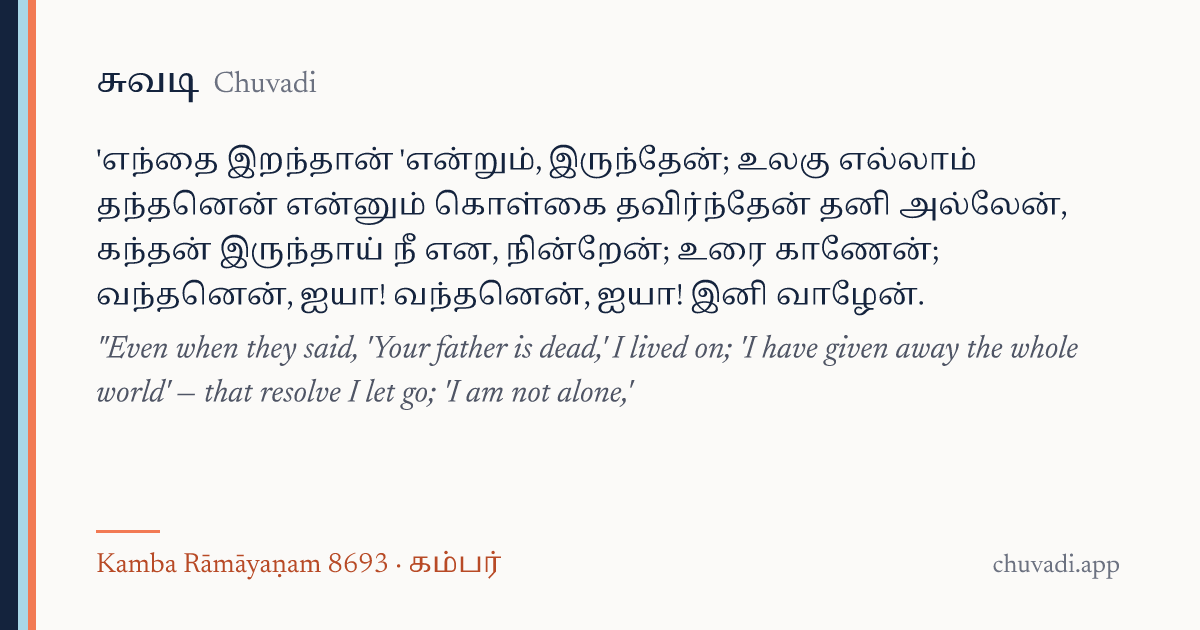
“எந்தை இறந்தான்” என்றும் இருந்தேன் - எம்தந்தை (தசரதன் இறந்தான் எனக் கேள்வியுற்றும் (இறவாது) இருந்தேன்; உலகு எல்லாம் தந்தனென் என்னும் கொள்கை தவிர்ந்தேன் - 'உலகம் முழுவதனையும் (பரதனே ஆளதி) தந்தேன்' என்ற (எனது உறுதியான) கொள்கையில் நெகிழ்ந்து நீங்கி (எனது ஆணையின் வழி பரதன் ஆளும்படி) ஆட்சியை ஏற்றுக்கொண்டவனாயினேன்; கந்தன் நீ இருந்தாய் - (இருப்பினும்) பற்றுக்கோடானவனாக நீ இருந்தாய்; தனி அல்லேன் என நின்றேன் - (ஆதலினால்) நான் தனித்துள்ளவன் அல்லேன் என எண்ணி (உறுதியுடன் நின்றேன்; உரைகாணேன் - (இன்றேற உனது உரையை நான் காணப் பெற்றேனில்லை; இனிவாழேன் - இனியும் நான் வாழ்ந்திருக்க மாட்டேன்; ஐயா! வந்தனன் - ஐயனே! வந்துவிட்டேன்! ஐயா! வந்தனன்! - ஐயனே! வந்துவிட்டேன்!
ஆங்கிலம் · English translationAI
Translation
- "Even when they said, 'Your father is dead,' I lived on; 'I have given away the whole world' —
- that resolve I let go; 'I am not alone,'
- I thought, 'for you are there as my support,' and so I stood firm; now I hear no word from you;
- I am coming, my lord! I am coming, my lord! I will live no longer."
What the poem says
Irāmaṉ's lament for Ilakkuvaṉ begins. He survived the news of his father's death and went back on his resolve to give up the kingdom entirely, agreeing that Paratan should rule in his name. All that time Ilakkuvaṉ was with him, so he never felt alone.
Now Ilakkuvaṉ does not answer. Irāmaṉ cries that he is coming to follow him in death.