



கம்பராமாயணம் 8712 · யுத்த 21.225
பாடல் · The poem
Tap a word to see its gloss in the commentary and where else it occurs.
பாட வேறுபாடு · Project Madurai reads
பொருள் · Meaning in Tamil
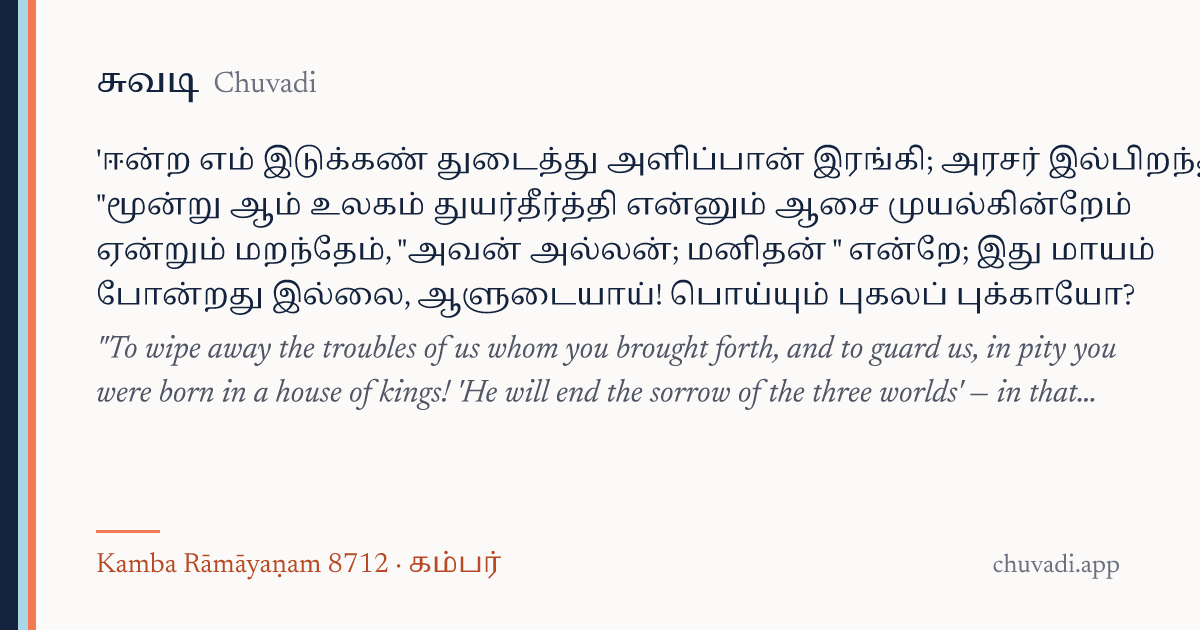
ஈன்று எம் இடுக்கண் துடைத்து அளிப்பான் - (நின்னால்) படைக்கப்பட்டவராகிய எம்முடைய துன்பங்களை அறவே நீக்கி (எம்மைக்) காத்தற் பொருட்டு; இரங்க, அரசர் இல் பிறந்தாய் - அருள் கொண்டு அரசர் குடியில் பிறந்தவனே! மூன்று ஆம் உலகம் துயர் தீர்த்தி - (அவ்வாறு அவதரித்து அருளிய நீ) மூன்றாகிய உலகங்களின் துயர்களைத் தீர்த்தருள்வாய்; என்னும் ஆசை முயல்கின்றோம் - என்னும் ஆசையினாலேயே முயன்று (உயிருடன் வாழ்கின்றோம்; ஏன்றும் - (நீ எம்மை உறுதியாகப் பாதுகாப்பாய் என்பதனை மனம் பொருந்த) ஏற்றுக் கொண்டிருந்தும்; “அவன் அல்லன்; மனிதன்” என்றே மறந்தோம் - (நின் அரற்றுதல் கேட்டு இராமனாகிய இவன் திருமாலாகிய அவனல்லன்; மனிதருள் ஒருவனே! என்று (அவ்வுண்மையை) மறந்தோமாயினும்; இதுமாயம் போன்றது இல்லை - (எம்மிடத்து நீகாட்டிய) இதனையொப்பதொரு வஞ்சனைச் செயல் (வேறெங்கும் நிகழ்ந்தது) இல்லை; ஆளுடையாய்! பொய்யும் புகலப் புக்காயோ - எம்மை அடிமையாக உடைய இறைவனே! (மெய்மையின் வடிவமான நீ) பொய்யுரைகளையும் புகலுதற்குமுற்பட்டு விட்டாயோ?”
தேவர்களின் முன்பும் மனிதன் போன்றே இராமபிரான் நடித்துக் காட்டுவதால், “பொய்யும் புகலப் புக்காயோ” எனத்தேவர் கூறுகின்றனர். முயலுதல் என்றது, அல்லற்காலத்துப் பலவகை முயற்சிகளையும் மேற்கொண்டு வாழுதலை, இறைவன் மெய்ம்மையே உருவாக உடையவன் என்பதனை வள்ளுவப்பெருமான் 354, 355, 357 என்ற குறள்களின் வழி கூறுதலைக் காணலாம்.
ஆங்கிலம் · English translationAI
Translation
- "To wipe away the troubles of us whom you brought forth, and to guard us, in pity you were born in a house of kings!
- 'He will end the sorrow of the three worlds' — in that hope we strive on;
- though we had accepted it, we forgot, thinking, 'He is not That One; he is a man'; there is no
- illusion like this one, O Master! Have you begun to speak falsehood too?"
What the poem says
The gods go on. Irāmaṉ was born as a king's son out of pity for them, and they live in the hope that he will end the suffering of the three worlds. Hearing him weep like a man, they almost forgot that he is Viṣṇu himself.
His act is so convincing that they ask whether he, who is truth itself, has started telling lies. The commentary cites verses of the Tirukkuṟaḷ on God as the true reality.