



கம்பராமாயணம் 8719 · யுத்த 22.1
பாடல் · The poem
Tap a word to see its gloss in the commentary and where else it occurs.
பொருள் · Meaning in Tamil
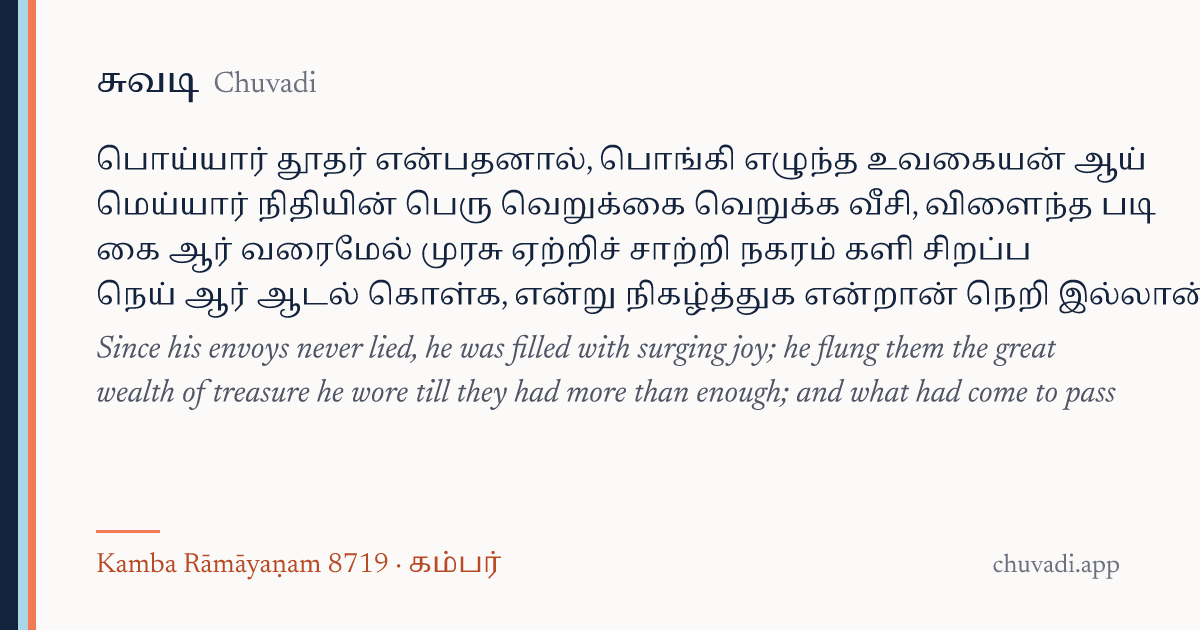
நெறி இல்லான் - நல்வழி மேற்கொள்ளாத இராவணன்; தூதர் பொய்யார் என்பதினால் - தன் தூதுவர் பொய் சொல்ல மாட்டார்கள் என்ற உறுதிப் பாட்டினால்; பொங்கி எழுந்த உவகையன் ஆய் - (தன்) உள்ளத்தில் பொங்கி எழுந்த மகிழ்ச்சியை உடையவனாய், மெய்யார் நிதியின் பெரு வெறுக்கை வெறுக்க வீசி -(அத்தூதுவர்க்கு) தன் உடம்பின் கண் (அணிகளாக) அணிந்திருந்த நிதியாக பெரும் செல்வத்தை அவர் (மிக அதிகமாகப் பெற்றமையால் வெறுக்குமாறு கொடுத்துவிட்டு; கய் ஆர் வரைமேல் முரசு ஏற்றி, சாற்றி - யானை மேல் முரசத்தை ஏற்றச் சொல்லி; விளைந்தபடி - போர்க்களத்தில் கிடைத்த வெற்றியினை; "நகரம் களி சிறப்ப நெய் ஆர் ஆடல் கொள்க" -இலங்கை மாநகரம் களிப்பு மிகுமாறு நெய் தேய்த்து முழுகுவதாகிய நீராடல் மேற் கொள்வதாக; என்று, நிகழ்த்துக என்றான் - என்று சொல்லுக என்று கட்டளையிட்டான்.
ஆங்கிலம் · English translationAI
Translation
- Since his envoys never lied, he was filled with surging joy;
- he flung them the great wealth of treasure he wore till they had more than enough; and what had come to pass
- he had drums set on hill-like elephants proclaim: "Let the city, its joy brimming over,
- take the festive bath in oil — let it be done," said he who knew no right way.
What the poem says
This begins a new canto, in which Cītai is made to see the battlefield. Irāvaṇaṉ trusts his spies completely and is overjoyed. He showers them with the jewels he is wearing.
He has the victory announced by drums carried on elephants and orders the whole city to celebrate with the traditional festive oil bath. The poet calls him 'he who has no right way', a reminder that his joy rests on a mistake and on wickedness.