



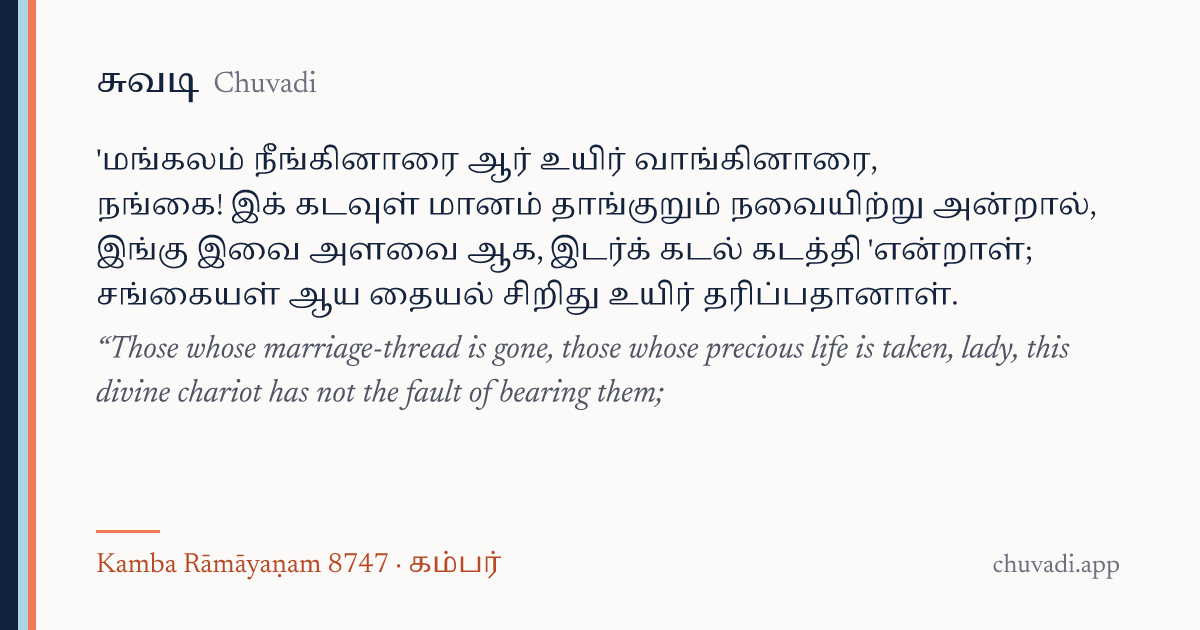
கம்பராமாயணம் 8747 · யுத்த 22.29
பாடல் · The poem
Tap a word to see its gloss in the commentary and where else it occurs.
பொருள் · Meaning in Tamil
நங்கையே! இக்கடவுள் மானம் - பெண்களிற்சிறந்தவளே! இந்தத் தெய்வத்தன்மை வாய்ந்த புட்பகவிமானம்; மங்கலம் நீங்கினாரை ஆருயிர் வாங்கினாரை - மங்கலநாண் நீங்கப்பெற்ற கைம் பெண்டிரையும், அரிய உயிர் நீங்கப்பெற்று பிணமானவரையும்; தாங்குறும் நவையிற்று அன்றால் - தாங்குகின்ற குற்ற முடையதன்று; “இங்கு இவை அளவையாக இடர்க்கடல் கடத்தி” என்றாள் - இங்கு யான் கூறிய இக்கருத்துக்களை அளவையாகக் கொண்டு இராமன் இறக்கவில்லை என்பதறிந்து துன்பக்கடலைக் கடப்பாயாக எனத் திரிசடை கூறினாள்; சங்கையள் ஆயதையல் சிறிது உயிர் தரிப்பதானாள் - (இராம லக்குவர் இறந்து விட்டார்களோ என) ஐயம்கொண்டவளான சீதை (திரிசடை சொற்களால்) சிறிது உயிர்தாங்கி இருப்பாளானாள்.
கடவுள் மானம் - தெய்விகமான புட்பக விமானம். சங்கை - ஐயம். பல ஏதுக்களைக் காட்டிச் சீதையின் ஐயத்தைப் போக்க முயலும், காட்சியும் அனுமானமும், அருத்தாபத்தியும், ஆகிய அளவைகளைக் கூறிய திரிசடை இராமன் முதலியோர் இறந்திலர் என்பதை நிறுவினளாதலின், 'இங்கிவை அளவையாக இடர்க்கடல் கடத்தி' எனக் கூறினாள்.
ஆங்கிலம் · English translationAI
Translation
- “Those whose marriage-thread is gone, those whose precious life is taken,
- lady, this divine chariot has not the fault of bearing them;
- taking these things here as your proof, cross the sea of sorrow,” she said;
- and the young woman, who had been in doubt, came to hold on a little to life.
What the poem says
Tiricaṭai offers a last proof. The Puṣpaka, the divine flying chariot on which Cītai is riding, will not carry a widow or a corpse. Since it bears Cītai, she is no widow, so Irāmaṉ must be alive.
The commentary notes that Tiricaṭai argues like a logician, using the recognised means of knowledge: what is seen, inference, and presumption from circumstance. That is why she says "taking these as your proof." Her words give Cītai enough hope to keep living.