



கம்பராமாயணம் 8749 · யுத்த 22.31
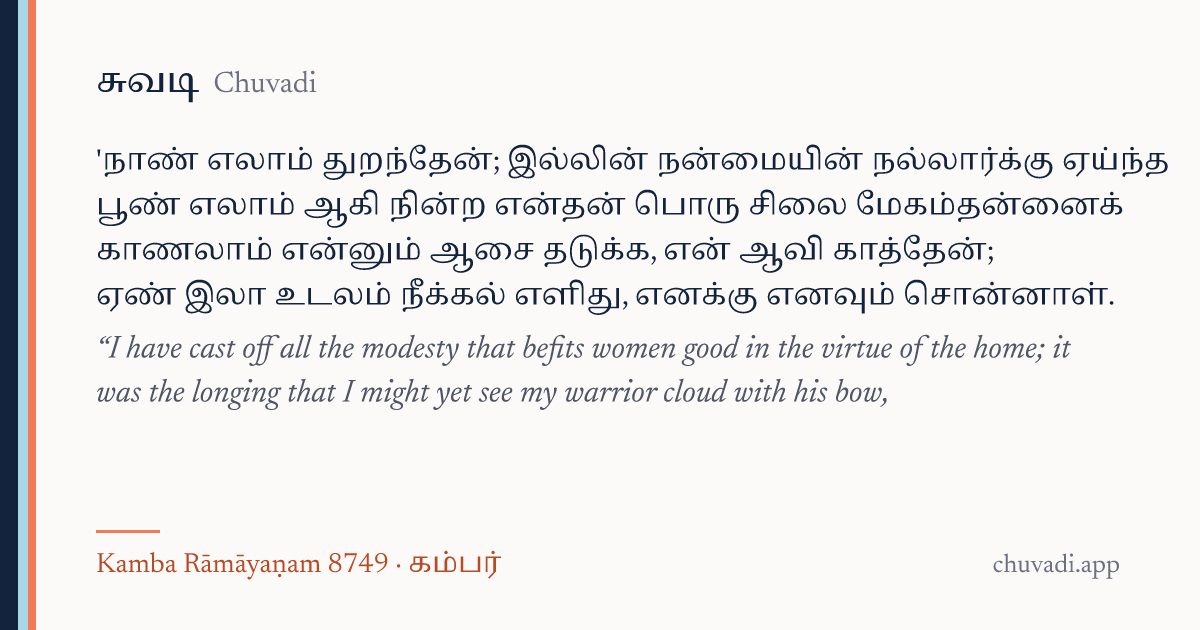
பாடல் · The poem
Tap a word to see its gloss in the commentary and where else it occurs.
பாட வேறுபாடு · Project Madurai reads
பொருள் · Meaning in Tamil
இல்லின் நன்மையின் நல்லார்க்கு - இல்லறத்தின் நன்மையினை உடைய கற்புடைய பெண்களுக்கு; ஏய்ந்த நாண் எலாம் துறந்தேன் - பொருந்துதற்குரிய நாண் முதலிய குணங்களை எல்லாம் துறந்தேன்; என் தன் பூண் எலாம் ஆகி நின்ற - என்னுடைய அணிகலன்கள் அனைத்துமாக நின்ற, பொருசிலை மேகம் தன்னை - (என்னுடைய கணவனாகிய) போர் செய்யும் வில்லேந்திய மேகம் போல்வானை, காணலாம் என்னும் ஆசை தடுக்க - காணலாகு மென்கின்ற ஆசை தடுத்தலால்; என் ஆவிகாத்தேன் - என் உயிரை இதுவரையில் காப்பாற்றிக் கொண்டிருந்தேன்; ஏண் இலா உடலம் நீக்கல் - (உணவின்றி) வலிகுன்றியுள்ள உடலினின்றும் உயிர் நீங்குதல்; எனக்கு எளிது எனவும் சொன்னாள் - எனக்கு எளிது; (அரிதன்று) என்றும் சொன்னாள்.
இது முன்பாடலோடு (கம்ப. 7653) பொருத்திக் காணத்தக்கது.
ஆங்கிலம் · English translationAI
Translation
- “I have cast off all the modesty that befits women good in the virtue of the home;
- it was the longing that I might yet see my warrior cloud with his bow,
- who stands as all my ornaments, that held me back and made me guard my life;
- to leave this strengthless body would be easy for me,” she also said.
What the poem says
Cītai explains why she has stayed alive in captivity. A virtuous wife, she feels, should not have outlived such disgrace; she has lost the modesty proper to her by living on. Only the hope of seeing Irāmaṉ again, the dark rain-cloud of a hero with his bow, who is all the jewellery she needs, has kept her alive.
Her body is so weakened by fasting that she could let go of life easily. The commentary points to an earlier verse where she says something similar.