



கம்பராமாயணம் 8762 · யுத்த 23.12
பாடல் · The poem
Tap a word to see its gloss in the commentary and where else it occurs.
பொருள் · Meaning in Tamil
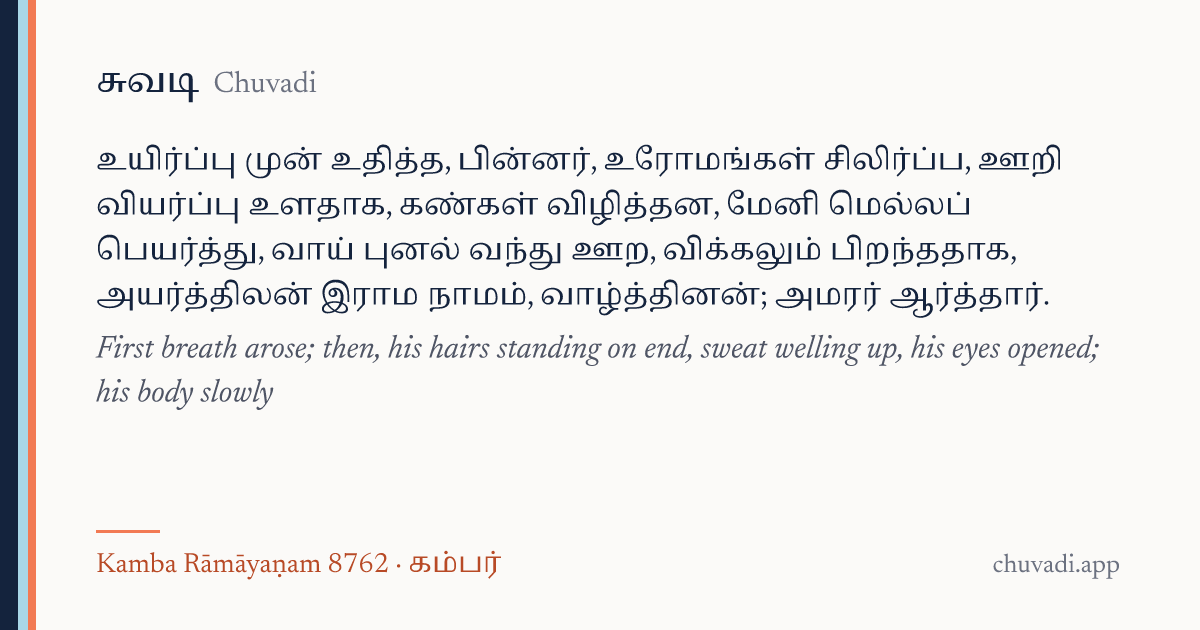
உயிர்ப்பு முன் உதித்த பின்னர் உரோமங்கள் சிலிர்ப்ப -சுவாசம் முன்னே வந்தபின்பு மயிர்க்கூச்செறிய; ஊறிவியர்ப்பு உளதாக கண்கள் விழித்தன - வியர்வை நீர் ஊறி வியர்வை உண்டாகக் கண்கள் திறக்கப்பெற்றன; மேனிமெல்லப் பெயர்த்து வாய்புனல் வந்து ஊற - உடல்மெல்ல அசைய வாயில் நீர் வந்து ஊறிட; விக்கலும் பிறந்த தாக - விக்கலும் எழுந்ததாக; அயர்த்திலன் “இராம நாமம்” வாழ்த்தினன் - (அந்த நிலையிலும்) மறவாதவனாய் இராமநாமம் கூறி வாழ்த்தினான்; அமரர் ஆர்த்தார் - அதுகண்டு தேவர்கள் ஆரவாரித்தனர்.
மரண நிலையிலிருந்து வாழ்வு நிலைக்கு வரும் உயிர்களுக்கு மெய்யின்கண் ஏற்படும் மெய்ப்பாடுகள் எங்ஙனமிருக்கும் என்பதனை, சுவாசம் முன்னேவருதல், மயிர்க்கூச்செறிதல், வியர்வை வருதல், உடல் அசைவு, வாயில் நீர் ஊறுதல், விக்கல் எழுதல் முதலானவற்றைக் கூறுகின்றமையைக் காண்கிறோம். மரணத் துன்பத்திலும் இராமநாமத்தை மறவாத அனுமனின் இராமபக்தி ஈண்டு சுட்டப்படுகின்றது. மயங்கிக் கிடந்த காலத்தும் ஆழ்மனத்தில் இராமநாமம் பதிந்திருந்தமை நினையத்தக்கது. 'நான் மறக்கினும் சொல்லும் நா நமச்சிவாயவே' என்ற சுந்தரர் வாக்கிற்குப் பொருள் ஈதென உணரலாம். மூர்ச்சிப்பதற்கு முன் மனத்தில் இருந்த இராமநாமத்தின் தொடர்ச்சி விழிப்புணர்வு வரும்போது மீளத் தோன்றியது என்பது உளவியல் உண்மை.
ஆங்கிலம் · English translationAI
Translation
- First breath arose; then, his hairs standing on end, sweat
- welling up, his eyes opened; his body slowly
- stirring, water rising in his mouth, a hiccup coming too,
- he had not forgotten Irāmaṉ's name, and praised it; the immortals shouted.
What the poem says
Aṉumaṉ revives, and the poet records each sign of a body coming back from near death: breath returns, his hair bristles, he sweats, his eyes open, his limbs stir, saliva flows and he hiccups.
His first word is Irāmaṉ's name, and the gods cheer. The commentary sees this as the mark of true devotion: the name was so deeply set in his mind that it came back first, even after a swoon close to death. It compares the saint Cuntarar's line saying that even if he forgets, his tongue will still say "Namaḥ Śivāya."