



கம்பராமாயணம் 8780 · யுத்த 23.30
பாடல் · The poem
Tap a word to see its gloss in the commentary and where else it occurs.
பொருள் · Meaning in Tamil
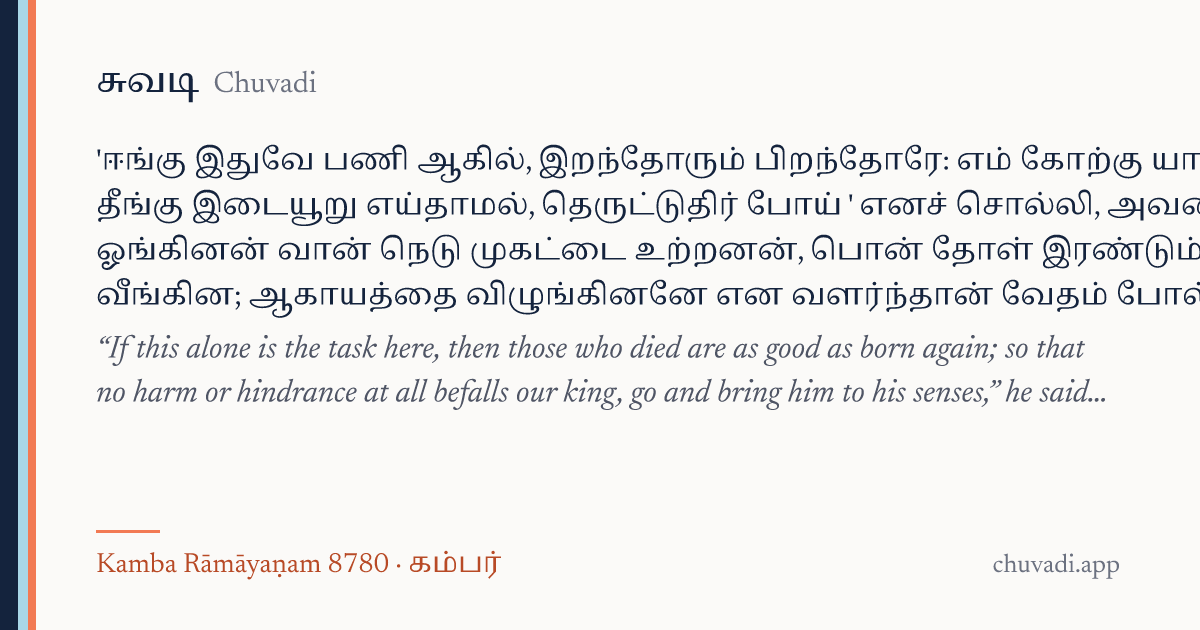
ஈங்கு இதுவே பணி ஆகில் இறந்தோரும் பிறந்தோரே - “இப்பொழுது இதுவே (நான் செய்ய வேண்டிய) பணி ஆனால் இறந்துபட்டவர்கள் அனைவரும் மீண்டும் இறப்பு நீங்கி எழுந்தவரே ஆவர்”; எம்கோமாற்கு யாதும் தீங்கு இடையூறு எய்தாமல் - எம்கோமானாகிய இராமனுக்கு தீங்குவரத்தக்க இடையூறு ஏதும் எய்தாதபடி; தெருட்டுதிர்போய் எனச் சொல்லி - போய்த் தெளிவுபடுத்துங்கள்” எனக் கூறி; அவரைத் தீர்ந்தான், வேதம் போல்வான் - அவர்களை விட்டு நீங்கினவனாய்; வேதம் போல்பவனாகிய அனுமன்; ஓங்கினன் வான் நெடுமுகட்டை உற்றனன் - உயர ஓங்கி வானத்தின் நெடிய முகட்டை அடைந்தான்; பொன்தோள் இரண்டும் திசையோடு ஒக்க வீங்கின - அவன் தோள்கள் இரண்டும் திசைகளின் அளவோடு ஒக்கப் பருத்தன; ஆகாயத்தை விழுங்கினனே என வளர்ந்தான் - ஆகாயத்தை இடமில்லாமல் விழுங்கிவிட்டான் என்னுமாறு பேருரு எடுத்து வளர்ந்தான்.
ஆங்கிலம் · English translationAI
Translation
- “If this alone is the task here, then those who died are as good as born again; so that no harm
- or hindrance at all befalls our king, go and bring him to his senses,” he said, and left them;
- he rose up and reached the high vault of the sky; his two golden shoulders swelled
- to match the quarters; he who is like the Veda grew as if he had swallowed the sky.
What the poem says
Aṉumaṉ accepts the task with complete confidence: if fetching the herbs is all that is needed, the dead are as good as alive again. He asks Vīṭaṇaṉ and Jāmbavān to go to Irāmaṉ and keep him from despair when he wakes.
Then he takes on his cosmic form. He grows until he touches the top of the sky, his shoulders spread as wide as the directions, and he seems to fill all of space. The poet calls him "like the Veda," a figure of truth and sacred knowledge.