



கம்பராமாயணம் 8794 · யுத்த 23.44
பாடல் · The poem
Tap a word to see its gloss in the commentary and where else it occurs.
பாட வேறுபாடு · Project Madurai reads
பொருள் · Meaning in Tamil
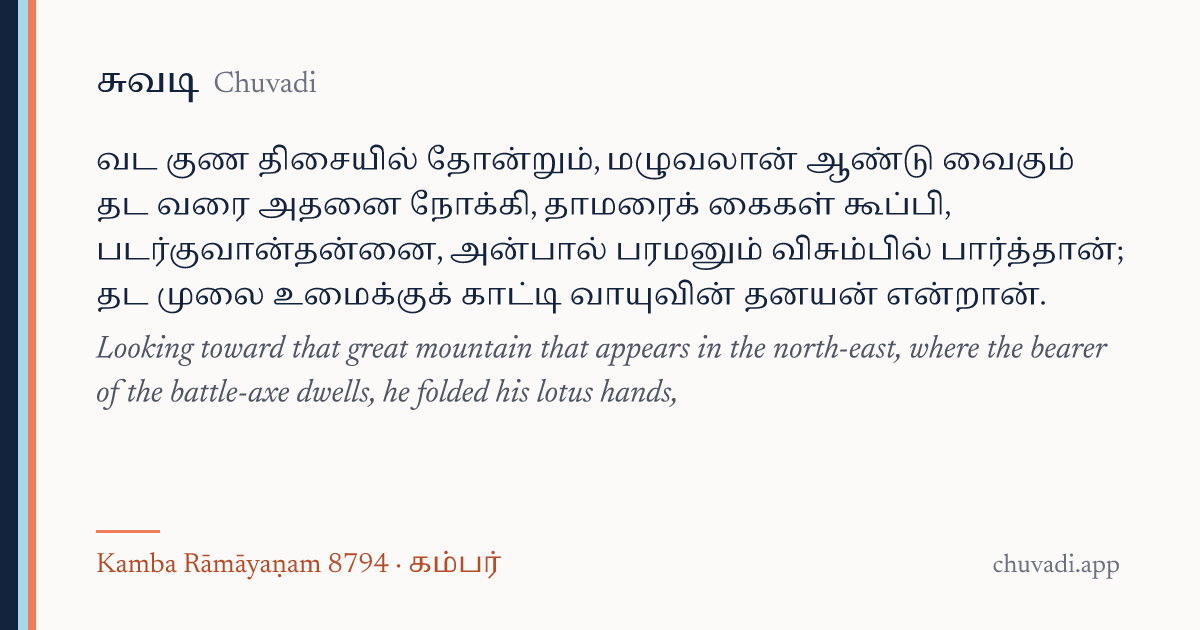
வடகுண திசையில் தோன்றும் - வடகிழக்குத் திசையில் தோன்றுகின்றதும்; மழுவலான் ஆண்டு வைகும் - மழுப்படையை உடைய சிவபெருமான் தங்கி இருப்பதும் ஆகிய; தடவரை அதனை நோக்கி தாமரைக் கைகள் கூப்பி - பெரிய மலையினை (கயிலையை)ப் பார்த்துத் தாமரை போலச் சிவந்த கைகளைக் குவித்து வணங்கி; படர்குவான் தன்னை அன்பால் பரமனும் விசும்பில் பார்த்தான் - செல்லுகின்ற அனுமனைப் பெருமையிற் சிறந்தவனாகிய சிவபரம் பொருளும் விரும்பிப் பார்த்து; தடமுலை உமைக்குக் காட்டி “வாயுவின் தனயன்” என்றான் - பருத்த தனங்களை உடைய உமாதேவிக்குக் காண்பித்து, 'வாயுதேவனுடைய மகன் அனுமன்' என்று கூறினான்.
வடகுணதிசை ஈசான்யம். இதற்குரிய தெய்வம் சிவாம்சம் பெற்ற ஈசானன். மழு- எரியீட்டி. இதனைத் தாருகாவனத்து முனிவர்கள் தமது ஆபிசார யாகத்தால் தோற்றுவித்து அனுப்ப அதனைச் சிவன் வலக்கரம் ஏற்றனன் என்பது புராணம்.
ஆங்கிலம் · English translationAI
Translation
- Looking toward that great mountain that appears in the north-east,
- where the bearer of the battle-axe dwells, he folded his lotus hands,
- and as he passed, the Supreme One too gazed on him with love in the sky,
- and pointing him out to Umā of the full breasts, said, “The son of Vāyu.”
What the poem says
Passing Kailāsa, which lies to the north-east, Aṉumaṉ joins his hands in reverence toward Śiva, the god who carries the axe.
Śiva in turn watches him affectionately and points him out to his consort Umā as the son of the Wind god. The commentary adds that the north-east is Śiva's quarter. It also tells the Purāṇic story of the fiery axe: the sages of the Dāruka forest raised it by a hostile sacrifice and sent it against Śiva, who caught it in his right hand.