



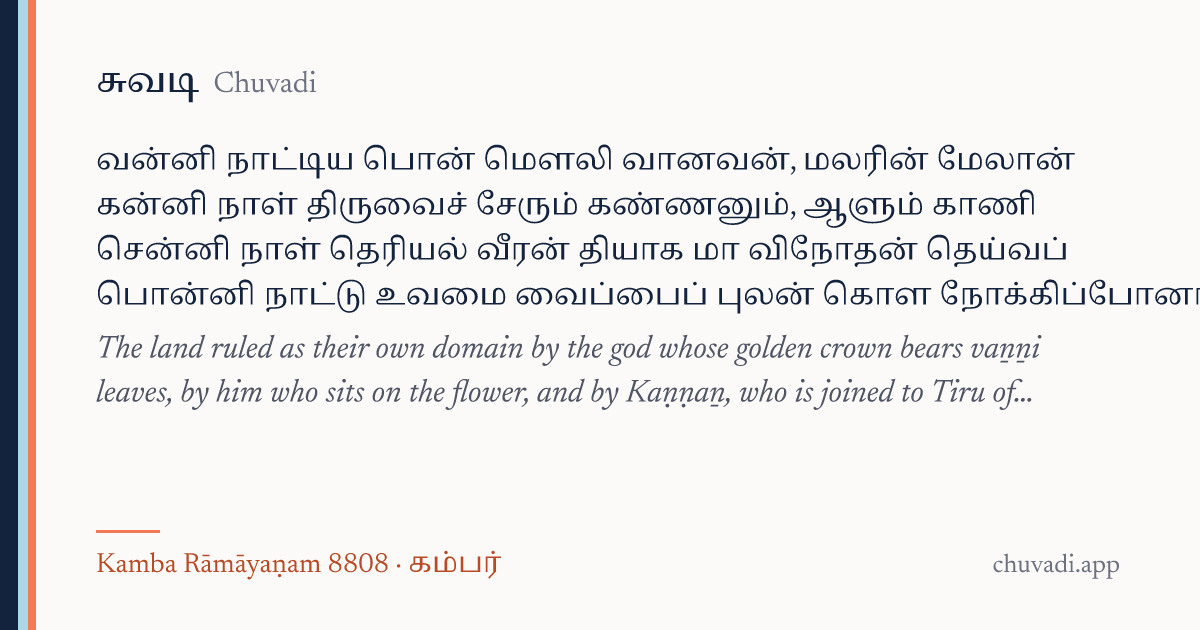
கம்பராமாயணம் 8808 · யுத்த 23.58
பாடல் · The poem
Tap a word to see its gloss in the commentary and where else it occurs.
பொருள் · Meaning in Tamil
வன்னி நாட்டிய பொன் மௌலி வானவன், மலரின் மேலான் - வன்னி இலையைத் தரித்த பொன்னிறமான சடா மகுடத்தைத் தாங்கிய சிவபெருமானும், தாமரை மலரில் வீற்றிருக்கும் பிரம தேவனும்; கன்னிநாள் திருவைச் சேரும் கண்ணனும் - என்றும் மாறாக் கன்னிமையுடைய திருமகளை மார்பிலே கொண்டுள்ள திருமாலும்; ஆளும் காணி - ஆட்சி செய்கின்ற தலமாகி; சென்னி நாள் தெரியல்வீரன் தியாக மா விநோதன் - தலையில் அன்றலர்ந்த மலர்மாலையைப் புனைந்த வீரனும், தியாக மாவிநோதன் என்ற சிறப்புப் பெயர் தாங்கியவனும் ஆகிய சோழனுடையதுமாகிய; தெய்வப் பொன்னி நாட்டு உவமை வைப்பை - தெய்வத்தன்மையுடைய காவிரி பாயும் சோழ நாட்டுக்கு உவமையாகத் தக்க அந்த உத்தரகுருவை; புலன் கொள நோக்கிப் போனான் - அனுமன் கட்புலன் கொள்ளுமாறு கருத்தொடு நோக்கிச் சென்றான்.
வன்னி - ஓர்மரம். அதன் இலை சிவபெருமான் சூடுதற்குரியது. முன்பு கோசலத்தை “காவிரிநாடன்ன கழனி நாடு ஓரீஇ” (குகப்-1) எனக் கூறிய கம்பநாடன் இங்கு உத்தர குருவைக் காவிரி பாயும் நாட்டிற்கு உவமையாகத் தக்கதென்று கூறித்தனது நாட்டுப்பற்றைக் காட்டுகின்றான். 'தியாகமாவிநோதன்' என்பது முதற்குலோத்துங்கன் முதல் பல சோழ மன்னர்க்குப் பெயராக வருதலின் இதனைக் கொண்டு கம்பனின் காலத்தை வரையறுத்தற்கியலாமற் போகின்றது.
ஆங்கிலம் · English translationAI
Translation
- The land ruled as their own domain by the god whose golden crown bears vaṉṉi leaves, by him who sits on the flower,
- and by Kaṇṇaṉ, who is joined to Tiru of ever-maiden days,
- and by the hero with a fresh garland on his head, Tiyāka Mā Vinōtaṉ: that place fit to be likened to
- the sacred land of the Poṉṉi, he went on gazing at with all his senses.
What the poem says
Aṉumaṉ gazes on Uttarakuru, ruled by Śiva with his crown of vaṉṉi leaves, by Brahmā on his lotus and by Viṣṇu with Śrī. The poet says it is fit to be compared with the sacred Kāviri country, the Chōḻa land watered by the river Poṉṉi and ruled by a king called Tiyāka Mā Vinōtaṉ.
The commentary points out the reversal. Usually a heavenly land is the standard of comparison, but Kampaṉ, out of love for his own Tamil country, makes the Chōḻa land the standard, as he did earlier when describing Kōcalam. Several Chōḻa kings bore the title Tiyāka Mā Vinōtaṉ, so it cannot be used to date the poet.