



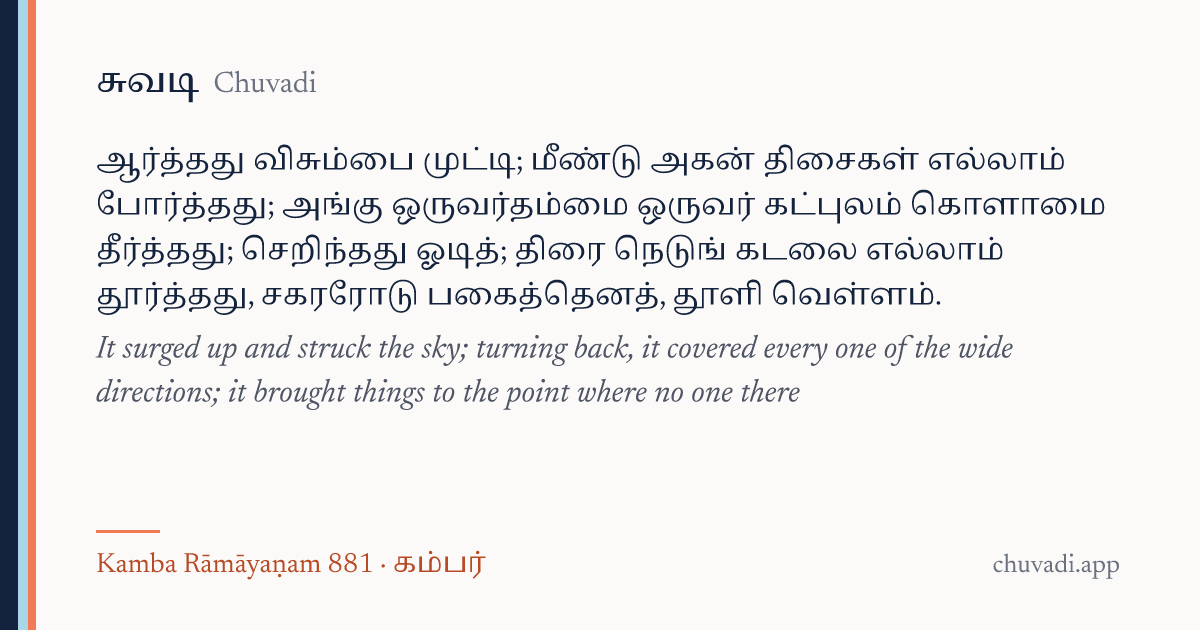
கம்பராமாயணம் 881 · பால 13.77
பாடல் · The poem
Tap a word to see its gloss in the commentary and where else it occurs.
பொருள் · Meaning in Tamil
(சேனையால் எழுப்பப்பட்ட) புழுதிக் கூட்டம்; ஆர்த்தது - நிரம்பியதாய்; விசும்பை முட்டி - வானத்தைத் தாக்கி; மீண்டு - (மேலே செல்ல இடம் இல்லாததால்) திரும்பி; அகல் திசைகள் எங்கும் - அகன்ற திசைகள் எல்லாவற்றையும்; போர்த்தது - மூடிக் கொண்டது; அங்கு - அத்திசைகளில்; ஒருவர்தம்மை ஒருவர் - ஒருவரையொருவர்; கண் புலம் கொளாமை - கண்களால் பார்க்க முடியாதபடி; தீர்த்தது - செய்து முடித்தது; செறிந்தது ஓடி - (பின்பு அது) நெருக்கமாக விரைந்து ஓடி; சகரரோடு பகைத்தது என - சகரரோடு பகை கொண்டதுபோல்; திரை நெடுங் கடலை எல்லாம் - அலைகளோடு கூடிய கடலையெல்லாம்; தூர்த்தது - தூர்த்துவிட்டது.
தூளிவெள்ள மிகுதியை விளக்கக் கடலைத் தூர்த்ததாகக் கூறப்பட்டது. - தொடர்பு உயர்வு நவிற்சியணி. தூர்த்தற்குப் 'பகைத்தென' என்று காரணம் கற்பித்துக் கூறியது ஏதுத் தற்குறிப்பேற்ற அணி.
ஆங்கிலம் · English translationAI
Translation
- It surged up and struck the sky; turning back, it covered every one of the wide directions;
- it brought things to the point where no one there
- could see anyone else; then, thick and rushing on, it filled up all the long-waved seas
- as if it bore a grudge against the Cakarar: that flood of dust.
What the poem says
The marching army raises so much dust that it hits the sky, falls back over every direction, blinds everyone, and finally fills in the ocean.
The ocean was believed to have been dug out by the Cakarar, the sons of King Cakaraṉ, which is why the sea is called cākaram. The poet pretends that the dust fills it in because it has a quarrel with them and wants to undo their work. Giving such an invented reason for a natural event is a standard figure of poetic fancy, here added to plain hyperbole.