



கம்பராமாயணம் 887 · பால 14.1
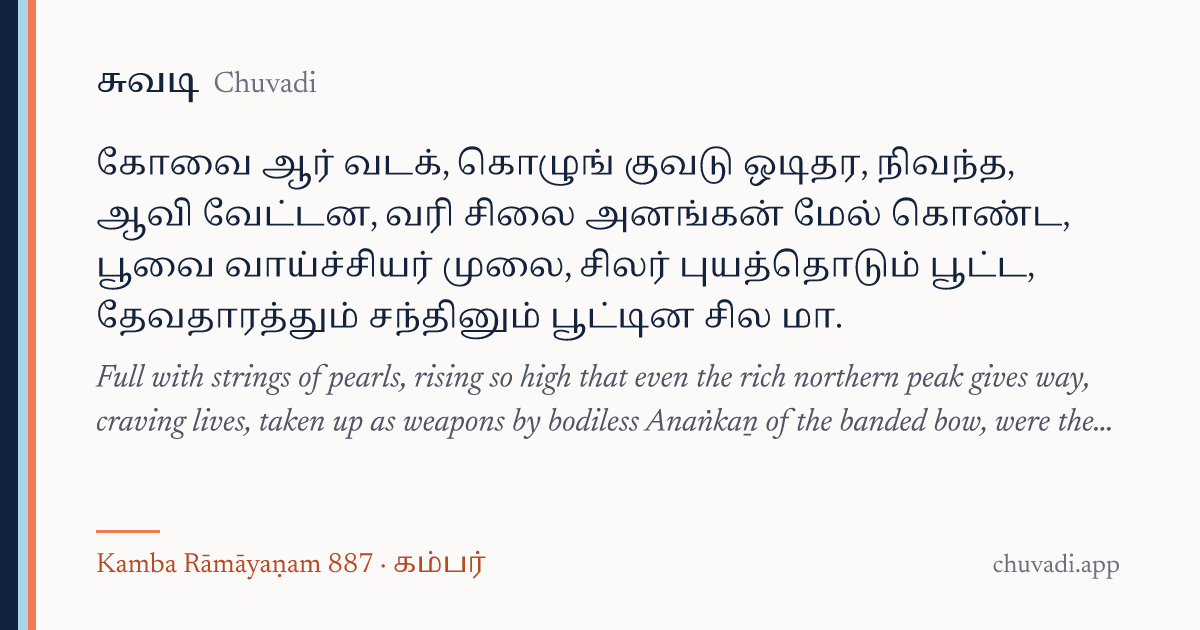
பாடல் · The poem
Tap a word to see its gloss in the commentary and where else it occurs.
பொருள் · Meaning in Tamil
கோவை ஆர் - முத்துவடம் முதலியன நிரம்ப அணைந்துள்ளனவும், வட கொழுங்குவடு - வடதிசையிலுள்ள செழித்த மேருமலையும்; ஒடிதர - தோற்கும்படி; நிவந்த - உயர்ந்துள்ளனவும்; ஆவிவேட்டன - (தம் காதலரான) ஆடவரின் உயிரை(க் கொள்ளை கொள்ள) விரும்பியனவும்; வரிசிலை அனங்கன்மேல் - கட்டமைந்த வில்லையுடைய மன்மதனால் தன் தொழிலுக்குக் (காம வேட்கை எழுப்பவும்); கொண்ட - ஆடவர் கருவியாகக் கொண்ட; முலைகளை - (தம்) கொங்கைகளை; பூவை வாய்ச்சியர் - நாகணவாய்ப் புள்ளைப் போல இனிய சொற்கள் பேசும் மகளிர்; சிலர் புயத்தொடும் பூட்ட - ஆடவர் சிலரின் புயங்களோடு அணைக்க; கோவை ஆர் வடம் - வானத்தையளாவிய ஆலமரத்தின்; கொழுங் குவடு ஒடிதர - செழித்த கிளைகள் ஒடியும்படி; நிவந்த - ஓங்கியனவும்; ஆவிவேட்டன - (தண்ணீர் பருக) தடாகத்தை விரும்பியனவும்; வரிசிலை அனங்கன் - கட்டமைந்த வில்லையுடைய மன்மதனைப் போன்ற வீரனை; மேல்கொண்ட - (தம்) மேல் கொண்டிருப்பனவுமான; சில மா - சில யானைகள்; தேவதாரத்தும் - தேவதார மரங்களிலும்; சந்தினும் - சந்தன மரங்களிலும்; பூட்டின - கட்டப்பட்டன.
சந்திரசயில மலையில் யானைகளின் மேல் இருந்த மகளிர் தம் தனங்கள் கணவரின் தோள்களில் படுமாறு அவரைத் தழுவியவாறு கீழே இறங்கினர்; அந்த யானைகள் மரங்களில் கட்டப்பட்டன. சிலேடையணி - கொங்கைக்கும் யானைக்கும் சிலேடை. தேவதாரு, சந்தனம் என்ற மரங்களில் யானைகள் பூட்டப்பட்டனபோல, பெண்களால் தனங்கள் ஆண்களின் தோள்களில் பூட்டப்பட்டன என்ற உவமை தொனிக்கிறது.
தனங்களுக்கு யானைகளும், தோள்களுக்குக் கட்டுத்தறியாக உதவும் மரங்களும் உவமை. தனங்கள் தம் காதலர்க்குக் காமவேதனையை மிகுதியாக உண்டாக்குவதால் 'அனங்கன் மேற்கொண்ட' என்றும், 'ஆவி வேட்டன' என்றும் கூறினார்
முலை - 'ஆவி வேட்டன' - அகிற்புகையை விரும்பின; வரிசிலை அனங்கன் மேல் கொண்ட - கட்டமைந்த கரும்பு வில்லையும் மன்மதனையும் தொய்யிலாக மேலே எழுதப்பெற்றன.
ஆங்கிலம் · English translationAI
Translation
- Full with strings of pearls, rising so high that even the rich northern peak gives way,
- craving lives, taken up as weapons by bodiless Anaṅkaṉ of the banded bow, were the breasts
- that some myna-voiced women fastened against men's arms; and in the same words,
- some elephants were fastened to deodar trees and sandal trees.
What the poem says
The army has camped on the Moon Mountain, and this verse turns on a double meaning. Each phrase fits both the women's breasts and the elephants. The breasts are hung with pearls, taller than Mount Mēru, eager to take lovers' lives, and are weapons of the love god Anaṅkaṉ. Read the other way, the elephants are tall enough to break the boughs of banyans, eager for water, and carry riders as handsome as the love god.
As the women climb down from the elephants, they hold on to their husbands, pressing their breasts against the men's arms. Meanwhile the elephants are tied to deodar and sandal trees. The pun sets the two "tyings" side by side: the breasts are the elephants, and the men's arms are the tethering trees.