



கம்பராமாயணம் 8872 · யுத்த 24.6
பாடல் · The poem
Tap a word to see its gloss in the commentary and where else it occurs.
பொருள் · Meaning in Tamil
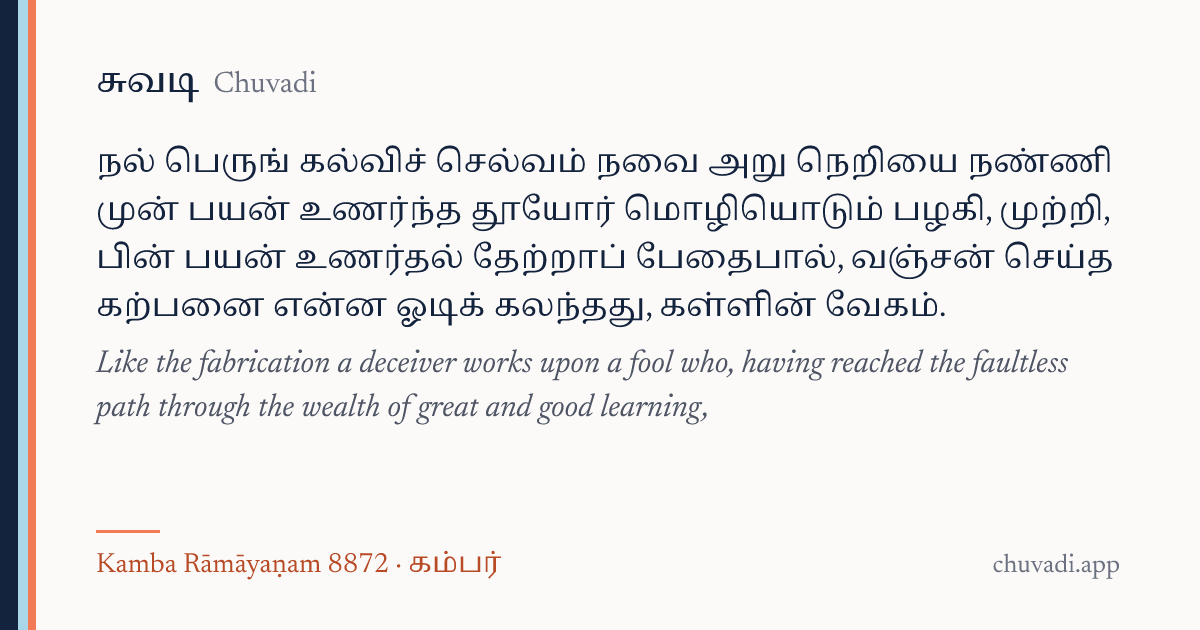
நல்பெருங்கல்விச் செல்வம் நவைஅறு நெறியை நண்ணி - நல்லதாகிய பெரிய கல்விச் செல்வத்தால் குற்றமற்றவழியைப் பொருந்தி; முன்பயன் உணர்ந்த தூயோர் மொழியொடும் பழகி முற்றி - முற்காலத்து அந்நெறியின் பயனை உணர்ந்த தூயோர்தம் உபதேச மொழியோடு பழகி முதிர்ச்சியுற்று; பின்பயன் உணர்தல் தேற்றாப் பேதைபால் வஞ்சன் செய்த - பின்னால் அந்த உபதேச மொழியினால் உளதாம்பயனை (உணரவேண்டி இருக்க, அதனை) உணர்தல் இல்லாத பேதைபால் வஞ்சகன் ஒருவன் செய்த; கற்பனை என்ன ஓடிக் கலந்தது கள்ளின் வேகம் - கற்பனை, அப்பேதையின் உள்ளத்தில் விரைந்த நம்பப்பட்டு பரவுவது போலக் கள்ளின் வேகம் மகளிர் கூட்டத்தில் விரைந்து பரவியது.
நூலறிவோடு கேள்வி ஞானமும் எய்தி அதன் பயனை உணராதாரைப் பேதை என்றார். “ஓதியுணர்ந்தும் பிறர்க்குரைத்தும் தானடங்காப் பேதையிற் பேதையாரில்” (குறள்-834) என்பது காண்க.
ஆங்கிலம் · English translationAI
Translation
- Like the fabrication a deceiver works upon a fool who, having reached
- the faultless path through the wealth of great and good learning,
- and having grown ripe in the words of the pure who knew its fruit of old,
- still cannot grasp its fruit thereafter: so the force of the toddy ran through them and mingled.
What the poem says
The drink takes hold of the women quickly. The poet compares this to a con man's lie working on a learned fool.
Such a man has studied a great deal and heard the teachings of the wise, but never understood what they were for. So a deceiver's tale spreads through his mind at once. The commentary cites the Tirukkuṟaḷ couplet that calls one who learns and teaches but cannot govern himself the greatest of fools.