



கம்பராமாயணம் 8882 · யுத்த 24.16
பாடல் · The poem
Tap a word to see its gloss in the commentary and where else it occurs.
பாட வேறுபாடு · Project Madurai reads
பொருள் · Meaning in Tamil
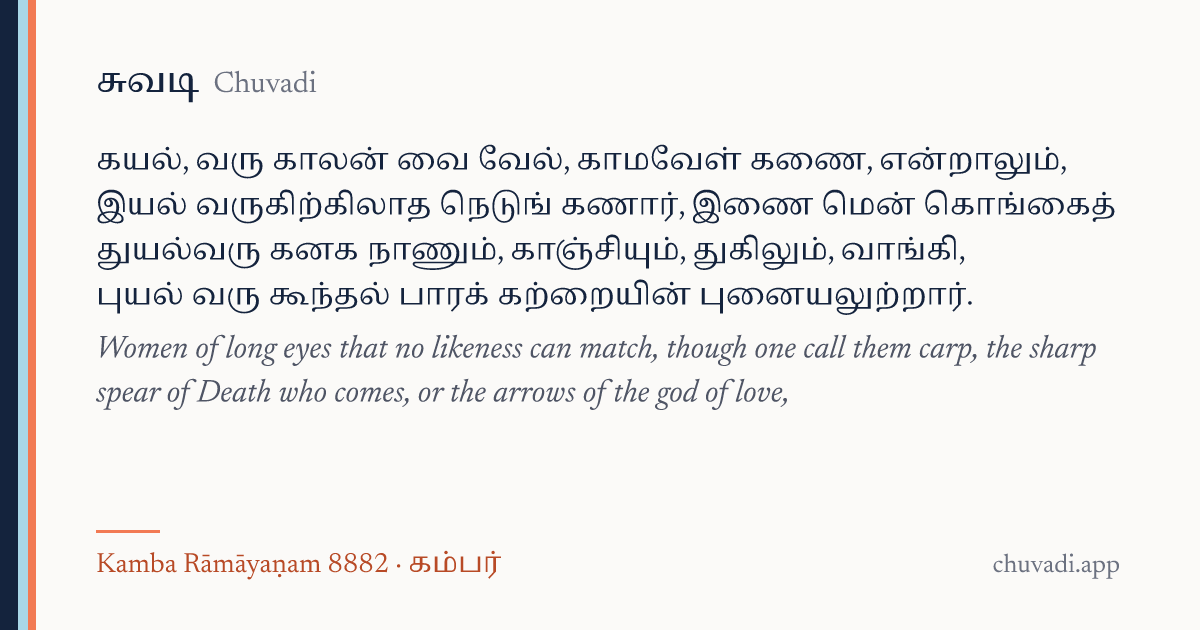
கயல் வருகாலன்வைவேல் காமவேள்கணை என்றாலும் - கெண்டை மீனும், உயிரைக் கொள்ளவருகின்ற எமன் கையிலுள்ள கூரிய வேற்படையும், மன்மதனுடைய கணையும் என உவமைகூறினும், இயல் வருகிற்கிலாத நெடுங்கணார் - ஒப்பமை அமையாத நீண்ட கண்களையுடைய பெண்கள்; இணைமென் கொங்கைத் துயல்வருகனக நாணும் காஞ்சியும், துகிலும் - தம் இணையான மென்மை பொருந்திய தனங்களின் மேல் அசைகின்ற பொன் சரட்டையும், மேகலையையும், புடவையையும்; வாங்கி, புயல்வரு கூந்தல் பாரக் கற்றையின் புனையலுற்றார் - கையில் வாங்கி மேகம் போன்ற கூந்தலாகிய கனமுடைய கற்றையில் அணியத் தொடங்கினார்கள்.
ஆங்கிலம் · English translationAI
Translation
- Women of long eyes that no likeness can match, though one call them carp,
- the sharp spear of Death who comes, or the arrows of the god of love,
- took the golden chains swinging over their two soft breasts, their girdles and their silks,
- and set about wearing them in the heavy cloud-like masses of their hair.
What the poem says
The women's eyes are beyond any comparison: carp, Death's spear and Kāma's arrows all fall short.
But they are now so drunk that they muddle their clothing. They pull off the gold chains from their breasts, their girdles and their saris and try to wear them in their hair.