



கம்பராமாயணம் 8940 · யுத்த 25.53
பாடல் · The poem
Tap a word to see its gloss in the commentary and where else it occurs.
பாட வேறுபாடு · Project Madurai reads
பொருள் · Meaning in Tamil
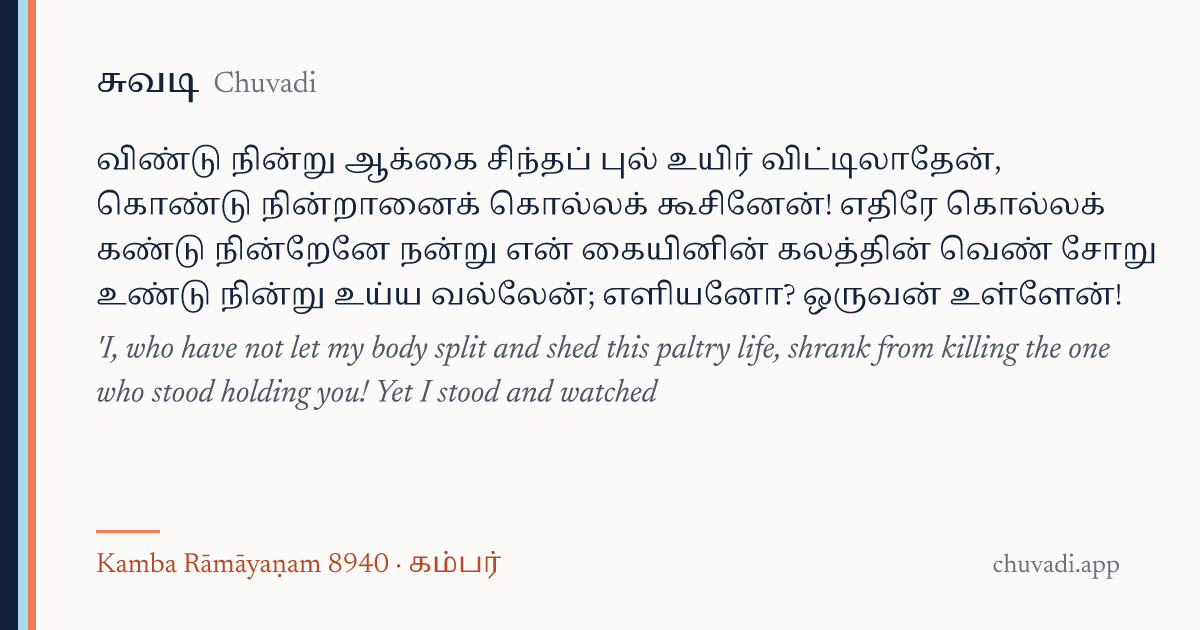
கொண்டு நின்றானைக் கொல்லக் கூசினேன்! - நின்னைக் கொல்லுதற்காக கையில் கொண்டு நின்ற அரக்கனைக் கொல்லக் கூசினேன்; எதிரே கொல்லக் கண்டு நின்றேனே - ஆனால் என் கண் எதிரே உன்னைக் கொல்லக் கண்டு நின்றேனே! விண்டு நின்று ஆக்கை சிந்தப் புல் உயிர் விட்டிலாதேன் - என் உடம்பு நின்று பிளந்து இந்தச் சிறிதாகிய என்னுயிரை விடத்துணியாதவனாய்; என்கையினின் கலத்தின் வெண் சோறு - இன்னும் கையினால் கலத்திலுள்ள வெண்சோற்றினை; உண்டு நின்று உய்ய வல்லேன் நன்று - உண்டு நின்று உயிர் வாழ்வதற்கு வல்லவனாய் - வாளாநின்றேன், நல்லதே! எளியனோ ஒருவன் உள்ளேன் - இத்தகைய யான் எளியவனோ? ஒப்பற்றவனாகவே உள்ளேன்.
ஆங்கிலம் · English translationAI
Translation
- 'I, who have not let my body split and shed this paltry life,
- shrank from killing the one who stood holding you! Yet I stood and watched
- him kill you before my eyes; fine, I am still able to live on,
- eating white rice from a plate with my hand; am I some lowly one? I am peerless indeed!'
What the poem says
Aṉumaṉ's self-reproach grows sharper. He hesitated to kill the rākṣasa who held Cītai, yet he could stand and watch her slaughtered. His body did not burst apart; he can still go on eating rice from a plate and living. With bitter sarcasm he calls himself 'peerless', meaning peerless in disgrace.