



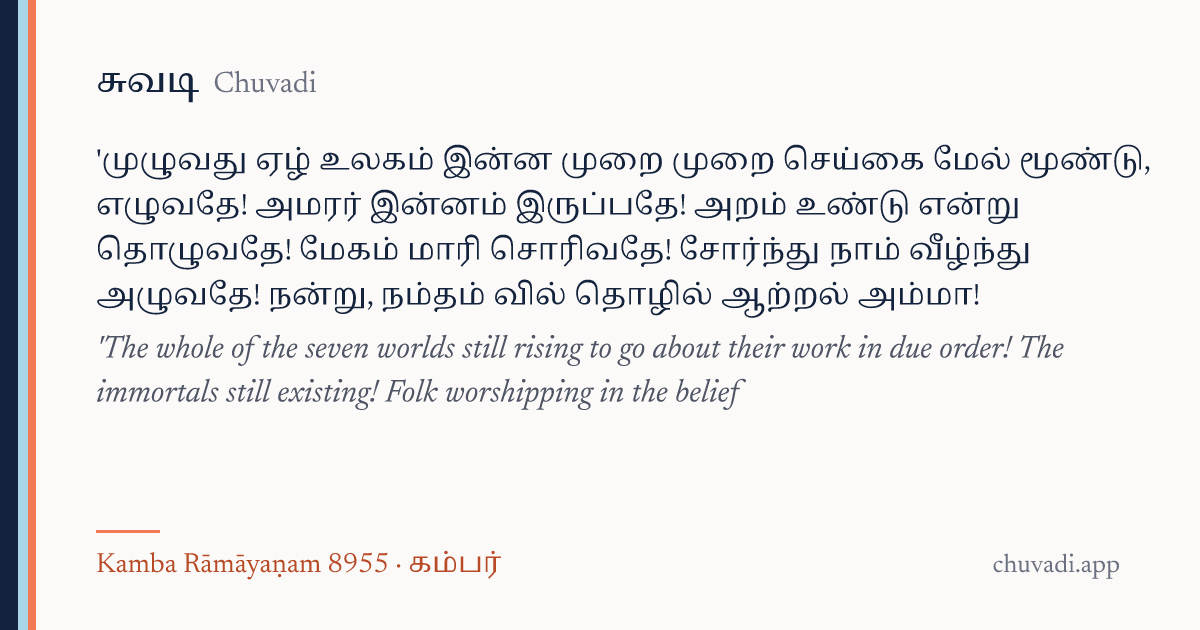
கம்பராமாயணம் 8955 · யுத்த 25.68
பாடல் · The poem
Tap a word to see its gloss in the commentary and where else it occurs.
பொருள் · Meaning in Tamil
இன்ன ஏழ் உலகம் முழுவதும் - (சீதையை அரக்கன் கொன்றபின் இன்னமும், ஏழுஉலகங்கள் முழுவதும்; முறை முறை செய்கைமேல் மூண்டு எழுவதே - ஒழுங்காகத் தத்தம் செயற்பாட்டின் மீது மூண்டு எழுவதா? அமரர் இன்னும் இருப்பதே அறம் உண்டு என்று தொழுவதே - தேவர்கள் இன்னமும் இருப்பதா? அறம் என்ற ஒன்று உண்டு என எண்ணி அதனைத்தொழுது கொண்டிருப்பதா? மேகம் மாரி சொரிவதே! சோர்ந்து நாம் வீழ்ந்து அழுவதே! - இனியும் மேகம் மழையைப் பொழிவதா? (இவற்றையெல்லாம் பார்த்துக் கொண்டு) நாம் சோர்ந்து வீழ்ந்து அழுது கொண்டிருப்பதா? நம்தம் வில் தொழில் ஆற்றல் நன்று அம்மா! - நம்முடைய வில் தொழில் வலிமை மிக நன்றாயிருக்கின்றது!
இச்செய்யுளில் ஏகார வினாக்கள் எதிர்மறைப் பொருள்காட்டி நின்றன. ‘இன்னும் எல்லா லோகமும் அழியாமலிருக்கின்றனவே என்று சீற்றமானார் இளவல்’ என்பது பழைய உரை. முறையற்ற ஒரு செயல் நடந்த பின்பு இனி முறையான செயல்கள் நடப்பதாக நினைத்து நம் வில்வலிமறந்து சோர்ந்து புலம்புவதில் பொருளில்லை என்கிறான் இலக்குவன். அம்மா - வியப்பிடைச் சொல்.
ஆங்கிலம் · English translationAI
Translation
- 'The whole of the seven worlds still rising to go about their work in due order!
- The immortals still existing! Folk worshipping in the belief
- that there is dharma! The clouds pouring rain! And we, limp, falling down
- and weeping! Fine indeed is the might of our archery!'
What the poem says
Ilakkuvaṉ is outraged that the world carries on as usual after such a crime: the seven worlds go about their business, the gods still exist, people still worship dharma, the clouds still rain, while the brothers lie weeping. Each exclamation is really a question expecting 'it should not be so'. He ends with sarcasm: a fine use of their famous archery! An old commentary notes that the younger brother is angry that the worlds have not yet been destroyed.