



கம்பராமாயணம் 8971 · யுத்த 25.84
பாடல் · The poem
Tap a word to see its gloss in the commentary and where else it occurs.
பொருள் · Meaning in Tamil
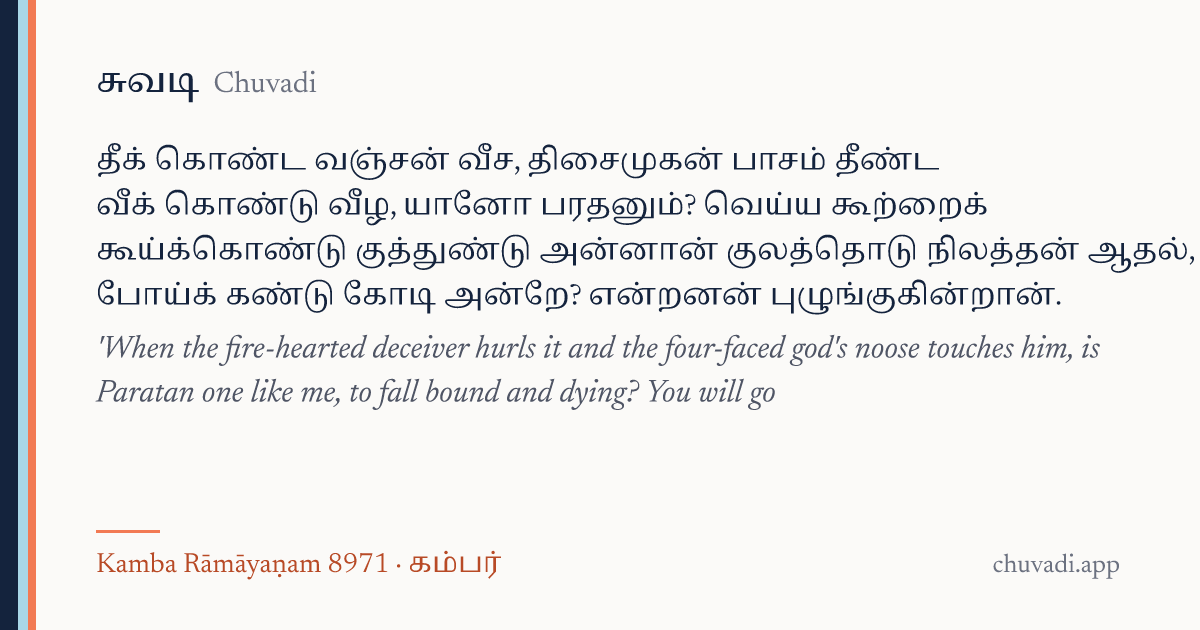
தீக்கொண்ட வஞ்சன் வீச திசை முகன் பாசம் தீண்ட - தீமையை இயல்பாகக் கொண்ட வஞ்சனாகிய இந்திரசித்து வீசியதால் பிரமன் அளித்த நாகபாசம் வந்து தீண்டிய உடனே; வீக்கொண்டு வீழ, யானோ பரதனும் - இறந்து வீழ யானோ பரதனும்? (யான் அல்லன் அப்பரதன்); அன்னான் குத்துண்டு வெய்ய கூற்றைக் கூய்க் கொண்டு - அவ் இந்திரசித்து (பரதனால்) குத்துப்பட்டு கொடிய யமனைக் கூவி அழைத்தவாறு; குலத்தொடு நிலத்தன் ஆதல் - தன் இனத்தவரோடு நிலத்தில் வீழ்வதனை; போய்க்கண்டு கோடி அன்றே? என்றனன் புழுங்குகின்றான் - நீயே போய் நேரே கண்டு கொள்வாய் அல்லவோ? என்று கூறினான் மனம்புழுங்குகின்றவனாகிய இலக்குவன்.
இராமனைத் தேற்றக்கூறினான் என்பதிலும் பரதன் தன்னினும் பேராற்றல் உடையவன் என்பதை உணர்ந்தே கூறினான் என்பதே பொருந்தும். ‘வள்ளலையே அனையான் அல்லவோ’ (கம்ப.657) பரதன்.
ஆங்கிலம் · English translationAI
Translation
- 'When the fire-hearted deceiver hurls it and the four-faced god's noose touches him,
- is Paratan one like me, to fall bound and dying? You will go
- and see for yourself how that one, stabbed, calls out to cruel Death
- and lies on the ground with all his kin,' said he, smouldering within.
What the poem says
Ilakkuvaṉ, himself seething, says Paratan is not like him: when Intiracittaṉ's Brahmā-given serpent noose struck Ilakkuvaṉ earlier in the war he fell, but Paratan will not. Irāmaṉ will see Intiracittaṉ run through by Paratan, crying out to Yama, and lying on the ground with his clan. The commentary notes Ilakkuvaṉ says this not merely to comfort his brother but because he truly regards Paratan as mightier than himself, 'like the generous one', Irāmaṉ, as the poet says elsewhere.