



கம்பராமாயணம் 8994 · யுத்த 26.10
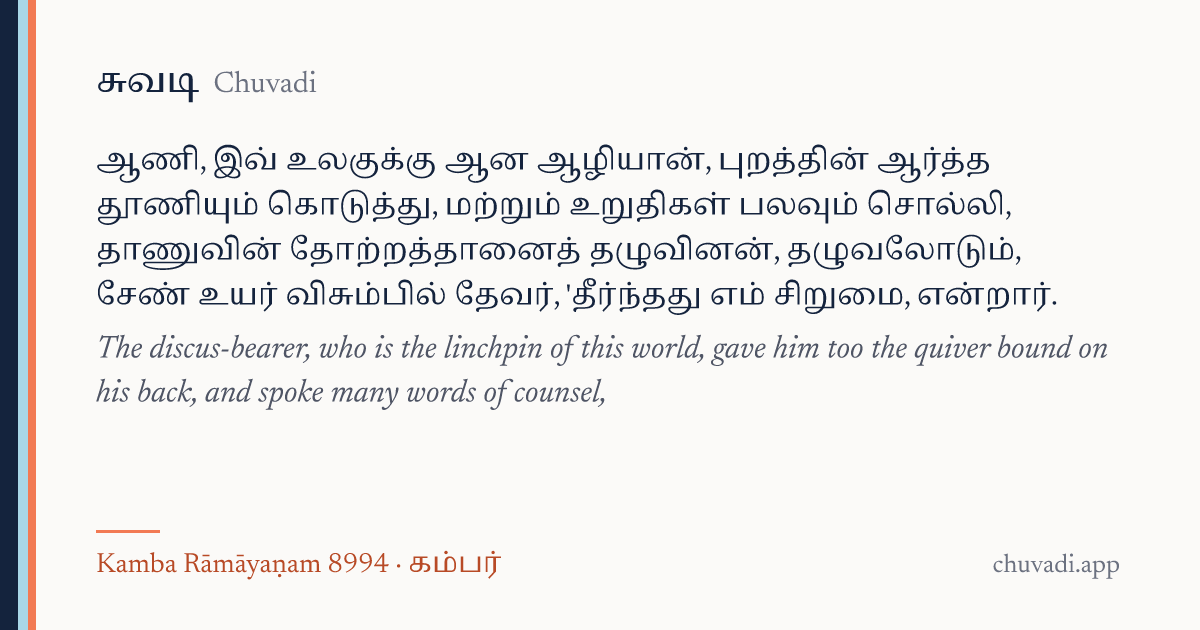
பாடல் · The poem
Tap a word to see its gloss in the commentary and where else it occurs.
பொருள் · Meaning in Tamil
இவ்வுலகுக்கு ஆணி ஆன ஆழியான் - இவ் உலகினுக்கு அச்சாணி போல நின்று முறைப்படுத்துகின்ற சக்கரப் படையினை உடைய (திருமாலாகிய) இராமன்; புறத்தின் ஆர்த்த தூணியும் கொடுத்து - தன் முதுகிற் கட்டியுள்ள அம்புப் புட்டிலையுங் கொடுத்து; மற்றும் உறுதிகள் பலவும் சொல்லி - மற்றும் உறுதி மொழிகள் பலவும் கூறி; தாணுவின் தோற்றத் தானைத் தழுவினன் - சிவபெருமானைப் போன்ற தோற்றத்தை உடையவனான இலக்குவனைத் தழுவிக்கொண்டான்; தழுவலோடும் சேண் உயர் விசும்பில் தேவர் - அங்ஙனம் தழுவி (ப் போர்க்கு) விடை கொடுத்தவுடனே மிக உயர்ந்த விண்ணுலகவராகிய தேவர்கள்; தீர்ந்தது எம் சிறுமை என்றார் - எம்முடைய துன்பம் தொலைந்தது என்று கூறி மகிழ்ந்தனர்.
ஆணி - தேரின் சக்கரம் கழலாதபடி அச்சின் கடையிற் செருகப்படுவது. தேரின் இயக்கம் தடைப்படாமல் நின்று காப்பது. இங்ஙனமே உலகம் இடையூறின்றி இயங்குதற்குத் தோன்றி நிற்றலின் இராமனை ‘இவ்வுலகுக்கு ஆணி ஆன ஆழியான்’ என்றார். புறம் - முதுகு. ஆர்த்த - கட்டிய. தூணி - அம்புப்புட்டில் தாணு - சிவபெருமான். அப்பெருமான் ‘செம்மேனி அம்மான்’ ஆகையினால் அந்நிறத்தினைக் கொண்ட இலக்குவனை ‘தாணுவின் தோற்றத்தான்’ என்றார்.
சிறுமை - துன்பம். இந்திரசித்தனால் அடியுண்ட அவமானத்தால் ஏற்பட்ட நாணம் எனினுமாம்.
ஆங்கிலம் · English translationAI
Translation
- The discus-bearer, who is the linchpin of this world,
- gave him too the quiver bound on his back, and spoke many words of counsel,
- and embraced him whose form was like Tāṇu's; and as he embraced him,
- the gods in the high heavens said, 'Our misery is over.'
What the poem says
Irāmaṉ, the discus-bearing Viṣṇu who holds the world together as a linchpin keeps a wheel on its axle, also gives Ilakkuvaṉ his quiver and words of encouragement, then embraces him. Ilakkuvaṉ, ruddy-complexioned, is likened to Tāṇu (Śiva), 'the red-bodied lord'. At the sight the gods declare that their humiliation at Intiracittaṉ's hands is about to end.