



கம்பராமாயணம் 9034 · யுத்த 26.50
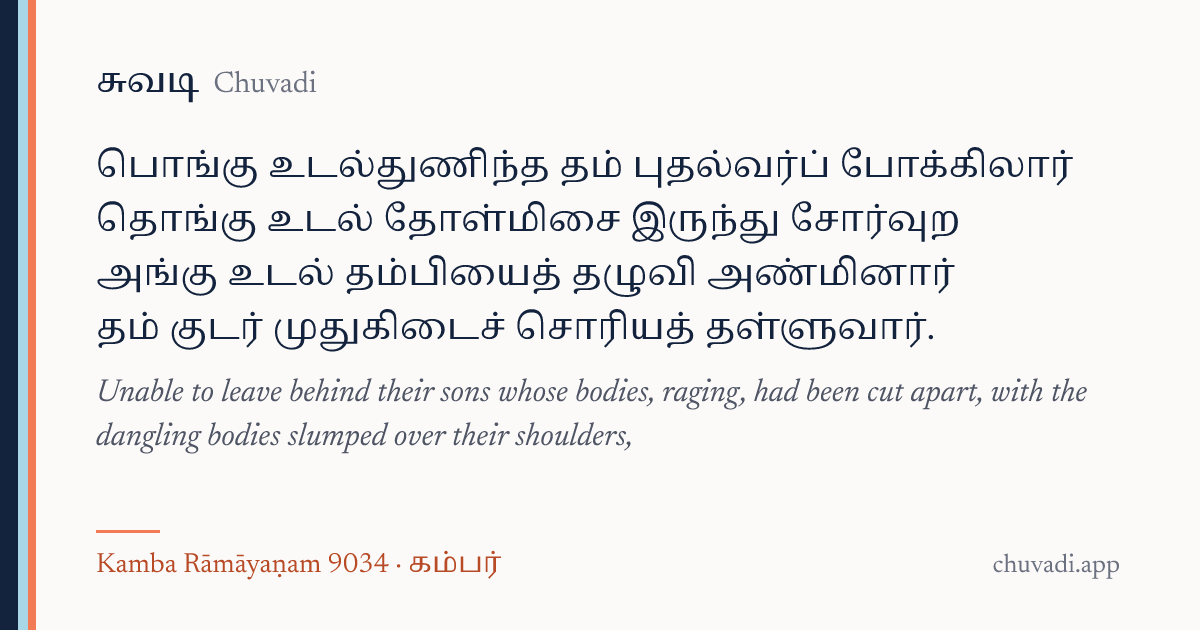
பாடல் · The poem
Tap a word to see its gloss in the commentary and where else it occurs.
பொருள் · Meaning in Tamil
தம் குடர் முதுகிடைச் சொரியத் தள்ளுவார் - தமது குடர் முதுகின் வழியாகவெளிப்பட்டுச் சரிந்த தொங்க, (அதனை ஒரு கையினால்) உள்ளே தள்ளிக்கொண்டு (மீளவும் போர்முகஞ்) செல்லும் அரக்கர் வீரர் சிலர்; பொங்கு உடல்துணிந்த தம் புதல்வர்ப் போக்கிலார் - வெகுண்டு பொருது, உடல் துணிக்கப்பட்ட தம் அருமைப் புதல்வரை (அங்கேயே) விட்டுச் செல்ல ஆற்றாதவராய்; தொங்கு உடல் தோள் மிசை இருந்து சோர்வுற - தொங்கும் இயல்பினதாகிய (அம்மைந்தரது) உடம்பு (தம்) தோள் மீதிருந்தவாறு சோர்ந்து தொங்க; அங்கு உடல் தம்பியைத் தழுவி அண்மினார் - அவ்விடத்திற் (பகைவரோடு) பொருது நிற்கும் தம்பியைத் தழுவிக்கொண்டு (பகைவர் சேனையை எதிர்த்து) நெருங்கினார்கள்.
ஆங்கிலம் · English translationAI
Translation
- Unable to leave behind their sons whose bodies, raging, had been cut apart,
- with the dangling bodies slumped over their shoulders,
- embracing a younger brother who was fighting there, they pressed forward,
- pushing back in their own entrails as they spilled out at the back.
What the poem says
Some rākṣasa warriors, their own guts spilling out through wounds in their backs, push them back in with one hand and fight on. Unwilling to abandon their dead sons, they carry the limp bodies on their shoulders, and with an arm round a younger brother still fighting beside them, they advance on the enemy.