



கம்பராமாயணம் 908 · பால 14.22
பாடல் · The poem
Tap a word to see its gloss in the commentary and where else it occurs.
பொருள் · Meaning in Tamil
கழி சிந்திய - கழியிலே போய்விடுமாறு; தரம் பயில் - உயர்ந்து எழுகின்ற; தழங்கு தரங்கத்து - ஒலிக்கும் அலைகளிலிருந்து; எழுந்து - மேல் எழுந்து; இடை பிறழ்ந்து ஒளிர் - இடையிடையே பிறழ்ந்து விளங்குகின்ற; கொழுங் கயல்கள் என்ன - கொழுத்த கயல் மீன்கள் என்று சொல்லும்படி; விழுந்த பனி அன்ன - (வானத்திலிருந்து) விழுந்த பனியைப் போன்று; திரை வீசு - தோன்றுகின்ற திரைச் சீலைகள் (காற்றால்) மோதப்படுகின்ற; புரைதோறும் - இடங்களிலெல்லாம் (கூடாரங்களில்); கழங்கு பயில் - கழங்கு ஆடுகின்ற; மங்கையர் கருங்கண் - மகளிரின் கரிய கண்கள்; மிளிர்கின்ற - பிறழ்ந்து விளங்கின.
காற்றினால் திரைச் சீலைகள் வீசியெறியப்படும்போது அங்குள்ள பெண்களின் கண்கள் அலை வீசும்போது அங்கே எழுந்து தோன்றும் கயல் மீன்களைப் போலப் பிறழ்ந்தன என்பார் - தற்குறிப்பேற்ற உவமையணி. அலையும் திரைச் சீலைக்கு அலைகளும், அவற்றிடைப் பிறழும் மகளிர் கண்களுக்கு அலையில் பிறழும் கயல்மீன்களும் உவமைகளாகும்.
ஆங்கிலம் · English translationAI
Translation
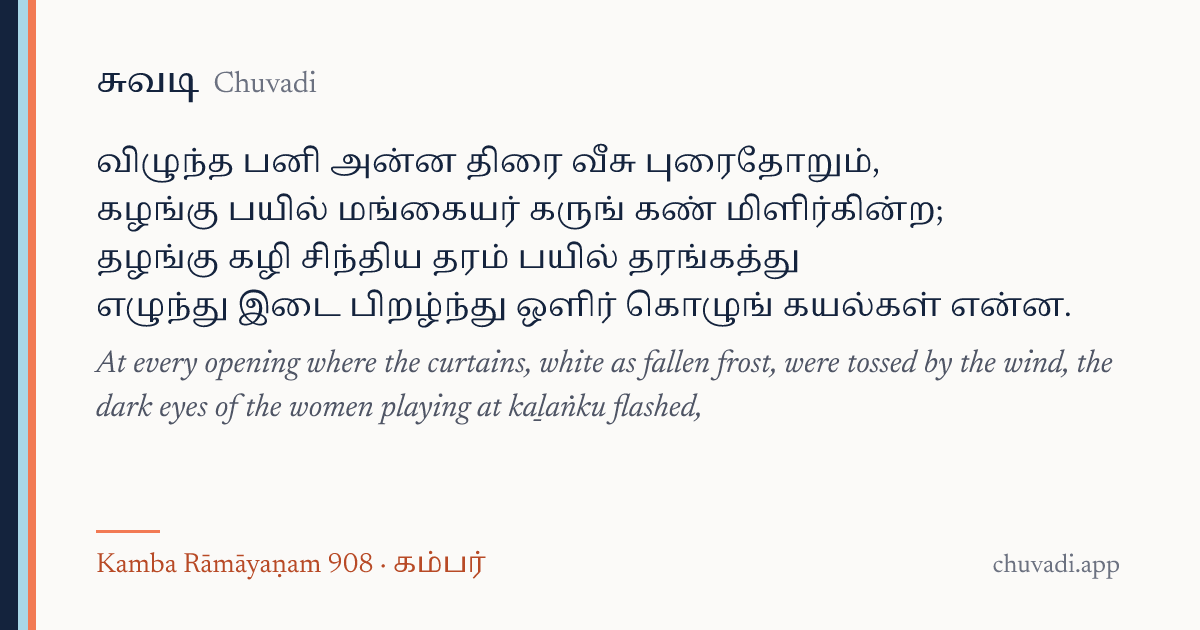
- At every opening where the curtains, white as fallen frost, were tossed by the wind,
- the dark eyes of the women playing at kaḻaṅku flashed,
- like plump carp that leap up from the roaring, towering waves
- flung into the backwaters, and gleam as they flicker in between.
What the poem says
Inside the tents the women pass the time with kaḻaṅku, a game of tossing and catching pebbles or seeds. When the wind lifts the white curtains, their dark, darting eyes flash into view.
The poet compares the billowing curtains to waves and the women's eyes to kayal fish. In classical Tamil poetry a woman's eye is traditionally likened to this fish, which shows itself for a moment as it leaps between the breaking waves.