



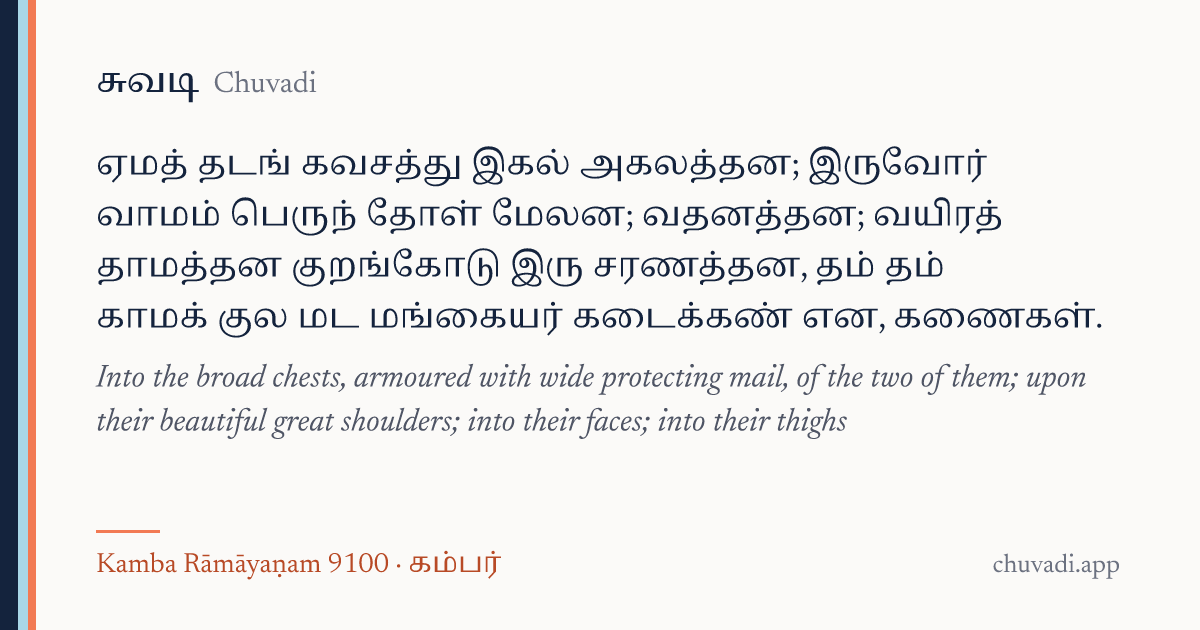
கம்பராமாயணம் 9100 · யுத்த 26.116
பாடல் · The poem
Tap a word to see its gloss in the commentary and where else it occurs.
பாட வேறுபாடு · Project Madurai reads
பொருள் · Meaning in Tamil
தம்தம் கணைகள், காமக்குல மட மங்கையர் கடைக்கண் என - இலக்குவன், இந்திரசித்து ஆகிய இருவரும் எய்த அம்புகள், காதல் வயப்பட்ட இளமை வாய்ந்த குலமகளிரின் கடைக்கண்களைப் போன்று (ஊடுருவவல்லனவாய); இருவோர் ஏமத்தடங் கவசத்து இகல் அகலத்தன - அவ்விருவரின் பாதுகாவலாக அமைந்த அகன்ற கவச மணிந்த வலிய மார்புகளிலே பாய்ந்தன; வாமம் பெருந்தோள் மேலன வதனத்தன - அவர்களின் அழகிய பெரிய தோள்களின் மேலே சென்றன; முகங்களிலே பதிந்தன; வயிரத்தாமத்தன; குறங்கோடு இரு சரணத்தன - வைரம் போன்று வலிய அழகியவனாகிய துடைகளுடனே இருபாதங்களிலும் ஊன்றித் தங்கின.
மங்கையர் கடைக்கண் அம்புக்கு, 'நல்லார் கொழுங்கயற்றடங்கண்போலும், அம்பு கொண்டரசர் மீண்டார்' (சீவக - 439) என்பதும் புற. வெண்பா - 84-ஆம் பாவும் காண்க.
ஆங்கிலம் · English translationAI
Translation
- Into the broad chests, armoured with wide protecting mail, of the two of them;
- upon their beautiful great shoulders; into their faces; into their thighs
- strong as diamond, and into both their feet — went the arrows of each,
- like the side-glances of young women of good family stricken with love.
What the poem says
The arrows of Ilakkuvaṉ and Intiracittu strike each other's armoured chests, shoulders, faces, thighs and feet. The poet compares them to the sidelong glances of young women in love, which pierce a man's heart just as surely.
The commentary points to the same old comparison of women's glances with arrows in the Cīvaka Cintāmaṇi and in the Puṟapporuḷ Veṇpāmālai.