



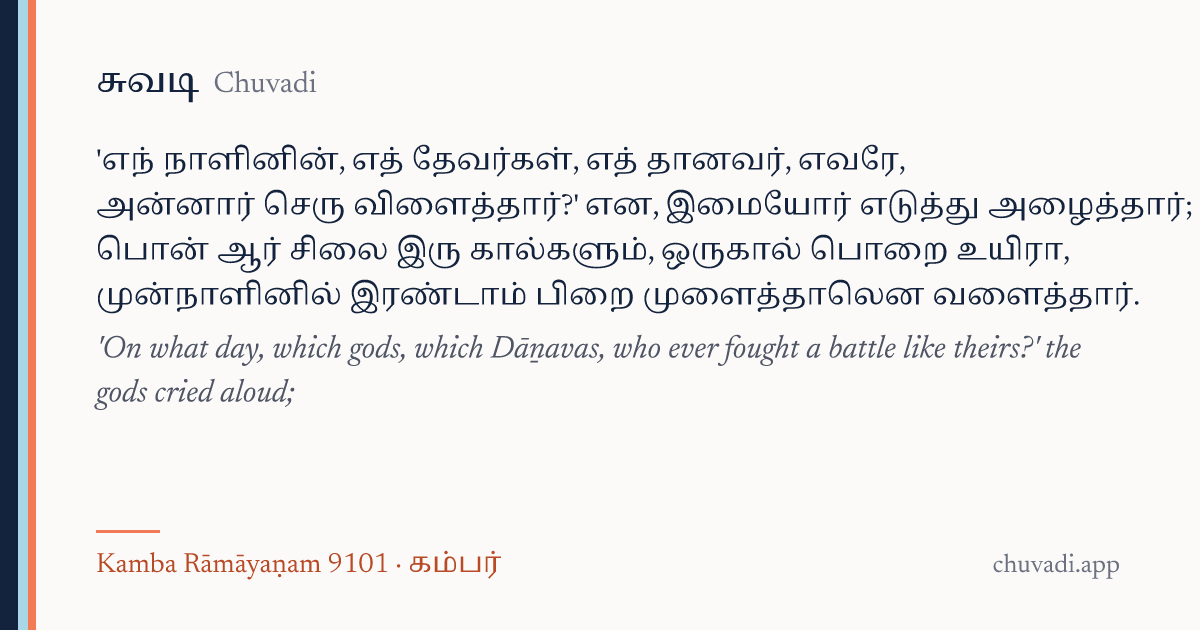
கம்பராமாயணம் 9101 · யுத்த 26.117
பாடல் · The poem
Tap a word to see its gloss in the commentary and where else it occurs.
பாட வேறுபாடு · Project Madurai reads
பொருள் · Meaning in Tamil
முன்னாளினில் இரண்டாம் பிறை ஒருகால் பொறை உயிரா முளைத்தால் என - பூர்வபட்சத்தில் இரண்டாகிய பிறைச் சந்திரன் ஒரேசமயத்தில் வெளிப்பட்டு முளைத்தாற் போன்று; பொன்னார் சிலை இருகால்களும் வளைத்தார் - பொன் கட்டுக்கள் அமைந்த விற்களின் இரு முனைகளையும் (இருவரும்) ஒரு சேர வளைத்தார்கள்; இமையோர் - (அது கண்ட) தேவர்கள்; எந்நாளினின், எத்தேவர்கள் எத்தானவர் - “எந்த நாளிலே, எந்த தேவர்கள் எந்த அசுரர்கள்; எவரே அன்னார் செருவிளைத்தார் என எடுத்து அழைத்தார் - வேறு யாவர் (இலக்குவன் இந்திரசித்து என்னும்) இவர்களுடைய செருத்தொழிலை ஒத்துப் போர்புரிந்தார்கள்?” என எடுத்துக் கூறிப் புகழ்ந்தார்கள்.
பொறை உயிர்த்தல் - கருவுயிர்த்தல்; இங்கு வெளிப்படுதல் என்னும் பொருளில் வந்தது. முன்னாள் - பூர்வபட்சம். ஒரு கால் இருகால்களும் வளைத்தல்: 'வரையென்பொருகாலிருகால் வளைய நிமிர்த்து' (திருக்கோ. 152).
ஆங்கிலம் · English translationAI
Translation
- 'On what day, which gods, which Dāṉavas, who ever
- fought a battle like theirs?' the gods cried aloud;
- they bent both ends of their gold-bound bows at once,
- as if two crescent moons had been born together in the bright fortnight.
What the poem says
The gods exclaim that no gods or demons in any age have ever fought a battle like this one.
Each warrior draws his gold-bound bow so fully that its two ends curve together, and the two bows look like twin crescent moons rising at the same moment in the waxing fortnight. The commentary explains the rare word for 'giving birth' used here to mean 'appearing', and cites a parallel line from the Tirukkōvaiyār about bending both ends of a bow at once.