



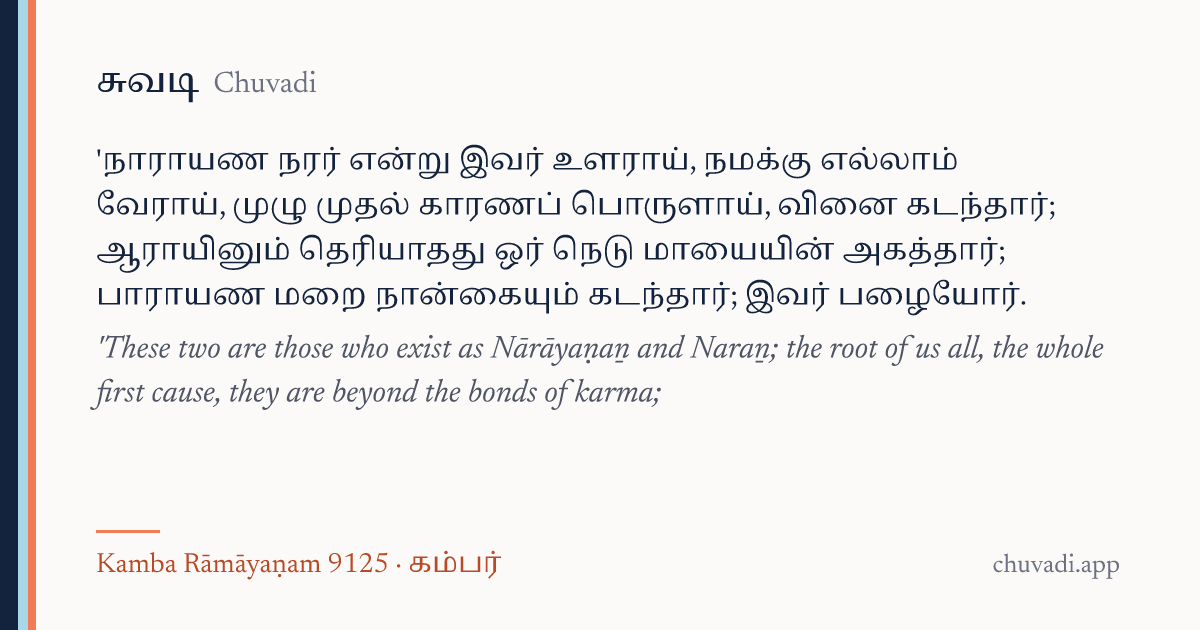
கம்பராமாயணம் 9125 · யுத்த 26.141
பாடல் · The poem
Tap a word to see its gloss in the commentary and where else it occurs.
பொருள் · Meaning in Tamil
இவர் நாராயண நரர் என்று உளராம் - (இராமஇலக்குவர் என்னும்) இவர்கள், நாராயணன் நரன் என்று உள்ளவர்கள்; நமக்கு எல்லாம் வேராம் முழு முதல் காரணப் பொருளாய் வினைகடந்தார் - நமக்கெல்லாம் மூலகாரணமாயுள்ள முழுமுதற்பொருளாய் வினைத் தொடர்பைக் கடந்தவர்கள்; ஆராயினும் தெரியாதது ஓர் நெடுமாயையின் அகத்தார் - எத்திறத்தோராயினும் தெரிந்து உணர வொண்ணாததொரு பெரிய மாயையினுள்ளே மறைந்திருப்பவர்கள்; பாராயண மறை நான்கையும் கடந்தார்; இவர் பழையோர் - (அறிஞரால்) இடைவிடாது ஓதப்பெறும் நான்கு வேதங்களையும் கடந்துள்ளவர்! இவர்கள் மிகவும் தொன்மை உடையவர்கள்.
திருமால் உலகவர்க்கு ஆசிரியர் மாணவர் நெறிமுறைகளை உணர்த்த வேண்டிப் பதரிகாச்சிரமத்தில் நரன் நாராயணன் என்னும் இருவராகத் தோன்றி, நரனாகிய மாணவனுக்கு நாராயணன் ஆசிரியனாக அமர்ந்து திருமந்திரப் பொருளை உபதேசித்தருளினான் என வைணவ நூல்கள் கூறும் அவர்களே இப்பொழுது இராம இலக்குவராக அவதரித்துள்ளார் என்பதாம். இதனை,
“உன்னை நான் பிரிவதில்லை ஒருமுறை பிரிந்து மேனாள் நன்னிலா வெறிக்கும் பூணாய் நரனு நாரணனு மானோம் பின்னொரு பிறப்பில் யாமே இராமலக்குவம் பேர் பெற்றோம்”
என அருச்சுனனுக்குக் கண்ணன் கூறுவதாக வரும் வில்லி பாரதச் செய்யுளாலும் உணரலாம்.
வேர் - மூலம் எல்லாவற்றிற்கும் மூலகாரணமாய் தமக்கொரு காரணமற்றவராய், காரணகாரிய வினைக்குட்படாதவராய், உயிரறிவுக்கு எட்டாதவராய் இருப்பவர் என்றவாறு.
ஆங்கிலம் · English translationAI
Translation
- 'These two are those who exist as Nārāyaṇaṉ and Naraṉ; the root
- of us all, the whole first cause, they are beyond the bonds of karma;
- they dwell within a vast illusion that no one at all can see through;
- they are beyond the four Vedas that are chanted; these are the ancient ones.'
What the poem says
Civaṉ explains to the gods who Irāmaṉ and Ilakkuvaṉ really are. They are Nārāyaṇaṉ and Naraṉ, the pair of sages who, in Vaiṣṇava tradition, were Tirumāl in two forms at the hermitage of Badari: Nārāyaṇaṉ as teacher and Naraṉ as pupil, to show the world the bond of guru and disciple.
They are the root cause of everything, untouched by karma, hidden in an illusion no one can see through, and beyond even the Vedas. The commentary quotes Villiputtūrār's Tamil Mahābhārata, where Kṛṣṇa tells Arjuna that they were once Naraṉ and Nārāyaṇaṉ and in another birth were Irāmaṉ and Ilakkuvaṉ.