



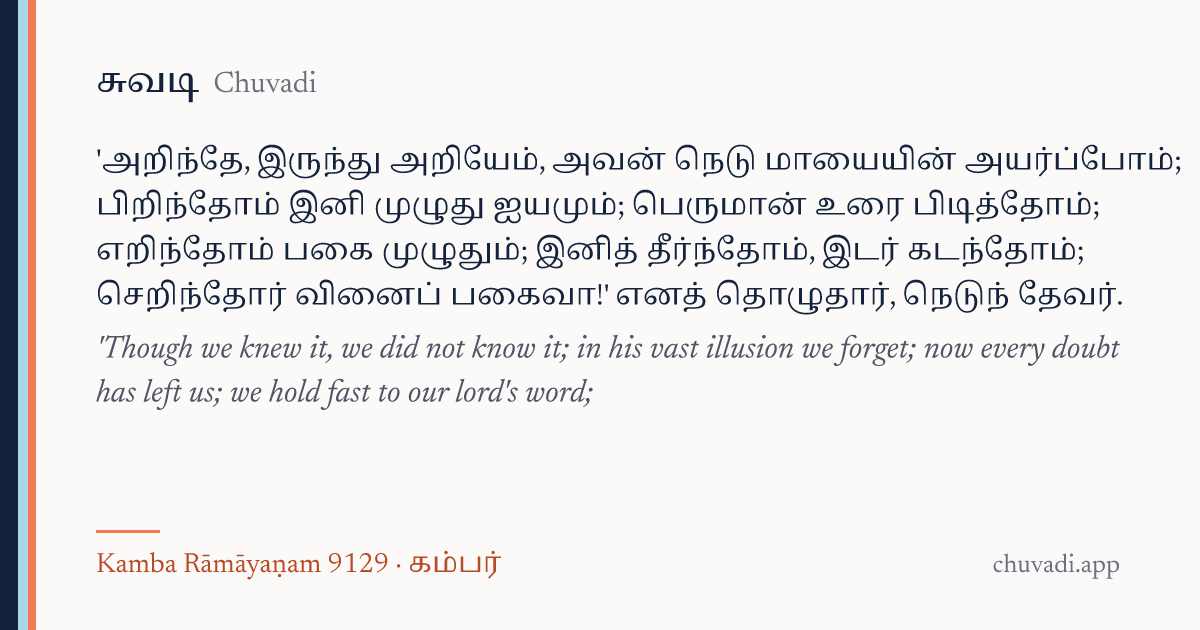
கம்பராமாயணம் 9129 · யுத்த 26.145
பாடல் · The poem
Tap a word to see its gloss in the commentary and where else it occurs.
பாட வேறுபாடு · Project Madurai reads
பொருள் · Meaning in Tamil
செறிந்தோர் வினைப்பகைவா! - தன்னை அடைந்தவர்களது தீவினைகளைச் சினந்தழிப்பவனே! அறிந்தே இருந்து அவன் நெடுமாயையின் அறியேம் அயர்ப்போம் - (இச்செய்தியை நாங்கள் முன்பே அறிந்திருந்தோமாயினும் அவனது நெடிய சூழ்ச்சியில் அகப்பட்டு அவனை அறியாதோமாகி மறந்தோம்; பெருமான் உரைபிடித்தோம் இனி முழுது ஐயமும் பிறிந்தோம் - எங்கள் பெருமானாகிய நினது அருளுரையினை (உறுதியாகப்) பற்றிக் கொண்டோமாகி இப்பொழுது அம்மாயத்தினின்றும் (எம்மனத்திற்கொண்ட) சந்தேகங்கள் முழுவதும் நீங்கித் தெளிந்தோம்; பகை முழுதும் எறிந்தோம் இடர் கடந்தோம் என நெடுந்தேவர் தொழுதார் - எமது பகை முழுவதையும் அழித்துப் போக்கினோம்; இடர்களின் நீங்கி வென்றோம்” என்று சொல்லிப் பெருமை மிக்க தேவர்கள் (சிவனை) வணங்கினார்கள்.
ஆங்கிலம் · English translationAI
Translation
- 'Though we knew it, we did not know it; in his vast illusion we forget;
- now every doubt has left us; we hold fast to our lord's word;
- we have cast off every enemy; now we are free, we have crossed beyond distress,
- O foe of the karma of those who come to you!' So the great gods bowed in worship.
What the poem says
The gods respond to Civaṉ, whom they address as the destroyer of the evil karma of all who take refuge in him. They admit that they had known this truth, yet Tirumāl's great illusion had made them forget it.
Now, holding fast to Civaṉ's words, their doubts are gone, and they feel that their enemies are already as good as destroyed and their troubles over. They bow in worship.