



கம்பராமாயணம் 9133 · யுத்த 26.149
பாடல் · The poem
Tap a word to see its gloss in the commentary and where else it occurs.
பாட வேறுபாடு · Project Madurai reads
பொருள் · Meaning in Tamil
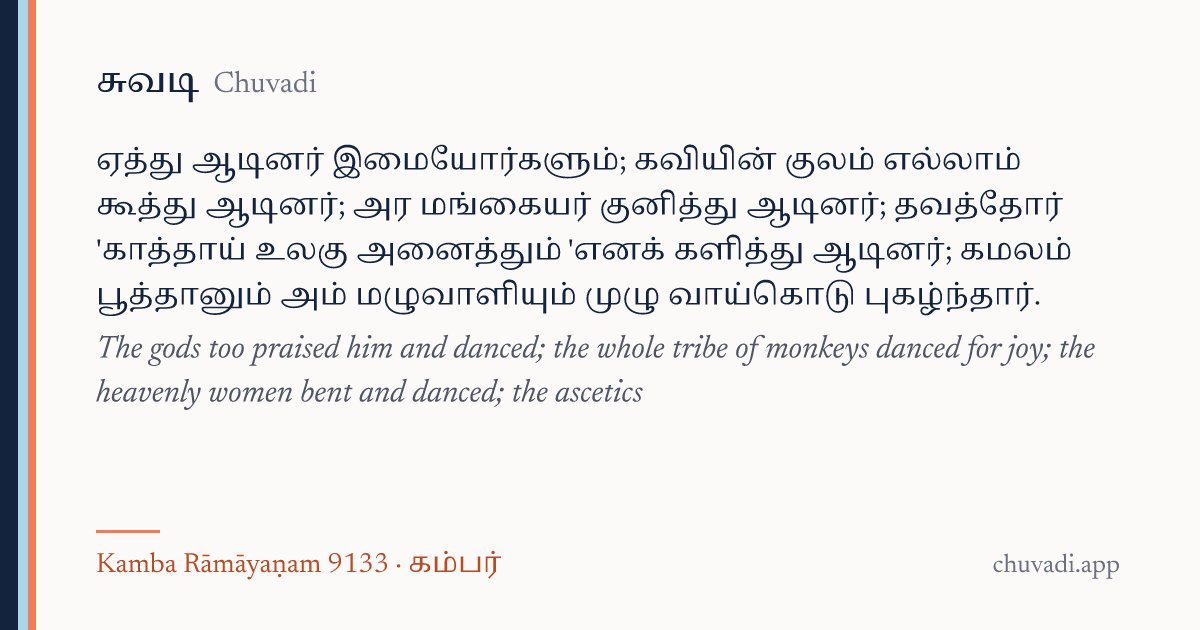
இமையோர்களும் ஏத்து ஆடினர் - (அதுகண்டு) தேவர்களும் (இலக்குவனைத் துதித்து ஆடினார்கள்; கவியின் குலம் எல்லாம் கூத்து ஆடினர் - குரங்குக் கூட்டம் யாவும் (மகிழ்ந்து) கூத்தாடினர்; அரமங்கையர் குனித்து ஆடினர் - தேவமங்கையர்கள் பரதத்தொழிலை மேற்கொண்டு நடனம் ஆடினார்கள்; தவத்தோர் “காத்தாய் உலகு அனைத்தும்” எனக் களித்து ஆடினர் - தவச் செல்வர்களாகிய முனிவர்கள் (இலக்குவனை நோக்கி) “உலகம் எல்லாவற்றையும் காத்தவன் ஆயினாய்” என்று சொல்லி மகிழ்ந்து ஆடினார்கள்; கமலம் பூத்தானும் அம்மழுவாளியும் முழுவாய் கொடு புகழ்ந்தார் - (திருமாலின் உந்தித்) தாமரையிலே தோன்றிய பிரமனும் மழுப்படையினை ஏந்திய அச்சிவபெருமானும் வாயாரப் புகழ்ந்து (இலக்குவனைப்) பாராட்டினார்கள்.
ஆங்கிலம் · English translationAI
Translation
- The gods too praised him and danced; the whole tribe of monkeys
- danced for joy; the heavenly women bent and danced; the ascetics
- danced in delight, saying, 'You have saved all the worlds'; he who blossomed from the lotus
- and that bearer of the axe praised him with their whole mouths.
What the poem says
When the Nārāyaṇāstra passes Ilakkuvaṉ by harmlessly, all creation celebrates. The gods sing his praises and dance, and the whole monkey tribe dances for joy. The celestial women perform formal dance, and the sages dance, crying that he has saved all the worlds.
Piramaṉ, born from the lotus that springs from Tirumāl's navel, and Civaṉ, who bears the battle-axe, praise him wholeheartedly.