



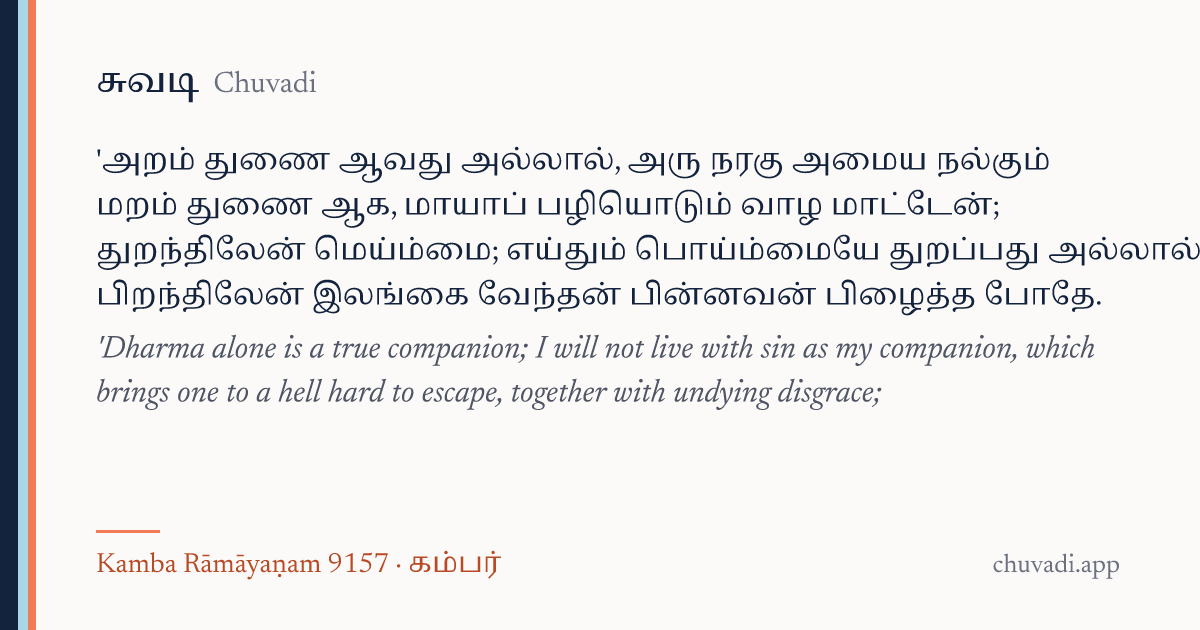
கம்பராமாயணம் 9157 · யுத்த 26.173
பாடல் · The poem
Tap a word to see its gloss in the commentary and where else it occurs.
பொருள் · Meaning in Tamil
அறம் துணை ஆவது அல்லால், அரு நரகு அமைய நல்கும் - அறமே துணையாவது (அவ் அறத்தை) அன்றி(க் கடப்பதற்கு) அரிய நரகத்தினைப் பொருந்தும்படி தரும்; மறம்துணையாக, மாயாப் பழியொடும் வாழ மாட்டேன் - பாவத்தினைத்துணையாகக்கொண்டு நீங்காத பழியோடும் உயிர் வாழ மாட்டேன்; எய்தும் பொய்மையே துறப்பது அல்லால் மெய்மை துறந்திலேன் - (இடையில்) வந்து அடையும் பொய்ம்மையினை விட்டு ஒழிப்பதல்லது மெய்மையினை விட்டு நீங்கினேன் அல்லேன்; இலங்கைவேந்தன் பிழைத்த போதே அவன் பின் பிறந்திலேன் - இலங்கை வேந்தனாகிய இராவணன் (பிறனில் விழைதலாகிய) பிழையினைச் செய்த பொழுதே அவன் பின் பிறவாதவன் ஆயினேன்.
ஆங்கிலம் · English translationAI
Translation
- 'Dharma alone is a true companion; I will not live with sin as my companion,
- which brings one to a hell hard to escape, together with undying disgrace;
- I have not forsaken truth; I have only forsaken the falsehood that came upon me;
- the moment the king of Ilaṅkai went wrong, I ceased to be his younger brother.'
What the poem says
Vīṭaṇaṉ answers that only righteousness is a true friend. Taking sin as one's companion leads to inescapable hell and lasting disgrace, and he refuses to live that way.
He has not abandoned truth, he says, only the falsehood that surrounded him. When Irāvaṇaṉ committed the crime of desiring another man's wife, Vīṭaṇaṉ ceased to be his brother in any meaningful sense.