



கம்பராமாயணம் 9158 · யுத்த 26.174
பாடல் · The poem
Tap a word to see its gloss in the commentary and where else it occurs.
பொருள் · Meaning in Tamil
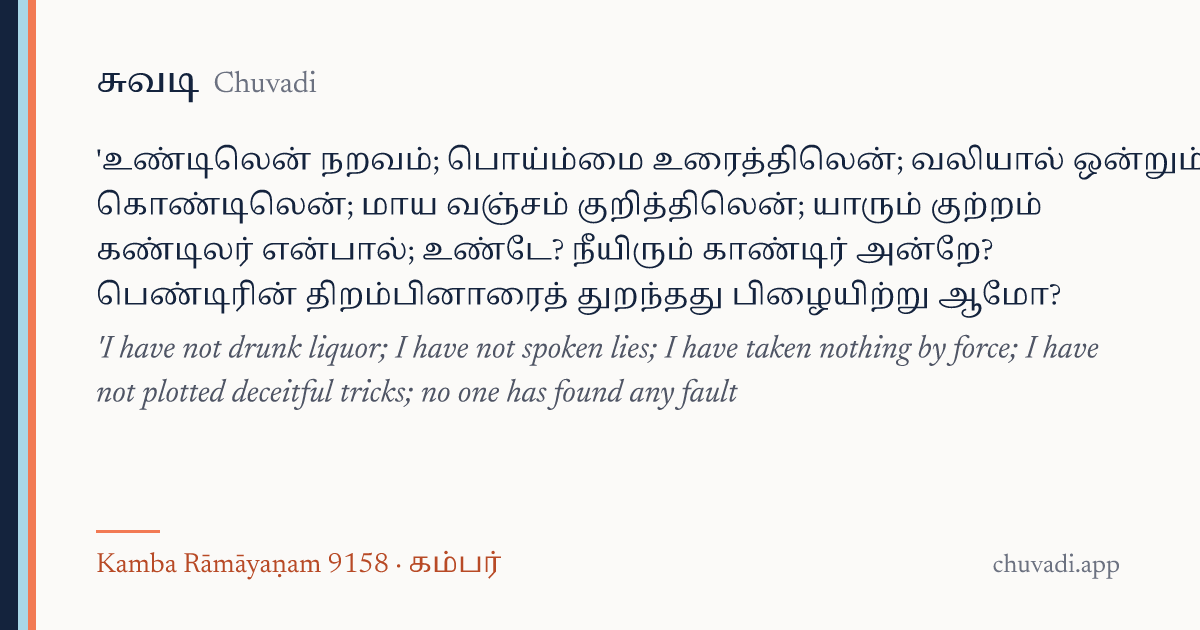
நறவம் உண்டிலென்; பொய்மை உரைத்திலென்; வலியால் ஒன்றும் கொண்டிலென் - (யான்) மதுவினை உண்டிலேன்; பொய்ம்மொழி உரைத்திலேன்; (பிறர்க்குரிய பொருள்களுள்) ஒன்றையும் வலிதிற்கவர்ந்து கொண்டிலேன்; மாய வஞ்சம் குறித்திலென்; யாரும் குற்றம் கண்டிலர் என்பால் - (எவர்க்கும்) மாயத்தினாற் செய்யும் வஞ்சனைச் செயலை(மனத்தாற்) குறித்திலேன்; என்பால் யாரும் குற்றத்தினைக் கண்டிலர்; நீயிரும் காண்டிர் அன்றே? உண்டே? - நீங்களும் என்னை நன்கு அறிந்திருக்கிறீர்களல்லவா? என்பால் ஏதேனும் குற்றம் உளதோ?; பெண்டிரின் திறம்பினாரைத் துறந்தது பிழையிற்று ஆமோ? - கற்புடைய பெண்டிரிடத்து முறைதவறி நடந்தவரை (யான் விட்டு நீங்கியது தவறுடைய செயலாகுமோ?
ஆங்கிலம் · English translationAI
Translation
- 'I have not drunk liquor; I have not spoken lies; I have taken nothing
- by force; I have not plotted deceitful tricks; no one has found any fault
- in me; is there any? You yourselves have seen it, have you not?
- Is it wrong to have left one who went astray with regard to women?'
What the poem says
Vīṭaṇaṉ lists his own blameless conduct. He has never drunk liquor, told lies, seized anything by force or plotted deceit, and no one, including Intiracittu and his family, has ever found fault in him.
How, then, can it be wrong to have left a man who violated the code of conduct towards chaste women? He means Irāvaṇaṉ's abduction of Cītai.