



கம்பராமாயணம் 9173 · யுத்த 27.6
பாடல் · The poem
Tap a word to see its gloss in the commentary and where else it occurs.
பொருள் · Meaning in Tamil
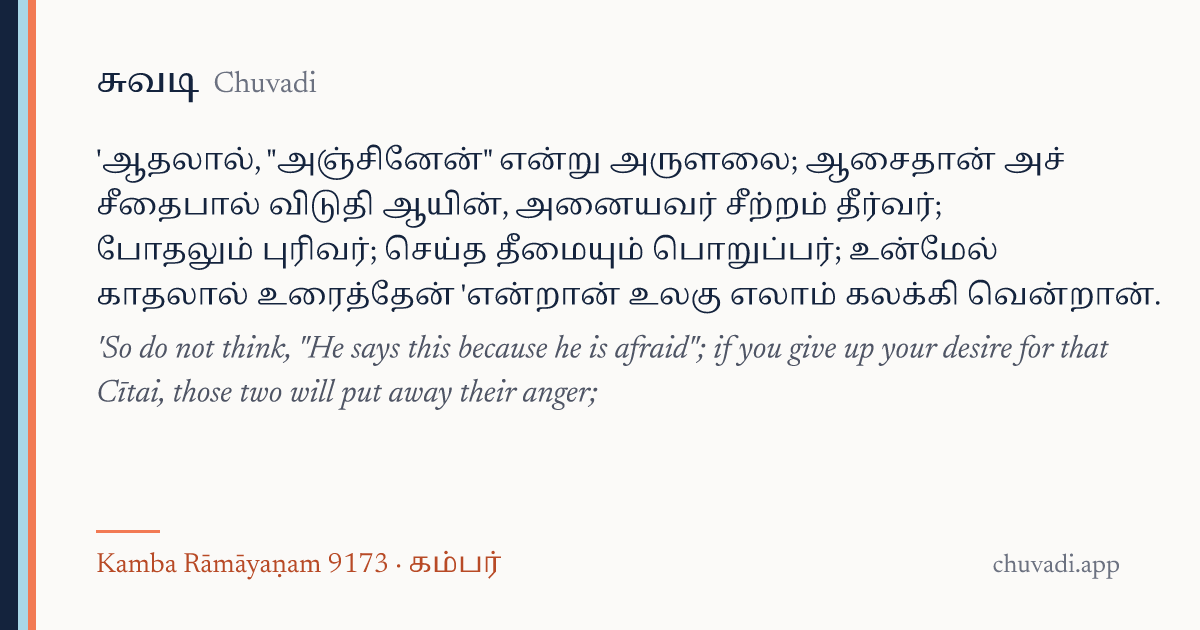
ஆதலால் அச்சீதைபால் ஆசைதான் விடுதி ஆயின் - அவர்களின் ஆற்றல் அத்தகையதாக இருத்தலால் அச்சீதையினிடத்தில் ஆசையை விட்டுவிடு; விடுவாயானால்; அனையவர் சீற்றம் தீர்வர் போதலும் புரிவர் - அவர்கள் கோபம் தணிவார்கள்; நம்மோடு போர் செய்யாது போதலும் செய்வர்; செய்த தீமையும் பொறுப்பர் உன்மேல் காதலால் உரைத்தேன் - நாம் செய்த தீமையையும் பொறுத்துக்கொள்வார்கள்; உன்மேல் வைத்த அன்பினால் இதனைச் சொன்னேன்; அஞ்சினேன் என்று அருளலை என்றான் உலகு எலாம் கலக்கி வென்றான் - அவர்களுக்கு அஞ்சிச் சொல்லுகின்றான் என்று கருதாதே என உலகம் முழுவதையும் கலங்கச் செய்து (முன்னம் நடந்த போர்களில்) வென்றவனாகிய இந்திரசித்து கூறினான்.
“அழிவு இலாத்தேர் கொண்டன்றிப் போர்த் தொழில் புரியலாகாது” எனப் போர்க்களத்திலிருந்து புறப்பட்ட இந்திரசித்து அத்தகு தேரினை ஊர்ந்து போர்க்களம் போதலை விடுத்துத் தந்தையிடம் வந்து இங்ஙனம் பேசுவது ஏன்? இறுதியாக இலக்குவனுடன் நடந்த போரில் “அறம் வெல்லும், பாவம் தோற்கும்” என்ற படிப்பினையை அவன் உணர்ந்தமையே. கும்பகர்ணன் முன்பே குறிப்பிட்ட (கும்பகர்ணவதை 84, 85) இந்த உண்மையை இவன் காலங் கடந்து உணருகின்றான். எனினும் இறுதியாகத் தந்தையிடம் சொல்ல வேண்டுவதைச் சொல்லிப் பார்க்கலாமே, என்ற எண்ணத்தினால் இங்ஙனம் வந்து கூறுகின்றான் என்க.
ஆங்கிலம் · English translationAI
Translation
- 'So do not think, "He says this because he is afraid"; if you give up your desire
- for that Cītai, those two will put away their anger;
- they will even go away; they will forgive the wrong that was done; I have said this
- out of love for you,' said he who had shaken all the worlds and conquered.
What the poem says
Intiracittu, who has shaken and conquered the worlds, pleads with his father. If Irāvaṇaṉ gives up his desire for Cītai, the brothers' anger will cool; they will leave and forgive the wrong done to them. He insists that he speaks out of love, not fear.
The commentary asks why he left the battlefield to look for an indestructible chariot and then came to his father instead. Its answer is that his duel with Ilakkuvaṉ taught him that righteousness wins and sin loses, as Kumpakaruṇaṉ had warned earlier. Realising this too late, he still wants to make one last appeal.