



கம்பராமாயணம் 9178 · யுத்த 27.11
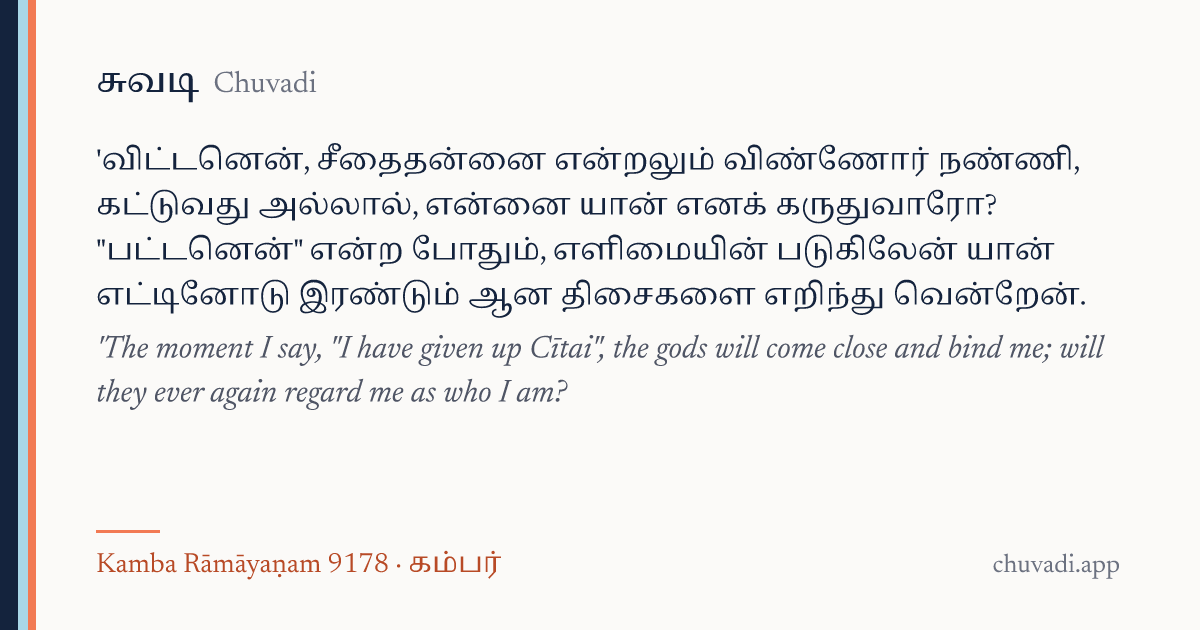
பாடல் · The poem
Tap a word to see its gloss in the commentary and where else it occurs.
பொருள் · Meaning in Tamil
சீதை தன்னை விட்டனென் என்றலும் - சீதையை இராமனிடம் விட்டு விட்டேன் என்றவுடன்; விண்ணோர் நண்ணிக் கட்டுவது அல்லால் - தேவர்கள் என்னை நெருங்கி வந்து கட்டுவார்களே அல்லாமல்; என்னை யான் எனக் கருதுவாரோ - பிறகு என்னை இராவணன் எனக்கருதி அஞ்சி நிற்பார்களோ? (ஆதலால் சீதையை விடாது போர் செய்து இறத்தலே நல்லது) எட்டினோடு இரண்டுமான திசைகளை எறிந்து வென்றேன் யான் - பத்துத் திசைகளில் உள்ளோரையும் படைக்கலங்களை எறிந்து வென்றவனாகிய யான்; “பட்டனென்” என்ற போதும் எளிமையின் படுகிலேன் - இறந்து பட்டேன் என்றாலும் எளிமையாக இறந்து பட மாட்டேன் (பலரையும் கொன்றே இறப்பேன்)
இங்கு, “ஆசை தான் அச்சீதை பால் விடுதியாயின்” என்ற இந்திரசித்தனுக்கு விடை கூறுகின்றான் தந்தை, எட்டினோடு இரண்டுமான திசை - எட்டும் இரண்டும் சேர்ந்த பத்துத் திசை.
ஆங்கிலம் · English translationAI
Translation
- 'The moment I say, "I have given up Cītai", the gods will come close
- and bind me; will they ever again regard me as who I am?
- Even when it comes to "he has fallen", I will not fall cheaply — I
- who hurled my weapons at the quarters, eight and two, and conquered them.'
What the poem says
Irāvaṇaṉ answers his son's advice to give up Cītai. The moment he did so, the gods would gather round and tie him up; they would never again fear him as Irāvaṇaṉ.
He has conquered all ten directions of space, the eight compass points plus up and down. Even if he must die, he will not die easily, but only after killing many.