



கம்பராமாயணம் 9179 · யுத்த 27.12
பாடல் · The poem
Tap a word to see its gloss in the commentary and where else it occurs.
பொருள் · Meaning in Tamil
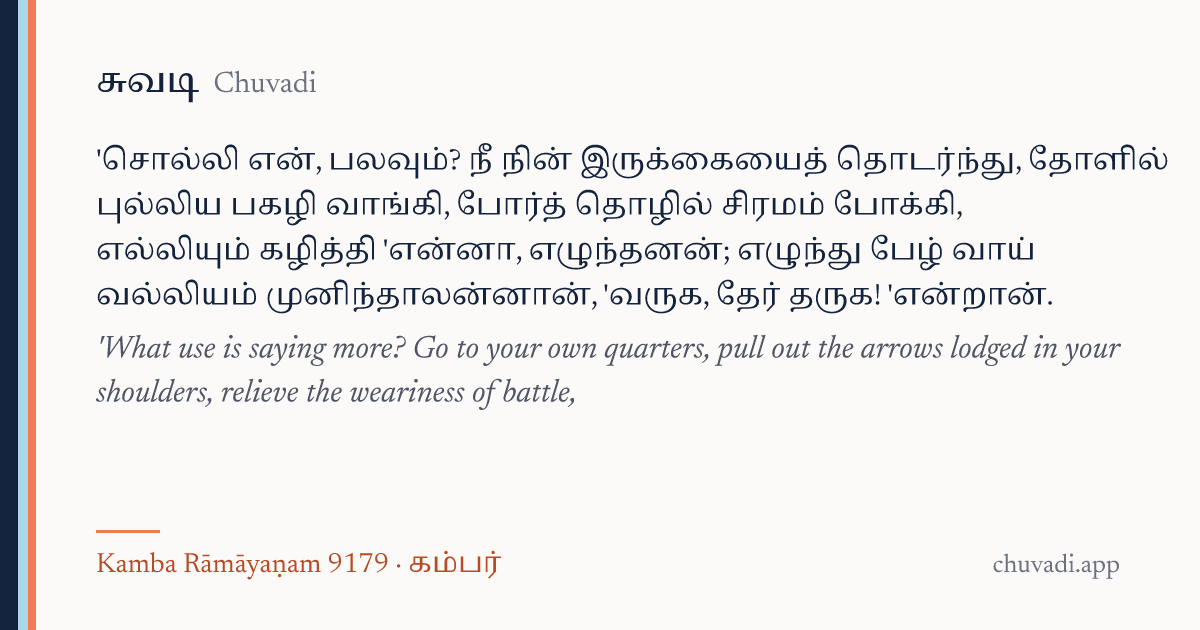
பலவும் சொல்லி என் நீ நின் இருக்கையைத் தொடர்ந்து - “பலவும்” சொல்லிப் பயனென்ன? நீ நின் இருப்பிடத்தை அடைந்து; தோளில் புல்லிய பகழி வாங்கி, போர்த்தொழில் சிரமம் போக்கி - தோளில் அழுந்திய அம்புகளை எல்லாம் நீக்கிவிட்டு, போர்த் தொழிலினால் உண்டான துன்பத்தைப் போக்கிக் கொண்டு; எல்லியும் கழித்தி என்னா, எழுந்தனன், எழுந்து - இந்த இரவு முழுமையும் கழிப்பாயாக என்று விட்டு எழுந்தனன் எழுந்து; பேழ்வாய் வல்லியம் முனிந்தாலன்னான், வருக தேர் தருக என்றான் - பிளந்த வாயினை உடைய புலி வெகுண்டாற் போன்றவனாய், இங்கு வருக என் தேரைக் கொணர்க என்று (தன் தேர்ப்பாகனை நோக்கிக்) கூறினான்.
புல்லிய - அழுந்திய, பகழி - அம்பு. எல்லி - இரவு. வல்லியம் - புலி. இந்திரசித்தன் போர்த்தொழிலால் ஏற்பட்ட சிரமத்தால் இங்ஙனம் பேசுவதாகக் கொண்டு இவ்வாறு கூறினான் என்க. “சீதையை விடாது மானத்தோடு இறந்து போதல் என் உளக் கிடக்கை இறப்பதற்கு நீயும் போ” எனக் கூற முடியுமா? அதற்குப் பதிலாக, “சொல்லியென் பலவும்? சிரமம் போக்கி எல்லியும் கழித்தி” எனக்கூறி, “யாரவன் இங்கு வருக, எனது தேர் தருக” என ஆணையிட்டான் என்பதை இராவணன் உணர்வான். இதே உத்தியைக் கும்பகர்ணனிடம் கையாண்டமையைக் காணலாம். “அஞ்சினை, வெறுவிது உன் வீரம்” (கம்ப 7361) “கண் முகிழ்த்து இரவும் எல்லியும் உறங்குதி போய்” (7362) “தருக என் தேர் படை, சாற்று, என் கூற்றையும்” (கம்ப 7364) என்பன காண்க.
ஆங்கிலம் · English translationAI
Translation
- 'What use is saying more? Go to your own quarters, pull out
- the arrows lodged in your shoulders, relieve the weariness of battle,
- and spend the night at rest,' he said, and rose; and rising, like a tiger
- with gaping jaws in a rage, he cried, 'Come! Bring my chariot!'
What the poem says
Irāvaṇaṉ cuts the conversation short. He tells his son to go home, pull out the arrows, rest from the strain of battle and sleep through the night. Then he rises like an angry tiger and calls for his chariot, meaning to fight himself.
The commentary explains the tactic. Irāvaṇaṉ cannot tell his son outright to go and die for honour. By treating his advice as mere battle fatigue and going out himself, he shames him into returning to the fight. It notes that he used the same method earlier on Kumpakaruṇaṉ.