



கம்பராமாயணம் 9181 · யுத்த 27.14
பாடல் · The poem
Tap a word to see its gloss in the commentary and where else it occurs.
பாட வேறுபாடு · Project Madurai reads
பொருள் · Meaning in Tamil
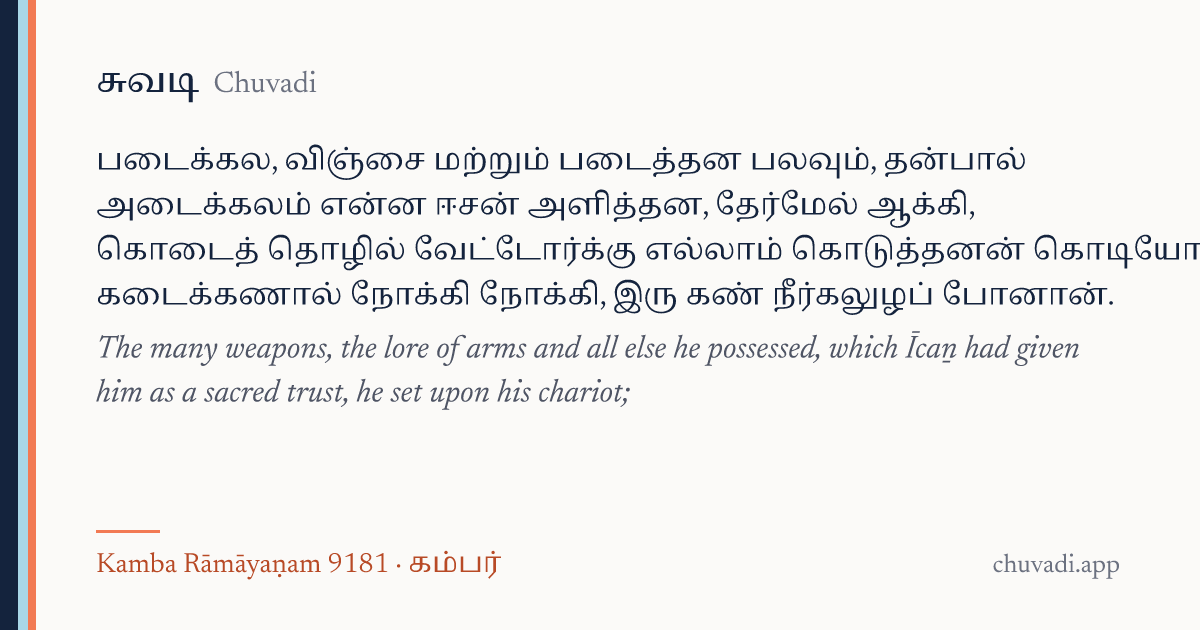
படைக்கல விஞ்சை மற்றும் படைத்தன பலவும் - படைக்கலங்களைச் செலுத்தக் கூடிய மறை பொருளாகத் தனக்குத் தெரிந்த வித்தைகளும் மற்றும் போர்த்துறைக்குரிய வகையான ஆயுதங்களையும், தன்பால் அடைக்கலம் என்ன ஈசன் அளித்தன தேர்மேல் ஆக்கி - தன்னிடத்து அடைக்கலப் பொருள்களாக சிவபெருமான் அன்புடன் அளித்தனவுமான பொருள்களைத் தேர்மேல் வைத்து; கொடைத்தொழில் வேட்டார்க்கு எல்லாம் கொடுத்தனன் - தான் கொடுக்கும் தொழிலிலே விரும்பியவர்களுக்கு (விரும்பிய வண்ணம் மீதமின்றி) அனைத்தையும் கொடுத்தனனாகி; கொடியோன் தன்னை - கொடுமை வாய்ந்தவனாகிய இராவணனை; கடைக்கணால் நோக்கி நோக்கி இரு கண் நீர் கலுழப் போனான் - தன் கண்களின் ஓரங்களினால் அடிக்கடி பார்த்து இரண்டு கண்களினின்றும் கண்ணீர் சிந்தப் போர் மீது சென்றான்.
முன்பு பிற உயிர்க்குத் துன்பஞ் செய்தும், இன்று தன் உறவும், கிளையும் போரில் பலியாவதை இரக்கமின்றி ஏற்றும் நின்றமையால் இராவணனைக் கொடியான் என்றார். “கடைக்கண்ணால் நோக்கி” என்பதற்கு, பிராட்டியை விட்டு விடுகிறேன் என்று அழைப்பானோ என்று பார்த்தான் என்பது பழைய உரை. கலுழ்தல் - சிந்துதல்.
ஆங்கிலம் · English translationAI
Translation
- The many weapons, the lore of arms and all else he possessed,
- which Īcaṉ had given him as a sacred trust, he set upon his chariot;
- he gave away everything to all who wished for gifts; and glancing back again and again
- out of the corner of his eye at the cruel one, he went, tears streaming from both eyes.
What the poem says
Intiracittu prepares for his last battle. He loads his chariot with all the weapons and secret knowledge of arms that Civaṉ had entrusted to him, and gives away all his possessions to anyone who asks, as a man does who knows he is going to die.
As he drives off he keeps glancing back at his father, here called 'the cruel one', with tears streaming down. The commentary says Irāvaṇaṉ is called cruel because he lets his own kin die without pity, and cites an old interpretation: the son keeps looking back in hope that his father will call him back and agree to release Cītai.