



கம்பராமாயணம் 9194 · யுத்த 27.27
பாடல் · The poem
Tap a word to see its gloss in the commentary and where else it occurs.
பாட வேறுபாடு · Project Madurai reads
பொருள் · Meaning in Tamil
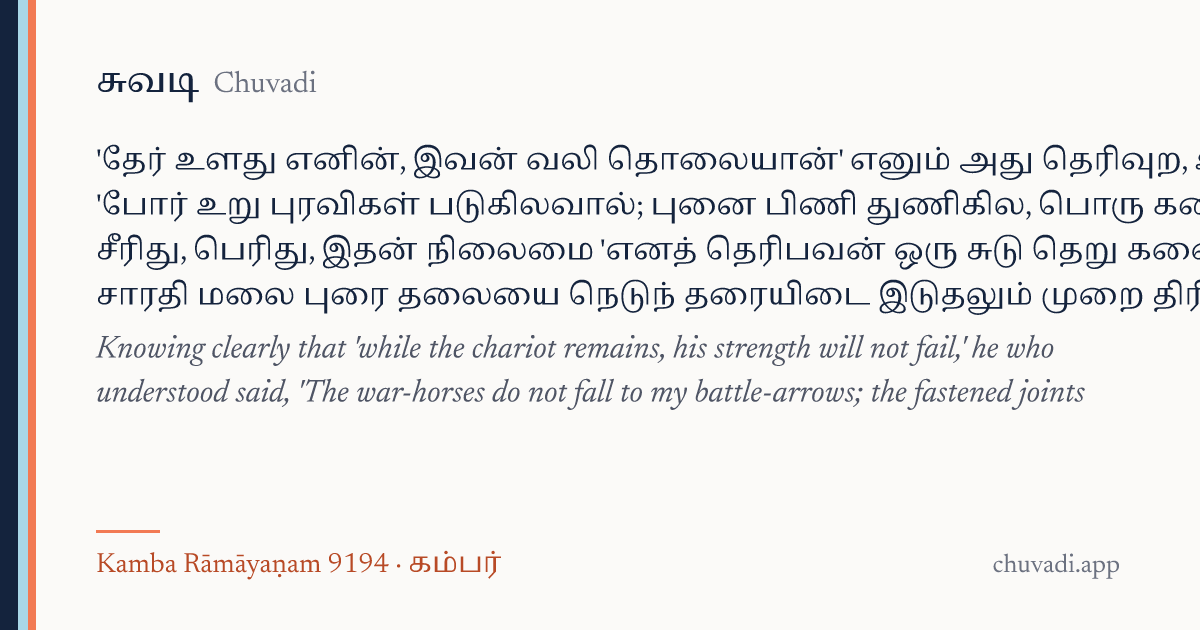
தேர் உளது எனின் இவன் வலி தொலையான் - தேர் அழியாதிருக்குமாயின் இந்த இந்திரசித்து வலிமை அழியான்; எனும் அது தெரிவுற, உணர் உறுவான் - என்கின்ற அதனைத் தெளிவாக உணர்ந்துள்ள இலக்குவன்; பொருகணையால் போர் உறு புரவிகள் படுகிலவால் - (தேரை அழிக்க முயன்று பார்த்து) நமது போர் செய்யும் கணைகளால் இவன் தேரில் பூட்டியுள்ள போர்த் தன்மை பொருந்திய குதிரைகள் வீழ்ந்தில; புனை பிணி துணிகில சீரிது பெரிது இதன் நிலைமை எனத் தெரிபவன் - தேர் உறுப்புகள் பொருந்தி உள்ள மூட்டுவாய்களும் துணிபடவில்லை. இத்தேரின் நிலைமை மிக்க சிறப்புடையது என்று தெரிந்தவனாய்; ஒரு சுடு தெறு கணையால் சாரதி மலை புரை தலையை - ஒரு சுடுகின்ற அழிக்கும் அம்பினால் அத்தேர்ப்பாகனது மலை போன்ற தலையைக் கொய்து; முறை திரிய நெடுந் தரையிடை இடுதலும் - அவன் நிலை கெடப் பெரிய தரையினில் இடுதலும்.
ஆங்கிலம் · English translationAI
Translation
- Knowing clearly that 'while the chariot remains, his strength will not fail,' he who understood
- said, 'The war-horses do not fall to my battle-arrows; the fastened joints
- are not cut through; the nature of this thing is excellent and great,' and seeing this, with a single scorching, destroying arrow
- he struck the charioteer's mountain-like head to the wide ground, so that all order was overturned.
What the poem says
Ilakkuvaṉ knows, because Vīṭaṇaṉ has told him, that Intiracittu's strength will not fail while he has his divine chariot. Yet his arrows cannot kill its horses or break its joints; it is a marvellous chariot.
So he takes another approach. With one burning arrow he strikes off the charioteer's huge head and sends it rolling to the ground, leaving the chariot without a driver. The sentence continues into the next verse.