



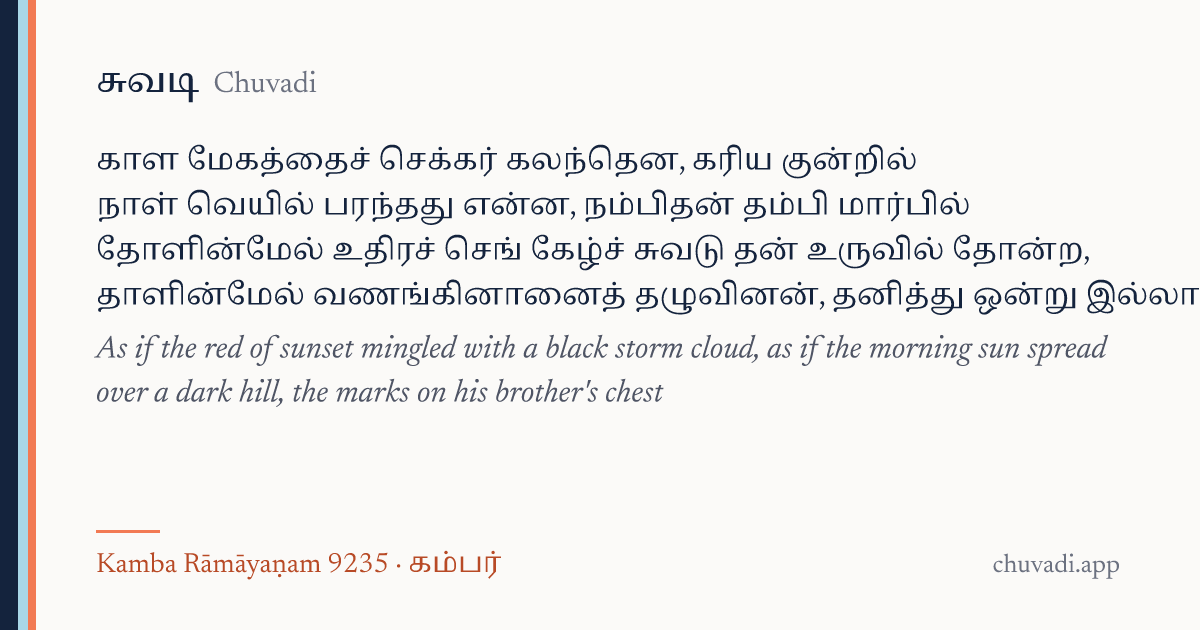
கம்பராமாயணம் 9235 · யுத்த 27.68
பாடல் · The poem
Tap a word to see its gloss in the commentary and where else it occurs.
பொருள் · Meaning in Tamil
தனித்து ஒன்றில்லான் நம்பி - (இலக்குவனை யன்றித் தனக்கெனத்) தனித்து ஒன்றும் இல்லாதவனாக இராமன்; தன் தம்பி மார்பில் தோளின் மேல் உதிரச் செங்கேழ்ச் சுவடு தன் உருவில் - தன் தம்பி இலக்குவன் மார்பிலும் தோளின் மேலும் இருந்த குருதியின் செந்நிறமுடைய சுவடுகள் தன் உருவத்தில்; காளமேகத்தைச் செக்கர் கலந்தென - கரிய மேகத்தைச் செவ்வானம் கலந்தாற்போலவும்; கரியகுன்றில் நாள்வெயில் பரந்தது என்ன தோன்ற - கரிய குன்றத்தில் காலை வெயில் பரவியது போலவும் தோன்றுமாறு; தாளின் மேல் வணங்கினானைத் தழுவினான் - தன் திருவடி மேல் வணங்கிய அத்தம்பியைத் தழுவிக் கொண்டான்.
இன்ப துன்பங்களில் இலக்குவனையன்றித் தனக்கென ஒன்றும் இல்லாதவன் இராமன் என்பதனை “தனித்து ஒன்றில்லான் நம்பி” எனக் குறித்தார். இலக்குவன் மார்பிலும் தோள்களிலுமுள்ள இரத்தச்சுவடுகள் தன்மார்பிலும் தோள்களிலும் தோன்றத் தழுவிக்கொண்டான் என்றார்.
ஆங்கிலம் · English translationAI
Translation
- As if the red of sunset mingled with a black storm cloud, as if
- the morning sun spread over a dark hill, the marks on his brother's chest
- and shoulders, red with blood, showing on his own form,
- he embraced him who bowed at his feet, he who had nothing apart from him.
What the poem says
Ilakkuvaṉ bows at Irāmaṉ's feet and Irāmaṉ hugs him close, so that the blood on his brother's chest and shoulders comes off on his own dark body, like sunset red on a black cloud or morning light on a dark hill. The phrase "he who had nothing apart from him" says that in joy and sorrow alike, Irāmaṉ had nothing that was his alone, without Ilakkuvaṉ.