



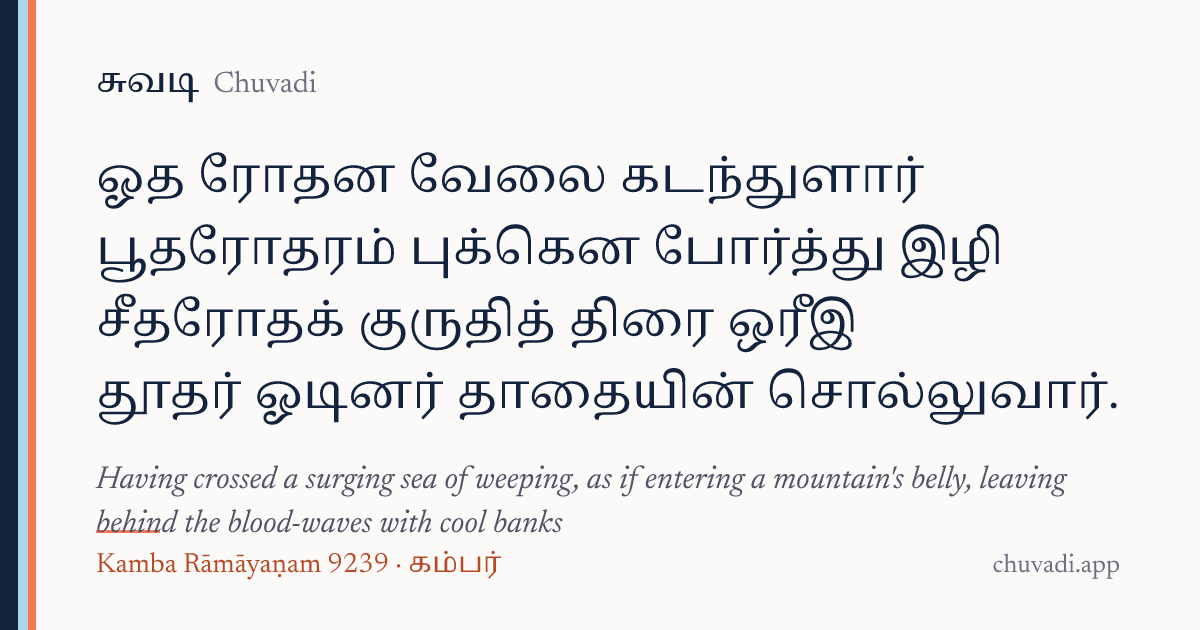
கம்பராமாயணம் 9239 · யுத்த 28.1
பாடல் · The poem
Tap a word to see its gloss in the commentary and where else it occurs.
பாட வேறுபாடு · Project Madurai reads
பொருள் · Meaning in Tamil
தூதர் தாதையின் சொல்லுவார் - (போர்க்களத்திலிருந்து இராவணனின்) தூதுவர்கள் (நடந்தவற்றை) தந்தையாகிய இராவணனிடம் சொல்லும் பொருட்டு; ரோதன ஓத வேலை கடந்துளார் - அழுகையாகிய அலைகடலைக் கடந்தவர்களாய்; போர்த்துஇழி சீதரோதக் குருதித்திரை ஒரீஇ - (போர்க்களமெங்கும்) போர்த்தது போல் மூடிக்கொண்டு இழிந்து ஓடுகின்ற குளிர்ந்த கரையை உடைய இரத்த அலைகளைக் கடந்து; பூதர உதரம் புக்கென ஓடினர் - மலை வயிற்றுள் புகுந்தாற்போல் (கோபுர வாயிலில் புகுந்து) (இலங்கையினுள்) ஓடினர்.
தூதர் ரோதனம், பூதரம், உதரம், ரோதம் என்பன வடசொற்கள். ரோதனம் - அழுகை; பூதரம் - மலை; உதரம் - வயிறு, நடுவிடம், ரோதம் கரை; ஓதம் - அலை; வேலை-கடல்; கதம் - குளிர்ச்சி, ரோதம் என்பதற்குத் துன்பம் என்று பொருள் கொள்ளினுமாம்.
ஆங்கிலம் · English translationAI
Translation
- Having crossed a surging sea of weeping,
- as if entering a mountain's belly, leaving behind the blood-waves with cool banks
- that spread like a covering and ran down,
- the messengers ran off to tell the father.
What the poem says
The scene changes to Ilaṅkai, opening the chapter of Irāvaṇaṉ's grief. Messengers flee the battlefield through a sea of lamentation and across waves of blood to tell Irāvaṇaṉ, the father, that his son is dead. They vanish into the city gate as if into the belly of a mountain. The verse is a showpiece of Sanskrit words in Tamil (rōtaṉam "weeping", pūtaram "mountain", utaram "belly", rōtam "bank") with a play on their sounds.