



கம்பராமாயணம் 9254 · யுத்த 28.16
பாடல் · The poem
Tap a word to see its gloss in the commentary and where else it occurs.
பாட வேறுபாடு · Project Madurai reads
பொருள் · Meaning in Tamil
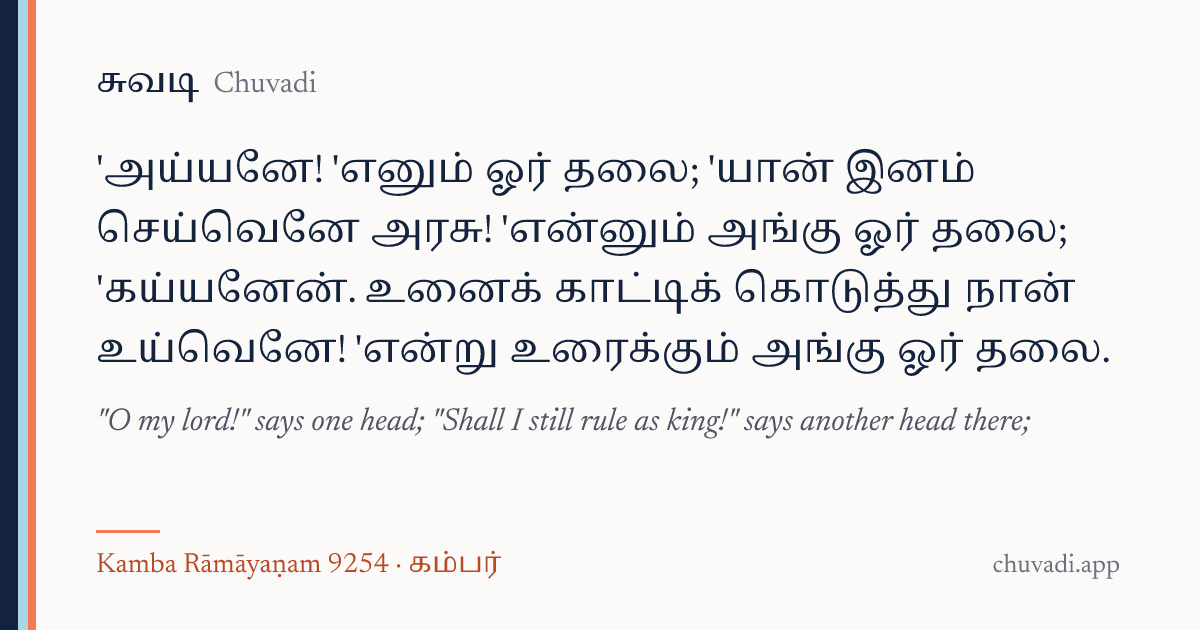
ஓர் தலை, 'அய்யனே!' எனும் - (இராவணனுடைய பத்துத் தலைகளுள்) ஒருதலை 'அய்யனே!' என்று அழைக்கும்; ஆங்கு ஓர் தலை 'யான் இனம் அரசு செய்வனே!' என்னும் - மற்றொரு தலை 'யான் இன்னும் அரசு செய்வேனோ!' என்றும் சொல்லும்; 'உனைக் காட்டிக் கொடுத்த கய்யனேன் நான் - உன்னைப் பகைவன் கொல்ல வழி செய்து கொடுத்த சிறுமையனாகிய நான்; உய்வனே!' என்று உரைக்கும் அங்கு ஓர் தலை - உயிர் வாழ்ந்திருப்பேனோ?' என்று ஒருதலை சொல்லும்.
இராவணனுடைய பத்துத் தலைகளுள் மூன்று தலைகள் கூறியவை இங்கு கூறப்பெற்றன. வாய் கூறியதைத் தலை கூறியதாகச் சொன்னது தானியாகுபெயர் கய்யன் - சிறுமையுடையவன். கை - சிறுமை. தான் செய்த செயலுக்குத் தானே பொறுப்பேற்று முந்திச் சென்று உயிர் விடாமல், தன் அன்புக்குரிய மகனை உயிர் விடச் செய்த சிறுமை இராவணனை வாட்டுகின்றது.
ஆங்கிலம் · English translationAI
Translation
- "O my lord!" says one head; "Shall I still
- rule as king!" says another head there;
- "Wretch that I am, having betrayed you to death, shall I
- go on living!" says another head there.
What the poem says
Irāvaṇaṉ's ten heads lament, each with its own cry; this verse gives three. The cries really come from the mouths, but are attributed to the heads. The third head says what hurts most: it was Irāvaṇaṉ's own war that sent his beloved son out to die, when he himself should have gone first to answer for what he had done.