



கம்பராமாயணம் 9257 · யுத்த 28.19
பாடல் · The poem
Tap a word to see its gloss in the commentary and where else it occurs.
பொருள் · Meaning in Tamil
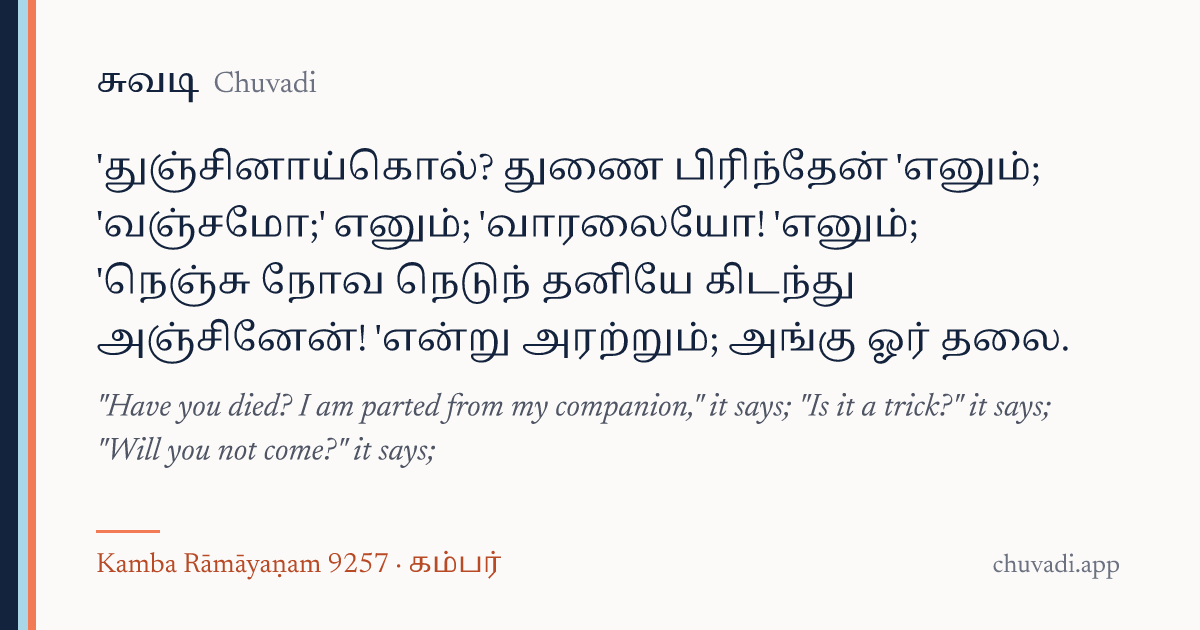
துஞ்சினாய் கொல் துணை பிரிந்தேன்' எனும் - நீ உண்மையாக இறந்து விட்டாயோ? யான் என் துணையாக இருந்த உன்னைப் பிரிந்தேனே!' என்று சொல்லும்; 'வஞ்சமோ!' எனும் 'வாரலையோ' எனும் - (நீ இறந்தாய் என்பது) 'வஞ்சனையோ' என்று சொல்லும். (உண்மையாகவே) 'என் முன் வரமாட்டாயோ!' என்று சொல்லும்; நெஞ்சு நோவ, நெடுந்தனியே கிடந்து - நெஞ்சு நோவுமாறு நெடுநேரம் (தன்துன்பத்தோடு) தனித்துக் கிடந்த (பின்பு); 'அஞ்சினேன்' என்று அரற்றும், அங்கு ஓர் தலை - 'அஞ்சினேன்' என்று வாய்விட்டு அரற்றும் ஒருதலை.
பெருந்துயரிலிருப்போர் பலவாறு புலம்பிக் கதறிய பின்பு சிறிது தமக்குத்தாமே புழுங்கிய வண்ணம் கிடப்பர். பின்பு திடீரென்று வாய் விட்டு அரற்றுவர். இவ்வுலகியல் நடப்பைக் கவனித்திருந்த கவிஞன் 'நெஞ்சு நோவ நெடுந்தனியே, தனக்குத்தானே ஏக்குற்று புழுங்கிச் சிறிது போது கிடந்த இராவணன் பின்பு திடீரென்று வாய் விட்டு அரற்றுவதாக அமைத்திருக்கும் நுட்பம் அறிந்து பாராட்டத்தக்கதாம்.
ஆங்கிலம் · English translationAI
Translation
- "Have you died? I am parted from my companion," it says;
- "Is it a trick?" it says; "Will you not come?" it says;
- and after lying long and all alone, its heart in pain,
- "I am afraid!" so one head there wails.
What the poem says
One head moves through denial and pleading: is his son really dead, is it a trick, will he not come back? Then it lies silent for a long time, brooding, before suddenly crying out "I am afraid!" The commentary praises Kampaṉ's observation of real grief, in which people wail, fall into long silent brooding, and then break out crying again.