



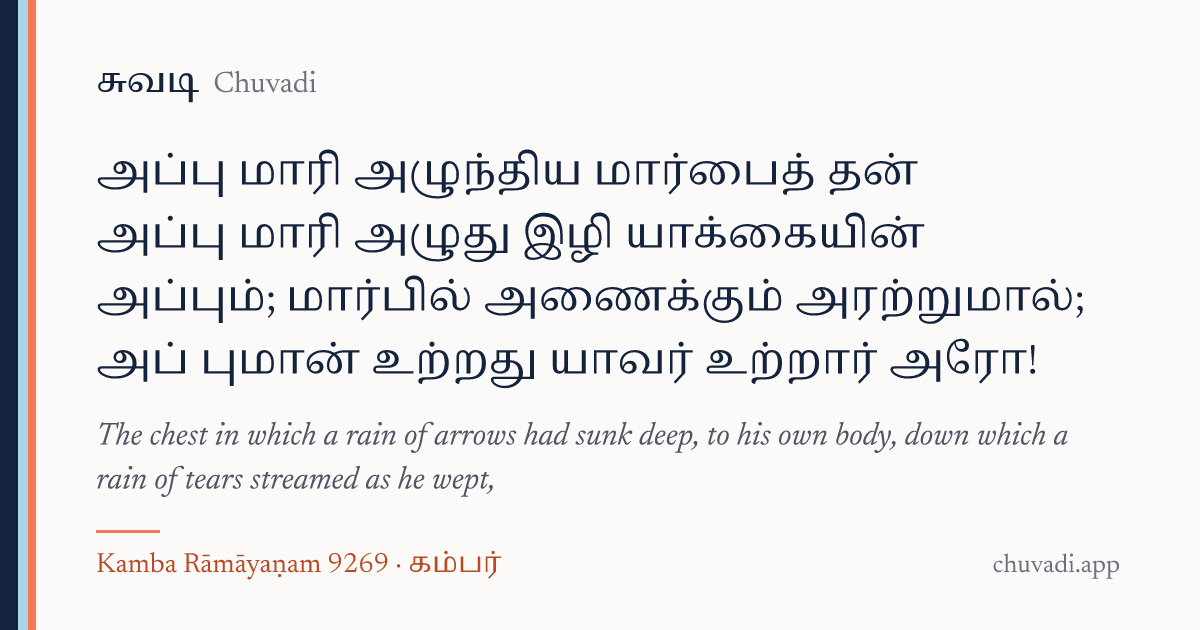
கம்பராமாயணம் 9269 · யுத்த 28.31
பாடல் · The poem
Tap a word to see its gloss in the commentary and where else it occurs.
பாட வேறுபாடு · Project Madurai reads
பொருள் · Meaning in Tamil
அப்பு மாரி அழுந்திய மார்பை - அம்பு மாரி அழுந்தி இருந்த இந்திரசித்தின் மார்பை; அப்புமாரி அழுது இழி தன் யாக்கையின் - அழுது அழுது கண்ணீர் மாரி இழிகின்ற தன் உடம்பின் கண்; அப்பும், மார்பில் அணைக்கும் அரற்றுமால் - ஒற்றிக் கொள்வான். பின் மார்பில் அணைத்துக் கொள்வான்; வாயால் அரற்றுவான்; அப்புமான் உற்றது யாவர் உற்றார் - அந்த ஆண்மையுள்ள இராவணன் உற்ற துன்பம் இவ்வுலகில் யாவர் அடைந்திருக்கின்றார்கள்!
'அம்புமாரி' 'அப்புமாரி' எனத் தம்மின வன்தொடராயிற்று. இரண்டாவது அப்புமாரி கண்ணீர் மழை என்ற பொருளது. அப்புதல் - ஒற்றிக்கொள்ளுதல் புமான் - ஆடவன் என்ற பொருளுடைய வடசொல்.
இச்செய்யுளில் நான்கடியினும் முதற்சீர் முழுமையும் ஒத்து வந்தமையால் 'யமகம்' என்னும் சொல்லணி அமைந்தது.
ஆங்கிலம் · English translationAI
Translation
- The chest in which a rain of arrows had sunk deep, to his own
- body, down which a rain of tears streamed as he wept,
- he presses; he hugs it to his breast; he wails;
- what that man suffered, who else has ever suffered!
What the poem says
Irāvaṇaṉ presses his son's arrow-riddled chest to his own tear-soaked body. The verse is a showpiece of yamakam, a figure in which the same sound recurs with different meanings: each line opens with appu or ap pu, meaning "arrow" in the first line, "water" (tears) in the second, "presses" in the third, and "that man" in the fourth.