



கம்பராமாயணம் 9285 · யுத்த 28.47
பாடல் · The poem
Tap a word to see its gloss in the commentary and where else it occurs.
பொருள் · Meaning in Tamil
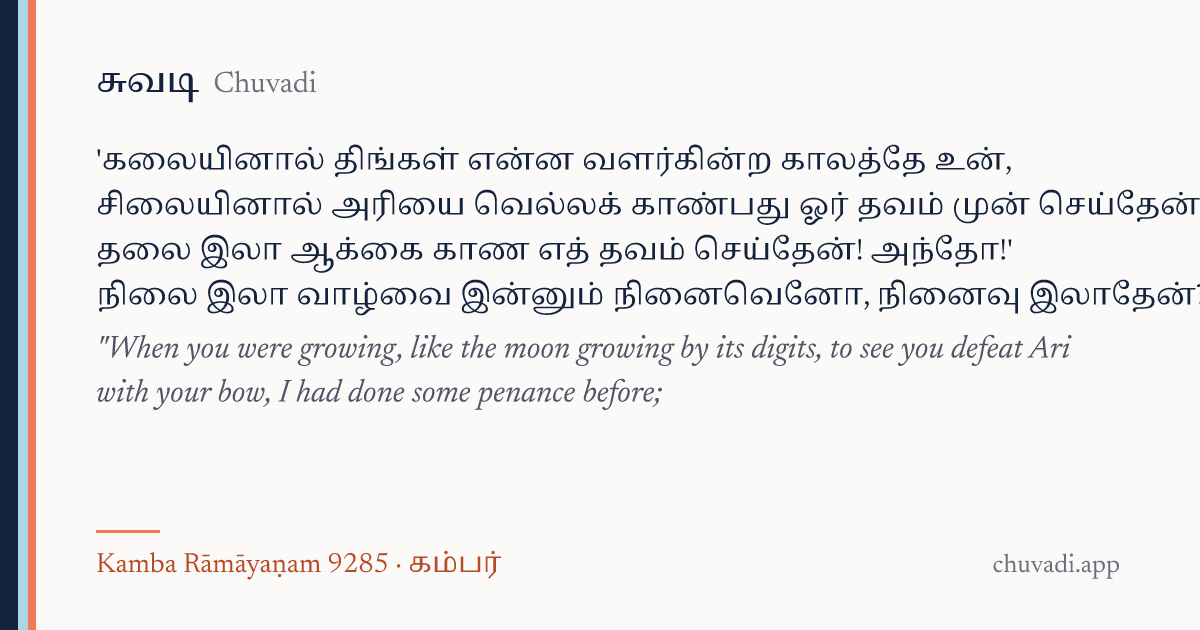
கலையினால் திங்கள் என்ன - நாளுக்கு நாள் கலையினால் (வளர்கின்ற) சந்திரனைப் போல; வளர்கின்ற காலத்தே - வளர்கின்ற இளம் பருவத்தே; உன் சிலையினால் அரியை வெல்லக் - உன் வில்லினால் இந்திரனை வெல்ல; காண்பது ஓர் தவம் முன் செய்தேன் - கண்டு மகிழும் தவத்தை முன் செய்திருந்தேன்; தலை இலா ஆக்கை காண - தலையில்லாத நின் உடம்பைக் காண்பதற்கு, எத்தவம் செய்தேன்! அந்தோ! - எந்தத் தவத்தை (பாவத்தைச்) செய்தேன்! அந்தோ! நினைவு இலாதேன் - நல்ல நினைவு இல்லாத யான்; நிலை இலா வாழ்வை இன்னும் நினைவேனா - (இவ்வாறு) நிலையில்லாத வாழ்வினை இனியும் மதித்திருப்பேனா?
கலை - கலை, அறிவையும் குறித்ததென்க. "எத்தவம் செய்தேன்" என்றவிடத்துத் "தவம்" என்ற சொல் எதிர்மறையாய்ப் பாவத்தைக் குறித்தது.
ஆங்கிலம் · English translationAI
Translation
- "When you were growing, like the moon growing by its digits, to see
- you defeat Ari with your bow, I had done some penance before;
- to see your body without a head, what penance did I do! Alas!
- Shall I still think of this unstable life, I who have lost my senses?"
What the poem says
Maṇṭōtari's lament. Some good deed in a past life must have earned her the joy of seeing her son, still young and growing like the waxing moon, defeat Intiraṉ (Ari) with his bow. What "penance" has now earned her the sight of his headless body? Here "penance" is used ironically to mean sin. She wonders why anyone would value so fleeting a life.