



கம்பராமாயணம் 929 · பால 14.43
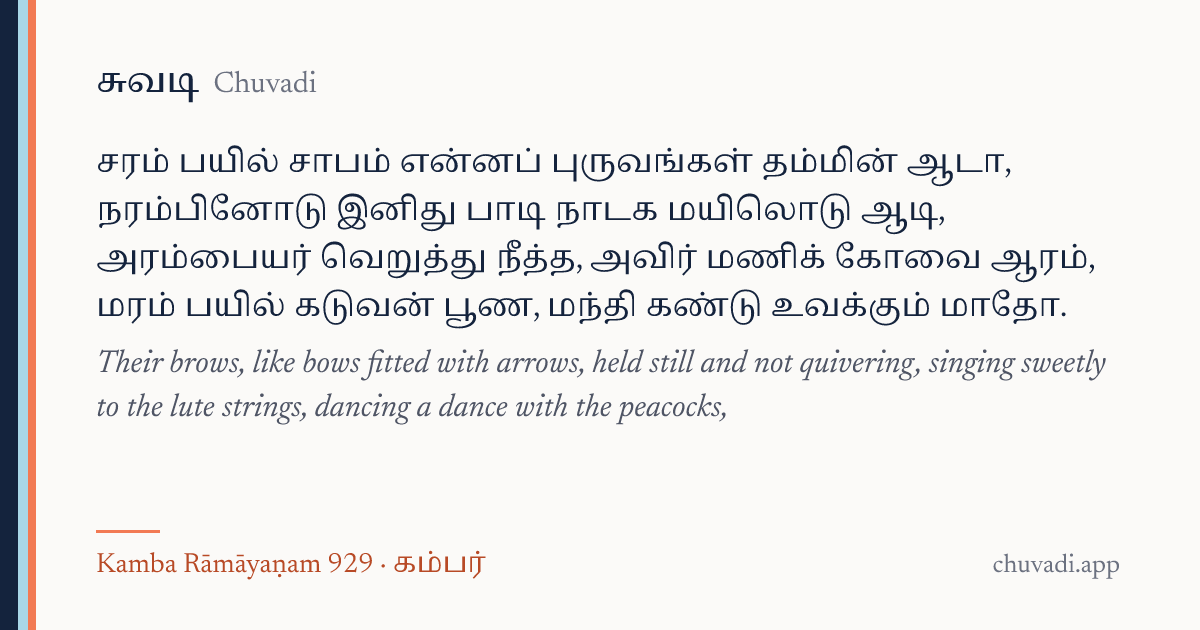
பாடல் · The poem
Tap a word to see its gloss in the commentary and where else it occurs.
பாட வேறுபாடு · Project Madurai reads
பொருள் · Meaning in Tamil
சரம் பயில் சாபம் என்ன - அம்பு பொருந்திய வில்லைப் போன்ற; புருவங்கள் தம்மின் ஆடா - புருவங்கள் தம்மிலே ஆடாமல் இருக்க; நரம்பினோடு இனிது பாடி - யாழ் நரம்போடு பொருந்த இனிமையாகப் பாடி; மயிலோடு நாடகம் ஆடி - மயில்களோடு (ஒப்ப) நடனம் ஆடி; அரம்பையர் வெறுத்து - தெய்வ மகளிர் (கணவர் மீது) ஊடலை உட்கொண்டு; நீத்த அவிர்மணிக் கோவை - கழற்றியெறிந்த ஒளிரும் நவமணி மாலைகளையும்; ஆரம் - முத்தாரங்களையும்; மரம் பயில் கடுவன் - மரங்களில் பழகுகின்ற ஆண்குரங்குகள்; பூண - (தமக்கு) அணிவிக்க; மந்தி கண்டு உவக்கும் - பெண் குரங்குகள் (அந்த அணிகளின்) அழகைக் கண்டு மகிழ்ச்சியடையும்.
தெய்வப் பெண்கள் ஊடலால் கழற்றியெறிந்த இரத்தினமாலை முதலியவற்றை ஆண்குரங்குகள் பெண்குரங்குகளுக்கு பூட்டின; அந்த அழகைக் கண்ட அப் பெண் குரங்குகள் மகிழ்ந்தன என்பது.
ஆங்கிலம் · English translationAI
Translation
- Their brows, like bows fitted with arrows, held still and not quivering,
- singing sweetly to the lute strings, dancing a dance with the peacocks,
- the nymphs, in a lovers' pique, flung off strings of bright gems and pearl necklaces;
- the tree-dwelling male monkeys put them on their mates, and the females are delighted to see.
What the poem says
The heavenly nymphs sing to the lute and dance alongside the peacocks, keeping their bow-shaped brows perfectly still as good performers should. After quarrels with their lovers they throw away their jewelled necklaces.
The monkeys of the mountain pick these up, and the males hang them on their mates, who are thrilled with their new finery.