



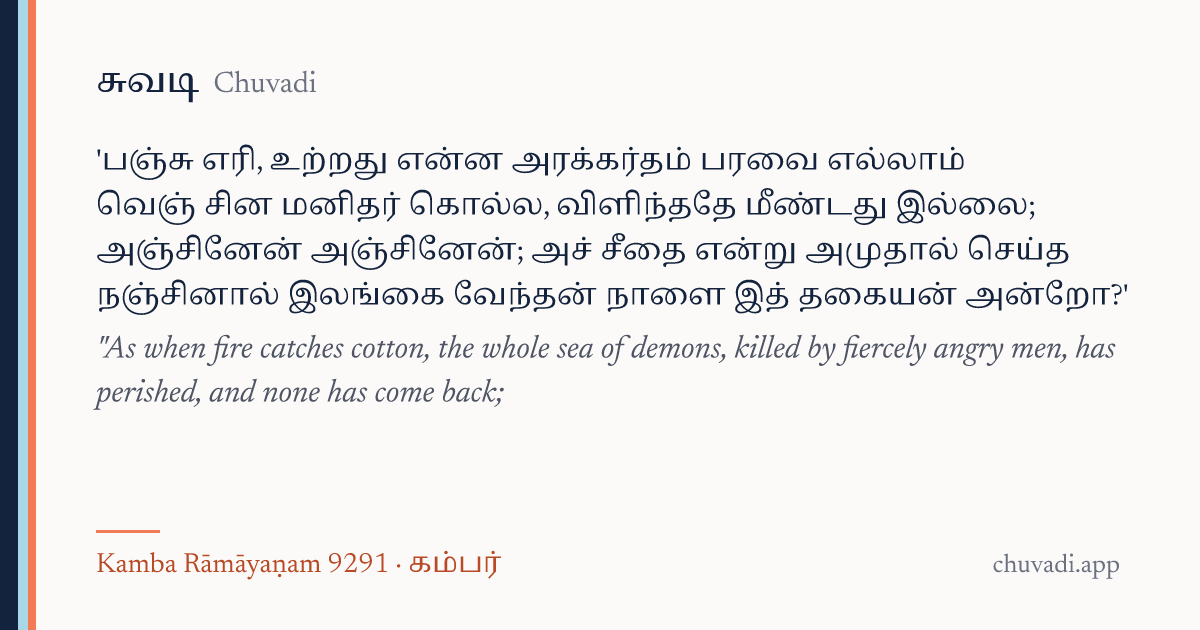
கம்பராமாயணம் 9291 · யுத்த 28.53
பாடல் · The poem
Tap a word to see its gloss in the commentary and where else it occurs.
பாட வேறுபாடு · Project Madurai reads
பொருள் · Meaning in Tamil
பஞ்சு எரி உற்றது என்ன - பஞ்சுப் பொதியில் நெருப்புப் பற்றி எரிந்தது என்னுமாறு; அரக்கர் தம் பரவை எல்லாம் - அரக்கர் தம் படைக்கடல் எல்லாம்; வெஞ்சின மனிதர் கொல்ல - கொடிய கோபத்தை உடைய (இரு) மனிதர் கொல்ல; விளிந்ததே, மீண்டது இல்லை - இறந்ததே அன்றி உயிர் மீண்டது இல்லை! அச்சீதை என்று அமுதால் செய்த நஞ்சினால் - அந்தச் சீதை என்ற பெயரை உடைய அமிழ்தினால் செய்த நஞ்சினால்; இலங்கை வேந்தன் நாளை இத்தகையன் அன்றோ - இலங்கைக்கு அரசனாகிய இராவணன் நாளைக்கு இத்தகையன் (இறந்து பட்டவன்) அன்றோ? அஞ்சினேன்! அஞ்சினேன்! - (ஆதலால்) அஞ்சினேன் அஞ்சினேன்!
தன் கணவன் மேல் குற்றம் காணாளாய், சீதையை அமுதாகத் தோன்றிய நஞ்சு என்றாள். தன் கணவன் கண்களுக்கு அமுதெனத் தோன்றியதனாலன்றோ அவன் கொணர்ந்தான் என்றபடி, இனி 'இராவணன் நாளை இங்ஙனம் மடிவானே என கூறப்பொறாளாய், "இலங்கை வேந்தன் நாளை இத்தகையன் அன்றோ” என்றாள்!
ஆங்கிலம் · English translationAI
Translation
- "As when fire catches cotton, the whole sea of demons,
- killed by fiercely angry men, has perished, and none has come back;
- I am afraid, I am afraid; through the poison made of nectar
- called Cītai, will not the king of Ilaṅkai be like this tomorrow?"
What the poem says
Maṇṭōtari sees the whole demon army burning up like cotton thrown on a fire. She fears, without quite daring to say it, that her husband will lie dead like their son tomorrow. Unwilling to blame him directly, she calls Cītai a poison made of nectar: she seemed sweet as nectar to Irāvaṇaṉ's eyes, which is why he carried her off, but she has proved deadly.