



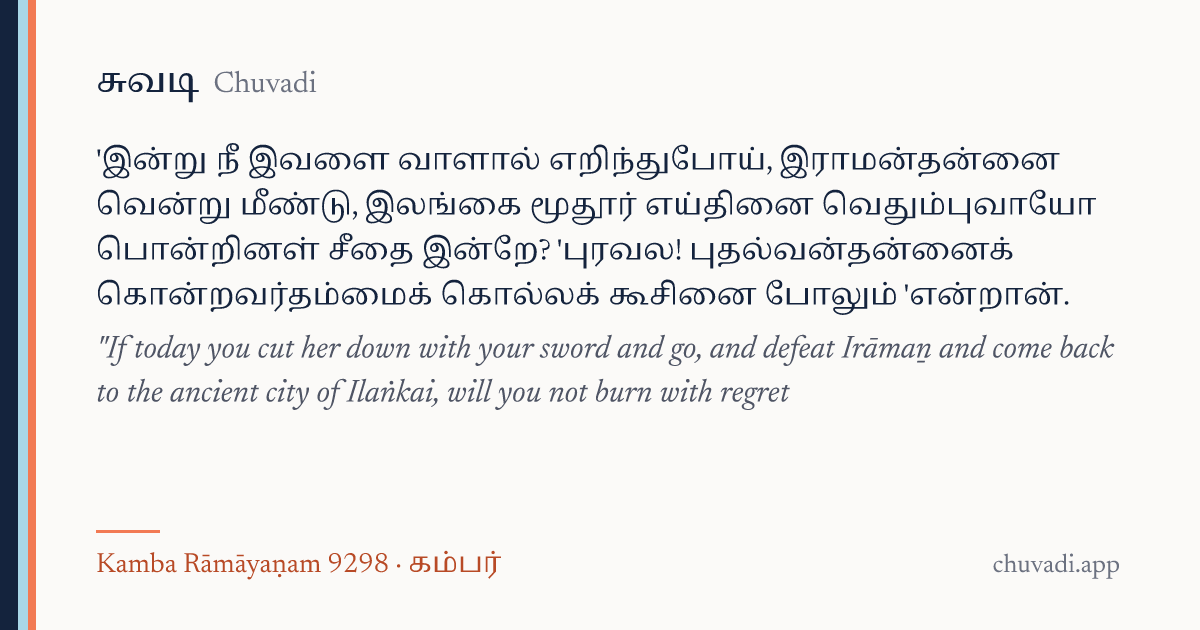
கம்பராமாயணம் 9298 · யுத்த 28.60
பாடல் · The poem
Tap a word to see its gloss in the commentary and where else it occurs.
பாட வேறுபாடு · Project Madurai reads
பொருள் · Meaning in Tamil
நீ இன்று இவளை வாளால் எறிந்துபோய் - நீ இன்றைக்கு இச்சீதையை வாளால் வெட்டிவிட்டுச் சென்று; இராமன் தன்னை வென்று இலங்கை மூதூர் மீண்டு எய்தினை - இராமனை வென்று இலங்கையாகிய பழமை வாய்ந்த (நம்) நகரத்துக்குத் திரும்பி வந்து; இன்றே பொன்றினள் சீதை வெதும்புவாயோ - இன்றே (நீ கொல்வாயானால்) இறந்துபடும் சீதைக்காக (பிறகு நினைந்து) மனம் வெதும்புவாயோ? புரவல! புதல்வன் தன்னைக் கொன்றவர் தம்மை - அரசே! (நின்) மகனைக் கொன்றவர் தம்மை; கொல்லக் கூசினை போலும் என்றான் - கொல்லுவதற்குப் பின்வாங்கினை போலும்' என்றான்.
'சீதையைக் கொன்ற பின்பு சென்று இராமனை வென்று மீள்வதால் என்பயன்' என்கிறான் மகோதரன். அத்துடன் பெண்ணைக் கொல்வதற்கு இவ்வளவு ஆவேசப்படுகின்ற நீ உன் புதல்வனைக் கொன்றவனைக் கொல்ல ஏன் பின்தங்குகின்றாய்; உன் வீரத்தையும் ஆவேசத்தையும் அவரிடமன்றோ காட்டவேண்டுமென்பதனையும் குறிப்பால் உணர்த்துகின்றான். கூசுதல் - மனம் பின்வாங்குதல்.
ஆங்கிலம் · English translationAI
Translation
- "If today you cut her down with your sword and go, and defeat
- Irāmaṉ and come back to the ancient city of Ilaṅkai, will you not burn with regret
- that Cītai perished this very day? O protector! Those who killed
- your son, it seems you shrink from killing them," he said.
What the poem says
Makōtaraṉ's final argument. If Irāvaṇaṉ kills Cītai now and then beats Irāmaṉ, what will victory be worth? He will only regret her death. And he hints at a sharper rebuke: Irāvaṇaṉ is furious enough to kill a helpless woman, so why does he hold back from killing the men who actually killed his son? His rage belongs on the battlefield.