



கம்பராமாயணம் 9364 · யுத்த 30.13
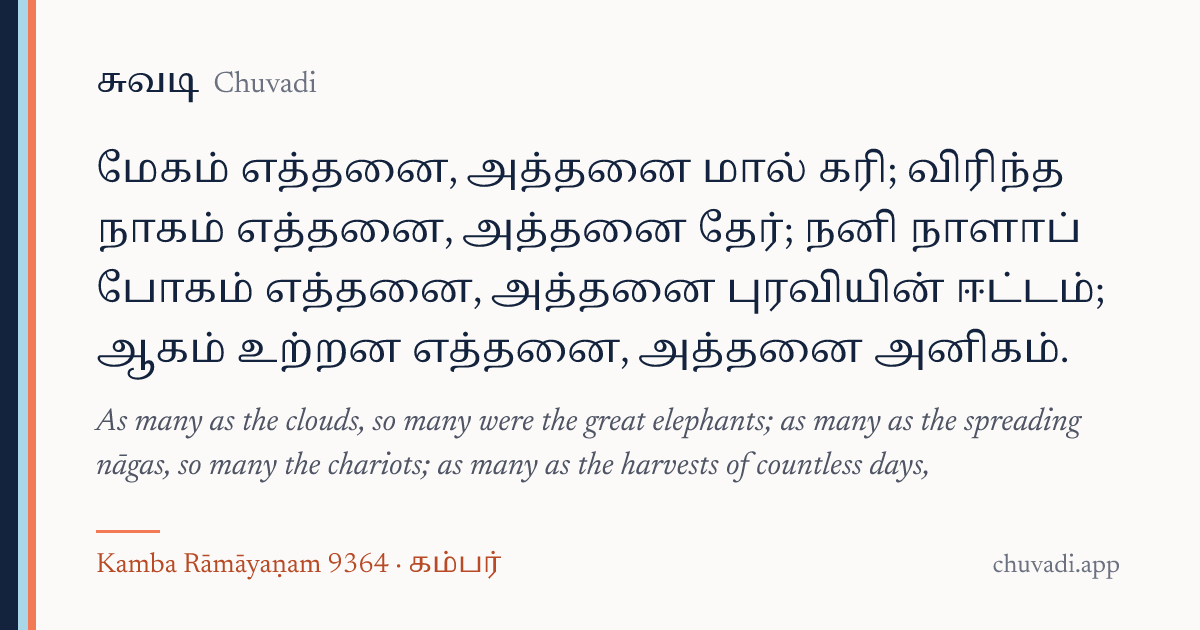
பாடல் · The poem
Tap a word to see its gloss in the commentary and where else it occurs.
பாட வேறுபாடு · Project Madurai reads
பொருள் · Meaning in Tamil
மேகம் எத்தனை அத்தனை மால் கரி - மேகங்கள் எத்தனை உண்டோ அத்தனை பெரிய யானைகள்; விரிந்த நாகம் எத்தனை அத்தனை தேர் - எங்கணும் பரவியுள்ள யானைகள் எத்தனையோ அத்தனைக்கு ஈடான தேர்கள்; நனி நாளாப் போகம் எத்தனை அத்தனை புரவியின் ஈட்டம் - நெடுநாளாகி விளைந்த (நெல்மணிகள்) விளைச்சலில் எத்தனையோ அத்தனை குதிரைகளின் கூட்டம்; ஆகம் உற்றன எத்தனை அத்தனை அனிகம் - உடல் பெற்ற உயிர்கள் எத்தனையோ அத்தனை காலாட்படை வீரர்கள் (என்று அளவிறந்தன அரக்கரின் நால்வகைப் படைகள்
உயிர்கள் அனுபவிப்பதற்கென இறைவனால் எத்தனையோ பல போகங்கள் படைக்கப்பட்டுள்ளனவோ அத்தனை புரவிகளின் கூட்டம் எனவும் மூன்றாவது வரிக்குப் பொருள் கொள்ளலாம். 'எத்தனை கோடி இன்பம் வைத்தாய் இறைவா எங்கள் இறைவா' எனச் சுப்பிரமணிய பாரதியார் பாடியது இங்கு நினைவுகூரத் தக்கது.
ஆங்கிலம் · English translationAI
Translation
- As many as the clouds, so many were the great elephants; as many as the spreading
- nāgas, so many the chariots; as many as the harvests of countless days,
- so many were the throngs of horses;
- as many as the beings that have bodies, so many the foot soldiers.
What the poem says
The four divisions of the demon army, elephants, chariots, horses and infantry, are each measured against something beyond counting: clouds, the spreading nāgas, the grains of harvests gathered over long ages, and all embodied creatures.
The third line can also be read as "as many as the pleasures God has made for living beings to enjoy". The commentary recalls Pāratiyār's line praising God for the countless joys he has placed in the world.