



கம்பராமாயணம் 9378 · யுத்த 30.27
பாடல் · The poem
Tap a word to see its gloss in the commentary and where else it occurs.
பாட வேறுபாடு · Project Madurai reads
பொருள் · Meaning in Tamil
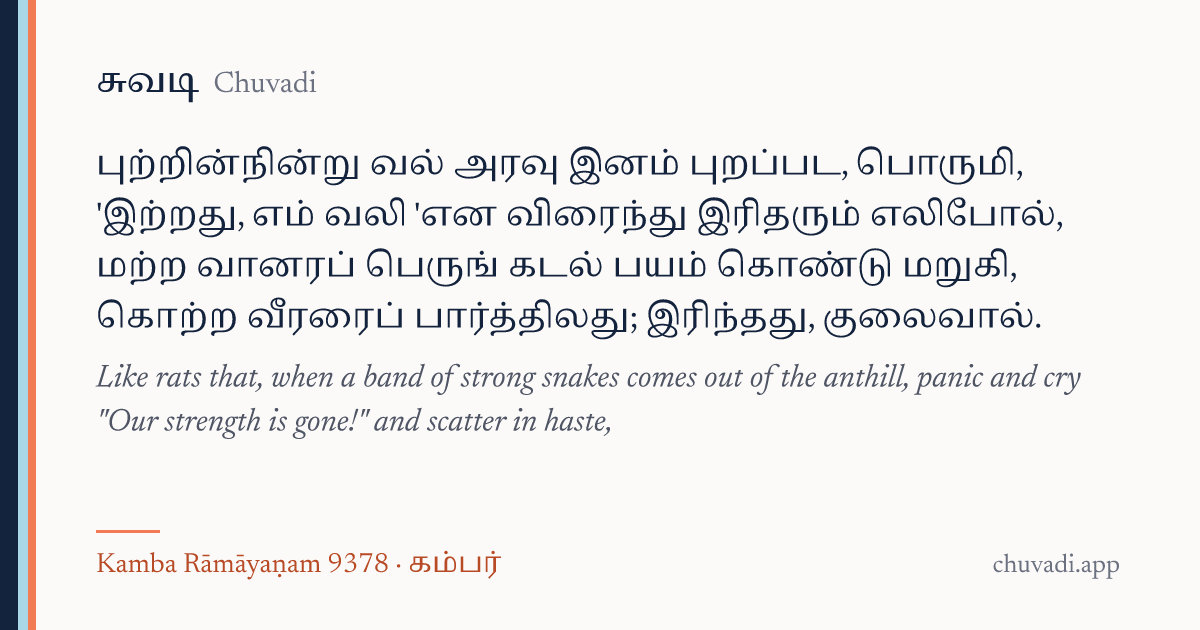
புற்றின் நின்று வல் அரவு இனம் புறப்பட - புற்றுகளிலிருந்து வலிய பாம்புக்கூட்டங்கள் புறப்படக் கண்டு; பொருமி - பொருமிக்கொண்டு; எம் வலி இற்றது - எங்கள் ஆற்றல் அழிந்தது; என - என்று சொல்லிக்கொண்டு; விரைந்து இரிதரும் எலிபோல் - விரைவாக ஓடுகின்ற எலிக்கூட்டம் போல; மற்ற வானரப் பெருங்கடல் - மற்று அங்கு உள்ள வானர சேனையாகிய பெரிய கடல் (கடல் போன்ற பெரிய வானர வீரர்கள்); பயம் கொண்டு மறுகி - அச்சம் கொண்டு கலங்க; கொற்ற வீரரைப் பார்த்திலது - வெற்றிக்கு உரிய இராம இலக்குவராகிய வீரர்கள் தம் பக்கல் இருக்கிறார்கள் என்பதைக் கருதிப்பார்க்கவில்லையாய்; குலைவால் இரிந்தது - மன நடுக்கத்தோடு ஓடியது.
'எலிப் பகை நாகம் உயிர்ப்பக் கெடும்' (திருக்குறள் 763) என்ற குறட்கருத்தை நினைவு கூர்க. இக்கருத்து முன்னும் 'எலியெலாம் இப்படை அரவம் யான் (கம்ப. 2312) என வந்தது. 'அரவின் நாமத்தை எலி இருந்து ஓதினால் அதற்கு விரவும் நன்மை என் (கம்ப. 6238) என இரணியன் கூற்றிலும் வந்தது.
ஆங்கிலம் · English translationAI
Translation
- Like rats that, when a band of strong snakes comes out of the anthill, panic
- and cry "Our strength is gone!" and scatter in haste,
- the great sea of monkeys, seized by fear and confusion,
- did not look to the victorious heroes; it fled in dismay.
What the poem says
The monkey army panics at the sight of the demon host and runs, like rats fleeing when snakes emerge from an anthill. In their terror they forget that the conquering heroes Irāmaṉ and Ilakkuvaṉ are on their side.
The commentary recalls the Tirukkuṟaḷ (763): a host of rats is ruined at the mere hiss of a cobra. Kampaṉ uses the same rat-and-snake image elsewhere in the epic.