



கம்பராமாயணம் 9396 · யுத்த 30.45
பாடல் · The poem
Tap a word to see its gloss in the commentary and where else it occurs.
பொருள் · Meaning in Tamil
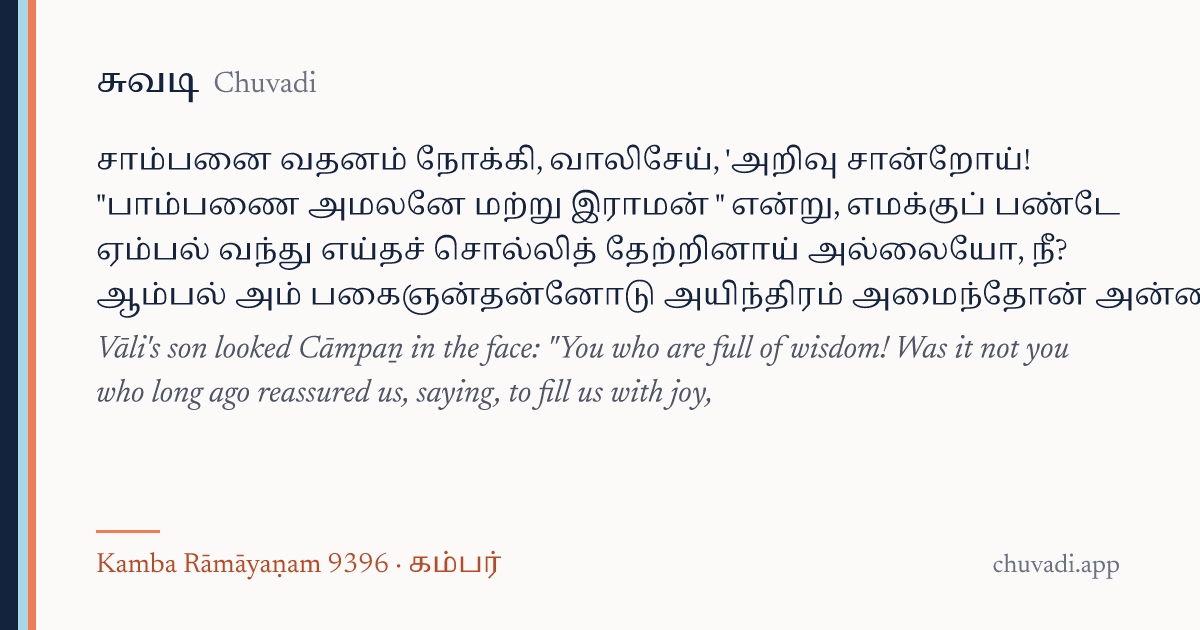
வாலி சேய் - வாலியின் மகனான அங்கதன்; சாம்பனை வதனம் நோக்கி - சாம்பவானின் முகத்தைப் பார்த்து; ஆம்பல் அம் பகைஞன் தன்னோடு அயிந்திரம் அமைந்தோன் அன்னாய் - ஆம்பற் பூவுக்குப் பகைவனாகிய சூரியனோடு இலக்கணம் கற்றறிந்த அனுமனை ஒத்தவனே! அறிவு சான்றோய்! - அறிவால் நிறைந்தவனே; பாம்பு அணை அமலனே மற்று இராமன் என்று - பாம்புப் படுக்கையில் எழுந்தருளியுள்ள திருமாலே இராமன் என்று; எமக்குப் பண்டே - முன்பே எங்களுக்கு; ஏம்பல் வந்து எய்தச் சொல்லி - மகிழ்ச்சி வந்து சேரும் வகையாகச் சொல்லி; தேற்றினாய் அல்லையோ நீ - தெளிவித்தவன் நீ அல்லவா?
'உன்னை நீ அறிகிலை அடியனேன் உனை முன்னமே அறிகுவேன் (8784) என்று இராமபிரான் இன்னான் என்று தான் முன்பே அறிந்துளதாக இராமபிரானிடமே சாம்பவான் கூறும் இடம் ஒன்று உண்டு.
ஆங்கிலம் · English translationAI
Translation
- Vāli's son looked Cāmpaṉ in the face: "You who are full of wisdom!
- Was it not you who long ago reassured us, saying, to fill us with joy,
- 'Irāmaṉ is none other than the Pure One who lies on the serpent couch'?
- You who are like him who learned the Aintiram grammar with the foe of the water lily!"
What the poem says
Aṅkataṉ, son of Vāli, now turns to Cāmpaṉ (Jāmbavān), the wise old bear chief who has also fled. He reminds him that it was Cāmpaṉ himself who once comforted them by revealing that Irāmaṉ is Viṣṇu, who reclines on the serpent Ātiśēṣaṉ.
He addresses Cāmpaṉ as the equal of Aṉumaṉ, who learned the Aindra grammar from the Sun, "enemy of the water lily" because the lily closes by day. Elsewhere in the epic Cāmpaṉ tells Irāmaṉ that he has known his true nature from of old.