



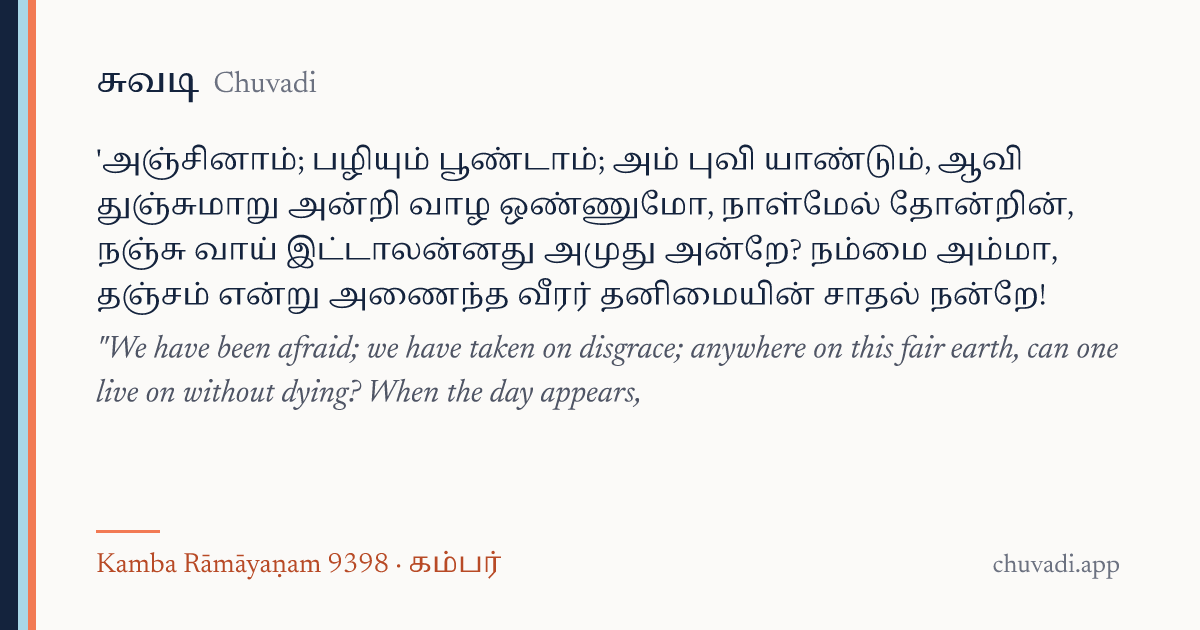
கம்பராமாயணம் 9398 · யுத்த 30.47
பாடல் · The poem
Tap a word to see its gloss in the commentary and where else it occurs.
பாட வேறுபாடு · Project Madurai reads
பொருள் · Meaning in Tamil
அஞ்சினாம் - நாம் இப்போது அஞ்சியவர்களானோம்; பழியும் பூண்டாம் - ஆகையால் பழியையும் மேற்கொண்டு விட்டோம்; அம் புவி யாண்டும் - அழகிய இந்தப் பூமியில் எங்குச் சென்றாலும்; துஞ்சுமாறு அன்றி வாழ ஒண்ணுமோ - சாவைத் தவிர வாழமுடியுமா? நாள் மேல் தோன்றின் - சாவு வருதற்குரிய நாள் நம் முன்னே வந்து தோன்றினால்; நஞ்சு வாய் இட்டாலன்னது அமுது அன்றோ - நஞ்சினை வாயிலிட்டது போல்வதாகிய அமுதம் அல்லவா? நம்மைத் தஞ்சம் என்று அணைந்த - நம்மை பற்றுக்கோடு என்று கொண்டு சேர்ந்த; வீரர் - இராம இலக்குவர் ஆகிய வீரர்கள்; தனிமையின் சாதல் நன்றே - நாம் துணையாக நிற்காமல் விலகிவிட்டதால் அவர்கள் தனிமையில் சாவது; இது நல்லதாகுமா?
அம்மா - வியப்பிடைச் சொல்.
ஆங்கிலம் · English translationAI
Translation
- "We have been afraid; we have taken on disgrace; anywhere on this fair earth,
- can one live on without dying? When the day appears,
- is not the nectar itself like poison put in the mouth? Ah!
- is it good that the heroes who came to us for refuge should die alone?"
What the poem says
Aṅkataṉ's rebuke continues. By running away they have already shown fear and earned disgrace. Yet no one anywhere on earth can escape death. When one's appointed day comes, even nectar turns to poison in the mouth, so flight saves nothing.
Irāmaṉ and Ilakkuvaṉ trusted the monkeys as their support. Is it right to leave them to die alone? "Ammā" is an exclamation of wonder.