



கம்பராமாயணம் 9430 · யுத்த 30.79
பாடல் · The poem
Tap a word to see its gloss in the commentary and where else it occurs.
பொருள் · Meaning in Tamil
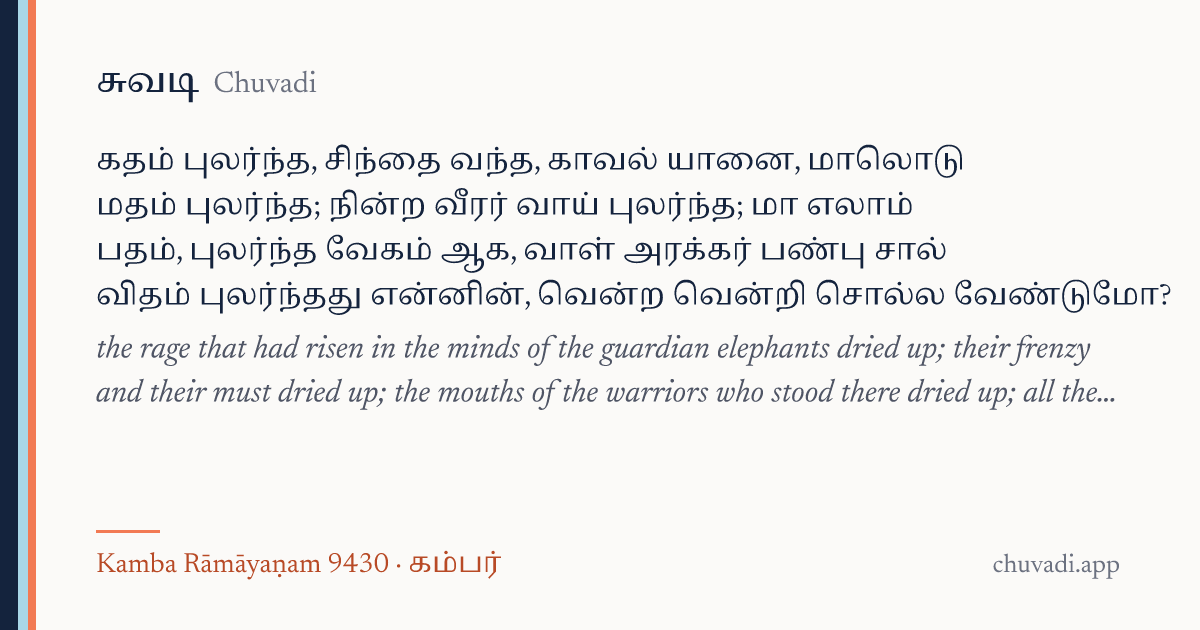
காவல் யானை சிந்தை வந்த கதம் புலர்ந்த - காவலாக வந்த அரக்கர் சேனை யானைகளின் மனத்தில் எழுந்த கோபம் உலரப் பெற்றன; மாலொடு மதம் புலர்ந்த - மதத்தோடு மத நீரும் உலர்ந்தன; நின்ற வீரர் வாய் புலர்ந்த - ஓடிவிடாமல் நின்ற அரக்க வீரர்களின் வாய்கள் உலர்ந்தன; மா எலாம் பதம் புலர்ந்த - குதிரைகளெல்லாம் தங்கள் வேகம் இழந்தன; வாள் அரக்கர் பண்பு சால் விதம் வேகமாகப் புலர்ந்தது - வாள் ஏந்திய அரக்கர்களின் வீரப் பண்பு மிக்க போர்வேகம் விரைவாகக் குறைந்தது; என்னின் - என்றால்; வென்ற வெற்றி சொல்ல வேணுமோ - இராமபிரான் வென்ற வெற்றியின் சிறப்பைத் தனியே சொல்லவேண்டுமா? (வேண்டியதில்லை).
ஆங்கிலம் · English translationAI
Translation
- the rage that had risen in the minds of the guardian elephants dried up; their frenzy
- and their must dried up; the mouths of the warriors who stood there dried up; all the horses'
- pace dried up as their speed failed; if the whole quality and bearing
- of the sword-bearing demons dried up so, need the victory he won be told?
What the poem says
Continuing from the previous verse: at the mere twang of Irāmaṉ's bowstring, the fury of the demons' war elephants drains away and their must dries up. The warriors who stand their ground find their mouths gone dry with fear, the horses lose their speed, and all the martial spirit of the demon swordsmen withers.
The verse repeats "dried up" (pular) again and again. If one sound can do this, the poet asks, what need is there to describe the victory itself?