



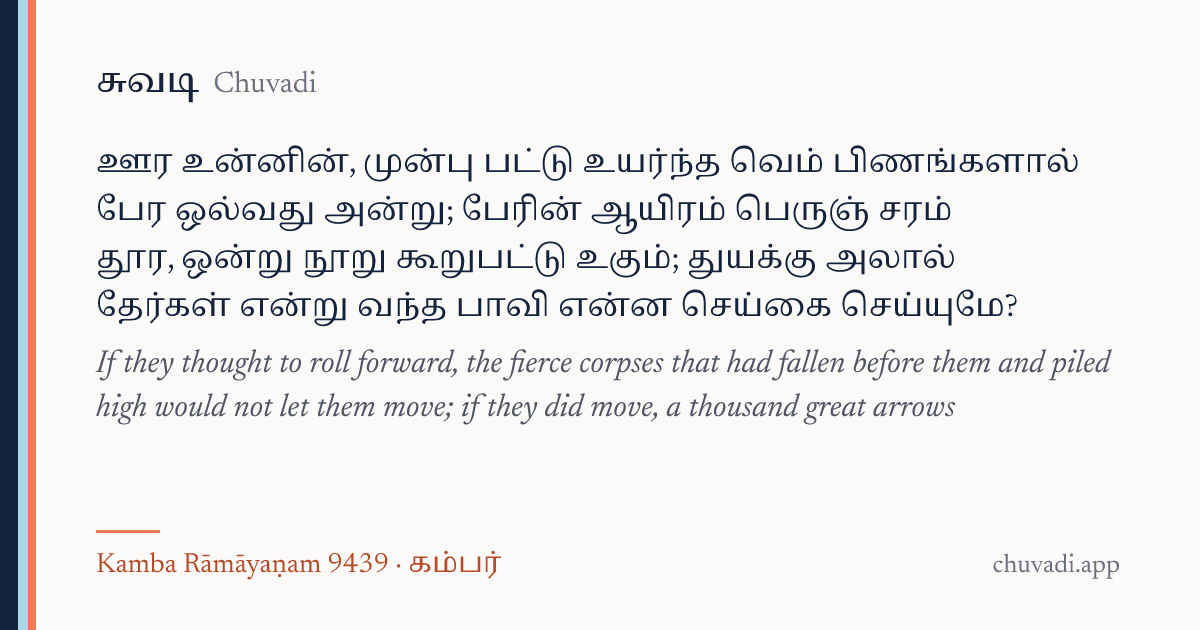
கம்பராமாயணம் 9439 · யுத்த 30.88
பாடல் · The poem
Tap a word to see its gloss in the commentary and where else it occurs.
பொருள் · Meaning in Tamil
தேர்கள் ஊர உன்னின் - பகையரக்கர்களின் தேர்கள் மெல்லவாவது போக நினைத்தால்; முன்பு - அப்படிச் செல்ல முற்படும் தேர்களின் முன்புறத்தில்; பட்டு உயர்ந்த வெம் பிணங்களால் - இறந்து உயரமாகக் குவிந்து கிடக்கின்ற பிணங்களால்; பேர ஒல்வது அன்று - போக முடிவதில்லை (பிணக் குவியல்களே தடை); பேரின் - தடையையும் மீறி மேலே சென்றால்; ஆயிரம் பெருஞ்சரம் தூர - இராமபிரான் செலுத்தும் ஆயிரம் பெருங் கணைகள் பெருகுதலால்; ஒன்று நூறு கூறுபட்டு உகும் - ஒவ்வொன்றும் நூறு துண்டுகளாக விழும்; துயக்கு அலால் - இதனால் மனச்சோர்வே அன்றி; தேர்கள் என்று வந்த பாவி - தேர்கள் எனச் சொல்லப்பட்ட பாவிகள்; என்ன செய்கை செய்யுமே - என்னத்தைத்தான் செய்துவிடும்! (மனங் கலங்குவதன்றிச் செய்யத்தக்கது ஒன்றுமில்லை).
தேர்களைப் பாவிகள் என்றதற்கேற்ப அவற்றுக்கு மனச் சோர்வு உண்டென்றும் கற்பித்தார் கவிஞர். அழுக்காறு என ஒரு பாவி (குறள் 168) இன்மை என ஒரு பாவி (குறள் (1042) என்றது போன்ற ஆட்சி இது.
ஆங்கிலம் · English translationAI
Translation
- If they thought to roll forward, the fierce corpses that had fallen before them and piled high
- would not let them move; if they did move, a thousand great arrows
- would pour in and each would fall in a hundred pieces; apart from despair,
- what could those wretches that came as chariots ever do?
What the poem says
Now the chariots. If they try to advance, the corpses heaped high in front of them block the way. If they get past, a thousand of Irāmaṉ's arrows break each one into a hundred pieces. They can do nothing but despair.
The poet calls the chariots "wretches" (pāvi) and so gives them feelings of despair. The commentary compares Tirukkuṟaḷ's similar use of "pāvi" for envy (168) and for poverty (1042).