



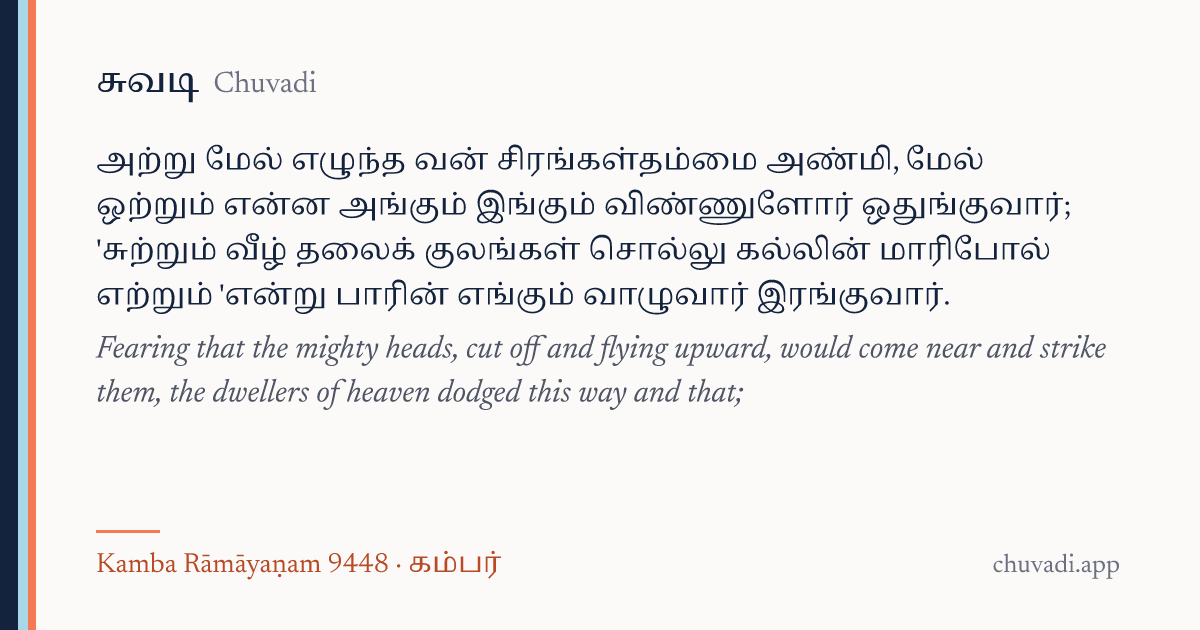
கம்பராமாயணம் 9448 · யுத்த 30.97
பாடல் · The poem
Tap a word to see its gloss in the commentary and where else it occurs.
பாட வேறுபாடு · Project Madurai reads
பொருள் · Meaning in Tamil
அற்று மேல் எழுந்த வன் சிரங்கள் - உடம்பிலிருந்து துண்டு பட்டு மேல்நோக்கி எழுந்த வலிய தலைகள்; தம்மை அண்மி - தங்களை நெருங்கி; மேல் ஒற்றும் என்ன - தங்கள் மேல் ஒட்டும் என்று; விண்ணுளோர் அங்கும் இங்கும் ஒதுங்குவார் - தேவர்கள் அங்கும் இங்குமாக ஒதுங்கிக் கொண்டார்கள்; சுற்றும் வீழ் தலைக் குலங்கள் - சுற்றிலும் எங்கெங்கும் விழுகின்ற தலைகளின் தொகுதிகள்; சொல்லு கல்லின் மாரிபோல் - சிறப்பாகச் சொல்லப் படுகின்ற கல் மழை போல்; எற்றும் என்று - மோதித் தாக்கும் என்று; பாரின் எங்கும் வாழுவார் - மண்ணுலகெங்கும் வாழ்கின்றவர்கள்; இரங்குவார் - வேதனைப்பட்டார்கள்.
ஆங்கிலம் · English translationAI
Translation
- Fearing that the mighty heads, cut off and flying upward, would come near and strike them,
- the dwellers of heaven dodged this way and that;
- "The masses of heads falling all around will batter us like the storied rain of stones,"
- so lamented those who live all over the earth.
What the poem says
The severed heads of the demons fly so high that the gods in heaven have to dodge them for fear of being hit. When the heads come down again, people all over the earth cry out in alarm, afraid they will be pounded as if by a famous hailstorm of stones.