



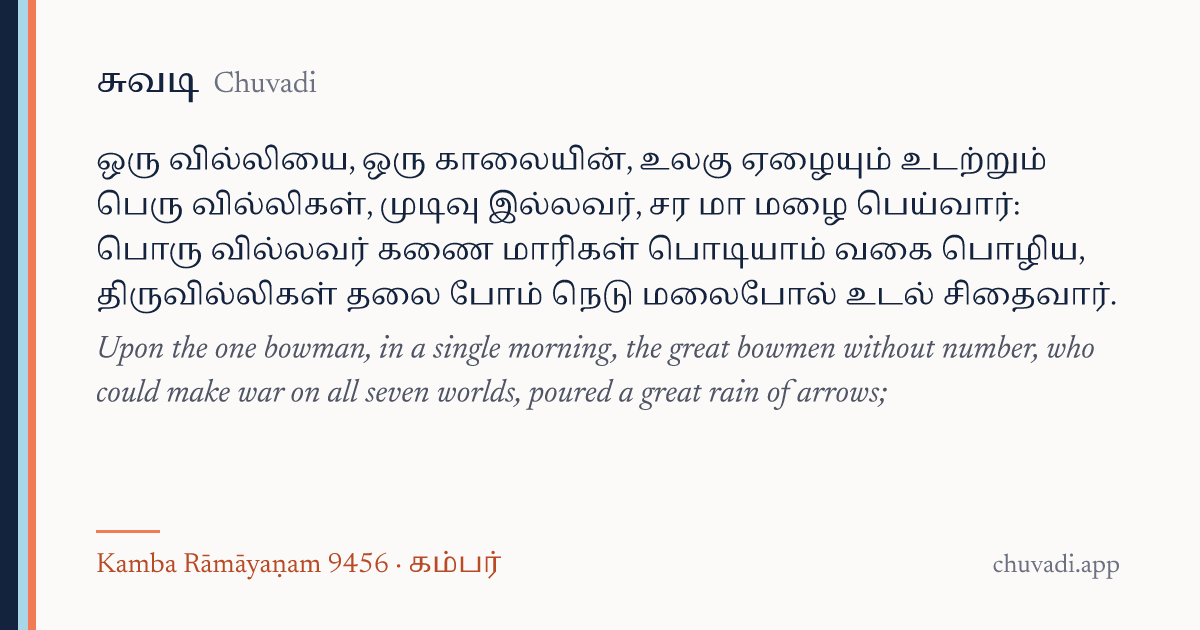
கம்பராமாயணம் 9456 · யுத்த 30.105
பாடல் · The poem
Tap a word to see its gloss in the commentary and where else it occurs.
பாட வேறுபாடு · Project Madurai reads
பொருள் · Meaning in Tamil
உலகு ஏழையும் உடற்றும் முடிவில்லவர் பெரு வில்லினர் - ஏழு உலகங்களையும் எதிர்த்துப் போரிட வல்லவர்களும் பெரிய விற்கள் ஏந்தியோருமாகிய கணக்கற்ற அரக்கர்கள்; ஒரு வில்லியை - வில்லை ஏந்தித் தனியொருவனாயுள்ள இராமனை எதிர்த்து; சர மா மழை பெய்வார் - பெரு மழையாக அம்புகளைப் பெய்தனர்; பொருவில்லவர் - போர் செய்யும் அந்த வில்லேந்திகளின்; கணை மாரிகள் பொடியாம் வகை - அம்பு மழை தூளாகும் வண்ணம்; பொழிய - (இராமபிரானும்) வில் மழை பொழிதலினால்; திருவில்லிகள் - (வீரச் செல்வம் இல்லாதவர்களாகிய அரக்கர்கள்; தலைபோம் - தலைகள் அறுபட்டு; நெடு மலை போல் உடல் சிதைவார் - பெரிய மலை போன்ற தங்கள் உடல்கள் அழிந்தனர்.
ஆங்கிலம் · English translationAI
Translation
- Upon the one bowman, in a single morning, the great bowmen without number,
- who could make war on all seven worlds, poured a great rain of arrows;
- as he poured down his own so that the arrow-showers of those fighting archers turned to dust,
- those bowmen bereft of fortune lost their heads, and their bodies broke apart like tall mountains.
What the poem says
Countless demon archers, each able to make war on all seven worlds, shower arrows on Irāmaṉ, the lone bowman. He answers with a rain of his own that grinds their arrows to dust. Then the demons, now stripped of all fortune and glory, are beheaded, and their mountainous bodies crumble.
The verse plays on "vil", bow: "oru villi" (the one archer), "peru villikaḷ" (the great archers), and "tiru-v-illikaḷ", which can be read as "those without fortune".