



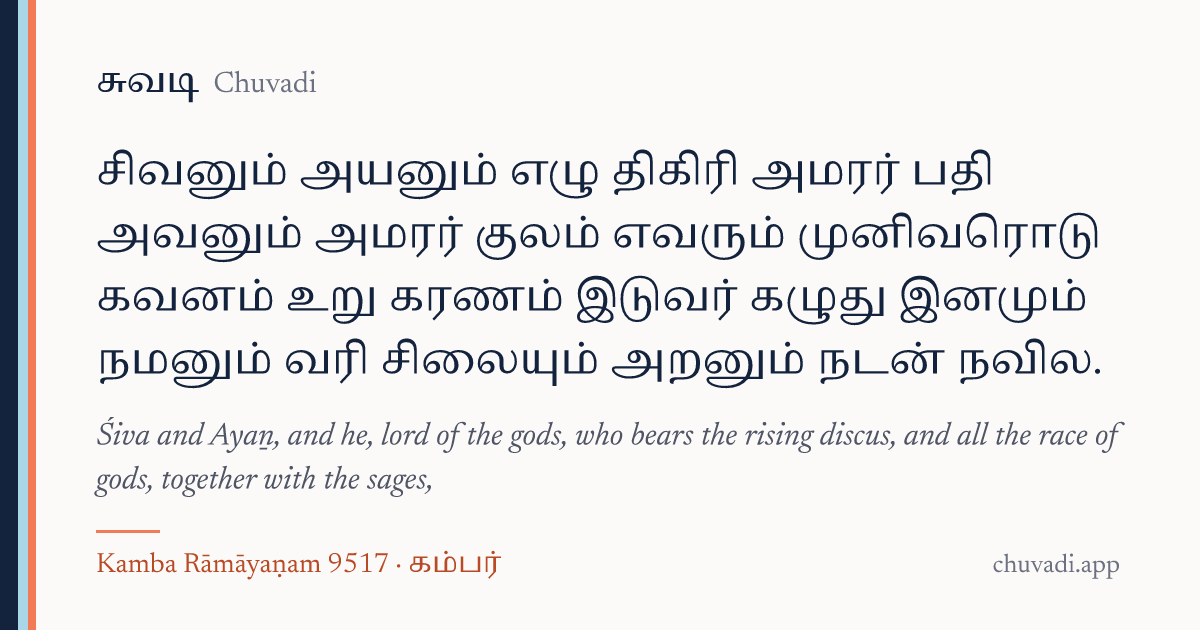
கம்பராமாயணம் 9517 · யுத்த 30.166
பாடல் · The poem
Tap a word to see its gloss in the commentary and where else it occurs.
பொருள் · Meaning in Tamil
கழுது இனமும் - பேய்க் கூட்டங்களும்; நமனும் - யமனும்; வரி சிலையும் - கட்டு அமைந்த வில்லும்; அறனும் - அறக் கடவுளும்; நடன் நவில - (மகிழ்ச்சியால்) நடனமாடும் படியாக; சிவனும் அயனும் எழு திகிரி அமரர் பதி அவனும் - சிவபிரான், நான்முகன், பகையை அழிக்க எழும் சக்கரப்படை ஏந்திய தேவர் தலைவனாகிய திருமால் ஆகியோரும்; அமரர் குலம் எவரும் - தேவர் கூட்டத்தைச் சேர்ந்த எல்லோரும், முனிவரொடு - முனிவர்களோடு சேர்ந்து; கவனம் உறு - வேகம் மிகுந்த; கரணம் இடுவர் - (மகிழ்ச்சியால்) குட்டிக்கரணமிட்டுக் கூத்தாடினர்.
நடன் நவில்தல் - நடனம் இடுதல். 'நட்டமே நவில்வாய்' (தேவாரம் 3-1-2) என்ற ஆட்சி காண்க.
ஆங்கிலம் · English translationAI
Translation
- Śiva and Ayaṉ, and he, lord of the gods, who bears the rising discus,
- and all the race of gods, together with the sages,
- turned swift somersaults; while the hosts of ghouls,
- and Yama, and the banded bow, and Dharma too, danced.
What the poem says
The whole universe rejoices at Irāmaṉ's fighting. Śiva, Ayaṉ (Brahmā) and Tirumāl, lord of the gods who bears the discus, along with every god and sage, turn somersaults for joy.
Even the ghouls of the battlefield, Yama the god of death, Irāmaṉ's own bow and the god of righteousness are said to dance. The phrase used for dancing echoes an expression found in the Tēvāram hymns.