



கம்பராமாயணம் 9568 · யுத்த 30.217
பாடல் · The poem
Tap a word to see its gloss in the commentary and where else it occurs.
பொருள் · Meaning in Tamil
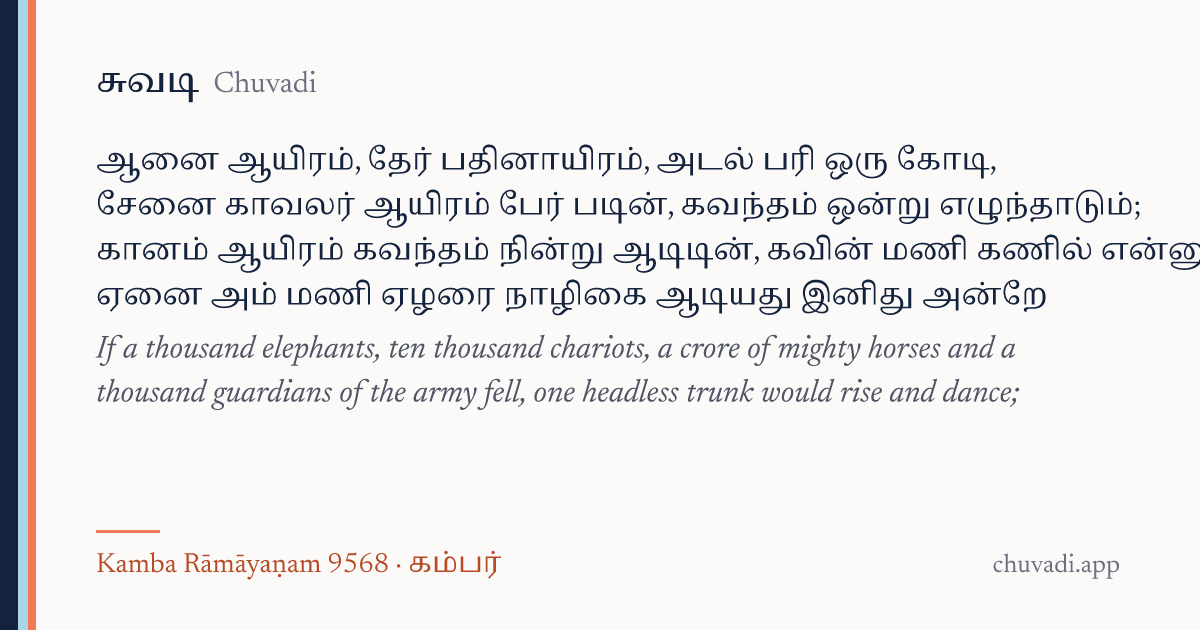
ஆனை ஆயிரம், தேர் பதினாயிரம், அடல் பரி ஒரு கோடி சேனை காவலர் ஆயிரம் பேர் படின் - ஆயிரம் யானைகளும் பதினாயிரம் தேர்களும், கொலை வல்லனவாகிய ஒரு கோடி குதிரைகளும் ஆயிரம் சேனைத் தலைவர்களும் இறந்து விழுந்தால்; கவந்தம் ஒன்று எழுந்து ஆடும் - ஒரு கவந்தம் எழுந்து கூத்தாடும்; கானம் - சுடலையிலே, ஆயிரம் கவந்தம் நின்று ஆடின் - ஆயிரம் கவந்தங்கள் ஆடினால்; கவின் மணி கணில் என்னும் - (இராமன் வில்லில் கட்டிய) அழகிய மணி ஒரு தடவை கணில் என ஒலிக்கும்; அன்று - போர் நடந்த அந்த நாளில்; ஏனை அம் மணி - அந்த (வில்) மணி; ஏழரை நாழிகை இனிது ஆடியது - ஏழரை நாழிகை நேரம் ஆடியது (ஆடியபோதெல்லாம் மணி ஒலித்தது)
போர்க்களத்தில் தன் வில்லாற்றலால் அழித்த திறம் கூறப்பட்டது.
ஆங்கிலம் · English translationAI
Translation
- If a thousand elephants, ten thousand chariots, a crore of mighty horses
- and a thousand guardians of the army fell, one headless trunk would rise and dance;
- if a thousand headless trunks stood and danced in the burning-ground, the fair bell would ring once;
- and that day the bell swung sweetly for seven and a half nāḻikais.
What the poem says
A famous verse measuring the slaughter by the bell on Irāmaṉ's bow. Tradition says that when a thousand elephants, ten thousand chariots, a crore of horses and a thousand commanders have died, one headless trunk rises and dances on the field.
Only when a thousand such trunks are dancing does the bell ring once. That day the bell kept ringing for seven and a half nāḻikais, about three hours, which shows the staggering scale of his archery.